
26 Ideas for Booster Club Fundraisers Your Donors Will Actually Show Up For
Booster Club Fundraising Ideas
Booster club fundraisers fund the gear, travel, and programs that schools can’t cover on their own. Here are 26 booster club fundraising ideas to run this year:
Universal: Restaurant spirit nights, gift card programs, spirit wear, 50/50 raffles, crowdfunding, peer-to-peer campaigns.
Athletic: Scoreboard sponsorships, sponsor-a-position fundraisers, alumni games, sport-specific a-thons, concessions.
Band: Mattress fundraisers, instrument cleaning days, program ads, candy catalogs, play-a-thons.
Cheer and dance: Youth clinics, senior tribute ads, watch parties, glow runs.
Signature events: Silent auctions, galas with fund-a-need moments, sweepstakes, online auctions, championship crowdfunders, golf tournaments.
RallyUp’s end-to-end fundraising platform can power many of the digital and event-based fundraisers in this guide from one platform. These include raffles where permitted, sweepstakes, auctions, crowdfunding, peer-to-peer campaigns, A-thons, ticketing, and storefront sales.
A new booster club treasurer often inherits a binder from last year’s board and has to make sense of it fast.
Suppose the binder says a car wash raised $5,000 over two Saturdays, a raffle ran smoothly but a margin note flagged the state license for next time. The spring goal was $40,000.
None of it looks wrong. It just looks like a lot to figure out from scratch.
Most booster club fundraisers do not need to be reinvented every season. The right ones carry forward and get easier to run each year.
This guide gathers booster club fundraisers by program type, so you can find high school booster club fundraising ideas that fit your team and your timeline.
In this article
- What is a booster club?
- What makes booster club fundraising different
- 7 things booster clubs need to know about compliance
- 26 booster club fundraising ideas for your next event
- Ideas for any booster club
- Athletic booster club fundraising ideas
- Band booster club fundraising ideas
- Cheer and dance booster club fundraising ideas
- Signature high school booster club fundraising ideas
- The booster club fundraising calendar
- 5 ways to run a booster club fundraiser
- Run better booster club fundraisers with RallyUp
- FAQs on booster club fundraisers
What is a booster club?
A booster club is a parent- or community-led group that supports a specific school program. The program might be athletics, band, cheer, drama, or an academic team like robotics or debate. Whatever the focus, the club exists to fund what the school can’t or won’t cover on its own.
A booster club is typically a parent- or community-led organization that supplements a school program. Many independently organized booster clubs seek recognition as 501(c)(3) public charities, but others operate under a school district, parent organization, education foundation, or group exemption.
The legal structure varies by state and district.
They run their own board and manage their own bank account.
Most separately recognized tax-exempt booster clubs must submit an annual Form 990-series return or notice. The appropriate form depends on gross receipts and, in some cases, total assets.
Clubs should also know that missing required filings for three consecutive years results in automatic revocation of federal tax-exempt status.
Booster clubs typically supplement school or district funding through donations, sponsorships, merchandise, membership support, and fundraising campaigns. The mix varies by program and district.
That covers new uniforms, competition travel, equipment, scholarships, end-of-season banquets, and facility upgrades.
These groups often provide valuable support that helps extracurricular programs continue and grow. Strong booster club fundraisers are what keep the lights on.
What makes booster club fundraising different
Booster club fundraisers aren’t general nonprofit fundraising, and treating them that way leads to burnout. Here’s how they stand apart:
- All-volunteer leadership that turns over fast: Board turnover is common, and institutional knowledge tends to walk out the door with departing officers.
- A small, repeatedly tapped donor pool: The same parents, alumni, and local businesses get asked every year.
- Season-based revenue, not calendar-year revenue: Costs are fixed and immediate. Travel, gear, and tournament fees don’t wait for the next gala or the spring banquet.
- Recurring compliance risks: Booster clubs need to carefully manage private benefit rules, individual fundraising credits, charitable gaming, cash controls, and annual filings.
For these reasons, a structured playbook matters more here than in most small-school fundraising efforts.
7 things booster clubs need to know about compliance
Compliance can feel like paperwork until a fundraiser gets delayed, questioned, or shut down. Booster clubs need a few basic guardrails before money starts moving.
Always keep the following in mind:
1. Confirm 501(c)(3) status
Independently organized booster clubs often seek 501(c)(3) recognition so eligible donations may be tax-deductible. Federal tax exemption is separate from obtaining an EIN, forming a legal entity, opening an account in accordance with a bank’s requirements, and receiving approval or recognition from the school district.
2. Avoid private benefit problems
Private benefit and private inurement are among the most serious tax-exemption risks for booster clubs. The IRS has said a club can lose its 501(c)(3) status by raising money to benefit individuals rather than the group as a whole.
This shows up most often in cooperative fundraising, where families earn credit toward their own child’s fees based on how much they raised. In 2013, the Tax Court upheld the IRS’s revocation of a gymnastics booster club’s exempt status for this exact reason.
The case is Capital Gymnastics Booster Club v. Commissioner. Families had earned points toward their child’s mandatory fees based on how much they raised in funds, and the court ruled that this created private inurement.
To prevent this, have a compliant setup that generally includes:
- One general account for the whole program
- Fundraising participation that is optional and stated in writing
- Broader club activity beyond fundraising logistics
- A documented hardship or scholarship process
- No dollar-for-dollar credit tied to individual fundraising
3. Check charitable gaming laws
Raffles and bingo are forms of charitable gaming and may require a license, registration, reporting, or specific operating procedures, or may be prohibited altogether.
Sweepstakes are legally different: they must include a genuine free method of entry, and a purchase or donation cannot be required or improve the odds of winning. Both are subject to jurisdiction-specific rules.
Some states require a charitable gaming license. Others restrict raffle structures, so check before tickets get printed. Check raffle laws by state before you take the idea further.
3 mistakes that make raffle fundraisers flop4. Get school district approval
Most districts require pre-approval for any fundraiser using the school name, facilities, or student involvement. Skipping that step can cause the fundraiser to shut down.
5. Document gifts and cash clearly
Donor acknowledgments matter for any 501(c)(3), but not every payment is tax-deductible. Raffle tickets are not deductible, while event tickets, merchandise, clinics, and auction purchases may provide substantial value to the buyer. Use receipt language that matches the transaction and clearly states any deductible portion.
Cash handling needs care. Count cash from concessions, raffles, and game-day sales with two signatures, then record deposits quickly. This protects volunteers, the board, and the reputation behind your booster club fundraising.
Important Note: State laws vary, and booster club fundraisers should confirm details with a CPA or attorney.
6. Check charitable registration requirements
Before soliciting donations online or beyond your home state, check whether charitable registration, renewal, or reporting requirements apply. Rules vary by state and may be triggered even when fundraising happens entirely online.
Dedicated nonprofit accounting software can also make officer transitions and annual reporting easier.
7. Keep track of parent volunteer time
Tracking parent volunteer hours is important for reporting on impact. Many schools recognize parent volunteer efforts and booster club participation could contribute toward this. For booster clubs with 501c(3) status, keeping track of the number of volunteers and how many hours they contribute may also be used in grant applications. Consider utilizing dedicated school volunteer tracking software to simplify annual reporting.
| Idea | Best for | Startup cost | Volunteer effort | Time to launch | Compliance sensitivity |
|---|---|---|---|---|---|
| Restaurant night | Quick community participation | Low | Low | 1–3 weeks | Low |
| 50/50 raffle | Game-day audience | Low | Moderate | Varies | High |
| Peer-to-peer | Travel or equipment goal | Low | Moderate | 1–2 weeks | Moderate |
| Silent auction | Banquet or signature event | Moderate | High | 6–12 weeks | Moderate |
| Youth clinic | Cheer, dance, or athletics | Moderate | High | 4–8 weeks | Moderate |
26 booster club fundraising ideas for your next event
These fundraising ideas work for athletics, band, cheer, dance, robotics, debate, and most school programs. Use these as ideas for booster club fundraising when your board needs low-friction options.
A note on the numbers below: The dollar ranges in this article are illustrative examples, not expected results. Outcomes vary widely by audience size, sponsorship support, pricing, donated goods, and event expenses. Build a revenue-and-expense estimate before selecting a fundraiser.
Ideas for any booster club
These flexible fundraising ideas work for most clubs.
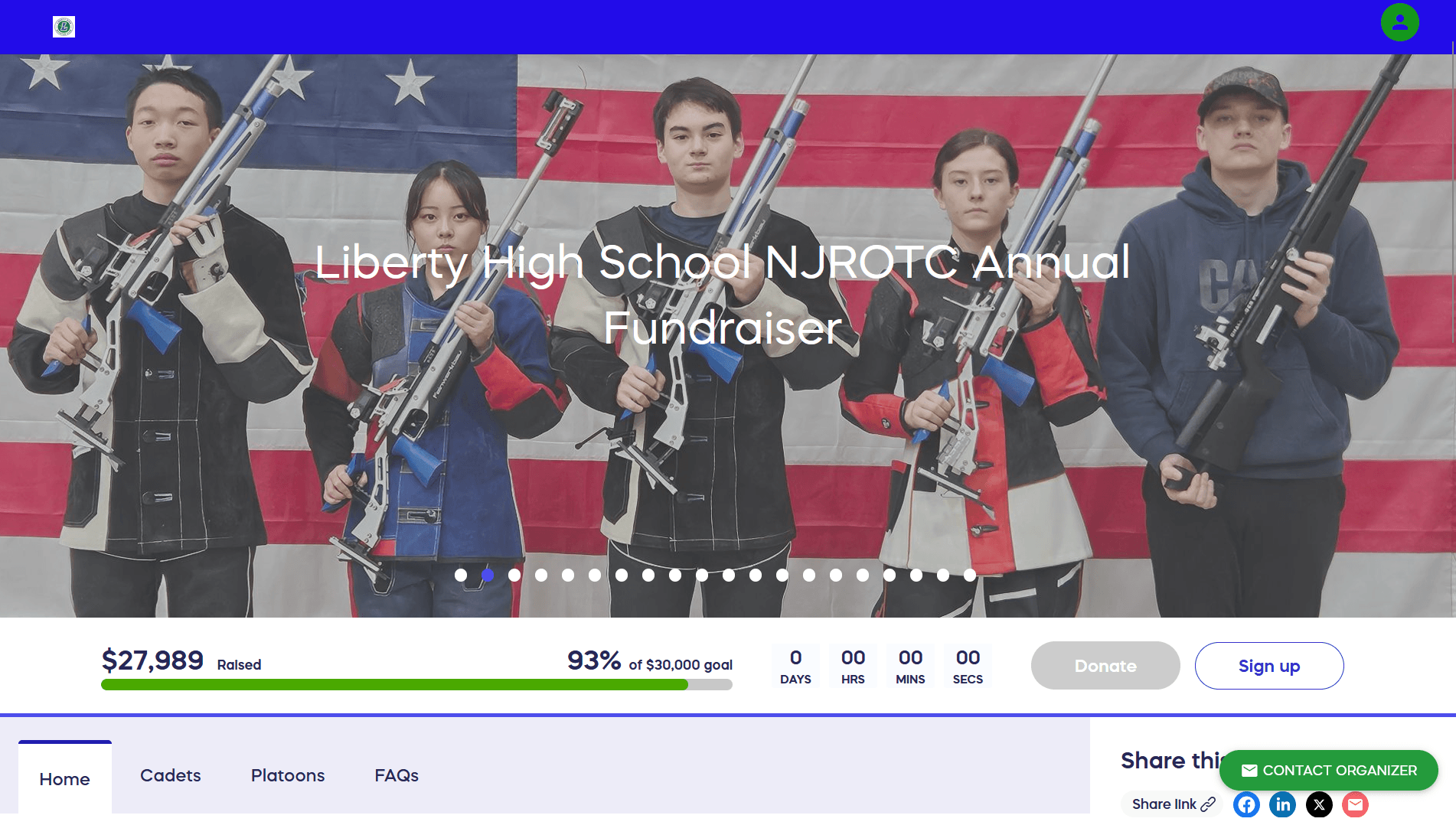
Choose one that fits your timeline, volunteer capacity, and revenue goal.
1. Restaurant spirit nights
Partner with a local restaurant that gives your club a percentage of sales from one evening.
Net revenue is usually modest, and effort stays low when the restaurant handles orders.
2. Gift card fundraising for booster clubs
Use Gift card programs to let families buy everyday gift cards for groceries, gas, and restaurants they already use.
A percentage of each purchase goes back to the booster club automatically.
Revenue builds slowly, and the campaign works best year-round.
3. Spirit wear and merch sales
Sell shirts, hats, decals, yard signs, and blankets before games or performances.
Pre-orders protect margins by avoiding leftover inventory.
4. 50/50 raffles
Sell raffle tickets at home games, then split the pot with the winner. Check state and district rules first, since raffles may require approval or licensing.
Learn all about 50/50 raffles5. Online crowdfunding campaigns
Raise money for one clear need, such as uniforms, travel, or new equipment, using crowdfunding.
Net revenue depends on list size, promotion, and deadline discipline.
6. Peer-to-peer campaigns
Give each family a personal fundraising page and a reasonable goal. Family or participant pages can track outreach and recognize participation, but all proceeds should support the program’s shared purpose.
Do not convert page totals into dollar-for-dollar credits or individual account balances. This spreads outreach across the full community and reduces pressure on the same small donor circle.
Peer-to-Peer fundraising: everything you need to knowAthletic booster club fundraising ideas
Sports programs have frequent games, visible facilities, and recurring sponsor value.
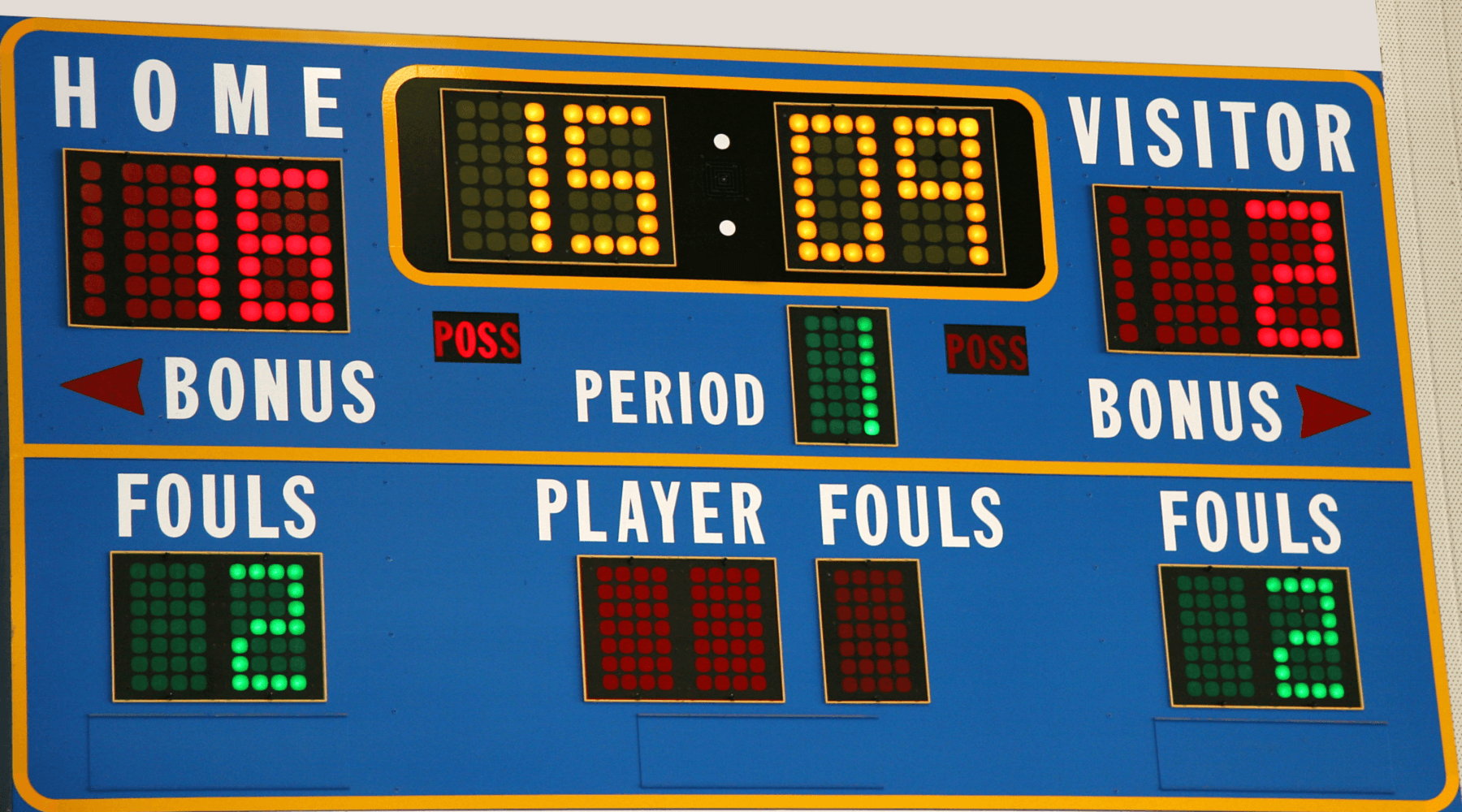
These athletic booster club fundraising ideas work best when the board sells season-long exposure.
7. Scoreboard and banner sponsorships
Sell ads on scoreboards, gym walls, outfield fences, or sideline banners. Revenue can recur every season with sponsor photos and renewal reminders.
8. Sponsor-a-position fundraisers
Invite local businesses to sponsor a position on the roster, such as a jersey number or line spot, rather than a specific athlete. All funds go into the team’s general budget, not to any one family.
This keeps the sponsorship inside IRS guidelines for public charities.
How to write a sponsorship letter9. Alumni games
Host a paid alumni game with concessions, raffles, and spirit wear.
Effort is moderate, and the event gets easier when alumni expect it yearly.
10. Sport-specific a-thons
Organize a-thons and tailor them to different sports.
For example, a hit-a-thon is one of the most reliable baseball booster club fundraising ideas, while free-throw-a-thons and kick-a-thons fit basketball and soccer, respectively.
11. Concession stands
Run concessions at home games with clear volunteer shifts and inventory controls. For clubs with a full home schedule, concessions can become a dependable year-round revenue line rather than a one-time push.
Fundraising apps for sports teams: 10 best picks for nonprofits in 2026Band booster club fundraising ideas
Band boosters face large seasonal expenses for uniforms, instruments, travel, and competitions.

That rhythm calls for booster club fundraiser ideas with steady revenue and event-day potential. Here are some efficient ones:
12. Mattress fundraisers
Host a one-day mattress sale through a vendor that brings inventory to the school.
As an illustration, a well-promoted band mattress sale might net in the range of $5,000 to $10,000, though vendor terms and turnout drive the result.
13. Instrument cleaning days
Partner with a local music shop or trained volunteers to offer basic cleaning services. Revenue is moderate, and the service feels useful to families.
14. Season program ads
Sell ad space to local businesses in marching band programs or concert booklets. This creates a clean sponsorship package and gives supporters visible recognition.
15. Candy or popcorn catalog sales
Run catalog sales during fall, when families already expect school fundraising. Participation is easy here, and fulfillment works best with a firm deadline.
Fundraisers you can run even if you only have a week16. Play-a-thons
Students collect pledges per minute of practice or per completed performance block. This connects giving directly to student effort and gives families a clear reason to participate.
Cheer and dance booster club fundraising ideas
The best cheer booster club fundraising ideas use the energy, visibility, and family appeal these programs already have.

Clinics and showcase moments can turn student talent into revenue.
17. Youth cheer or dance clinics
Run a Saturday clinic for elementary-age kids, led by the high school team.
Revenue can be strong because families pay for a fun, structured experience.
18. Senior tribute ads
Sell tribute space in a spring showcase program. The emotional pull is high, and production stays manageable with firm submission deadlines.
19. Competition watch parties
Host a paid watch party for regional or state events.
Add concessions, raffles, and small merch sales to raise more from one gathering.
20. Glow runs or color runs
Turn a team-led run into a community event.
Effort is high, and sponsor potential can make the campaign worthwhile.
Signature high school booster club fundraising ideas
Large events can anchor the annual calendar when the board has enough volunteers.

These fundraising ideas for booster clubs can cover expenses that smaller campaigns cannot reach:
21. Silent auctions or sports banquets
Combine a meal, program update, and auction items with simple bid sheets or online bidding. As an illustration, a strong silent auction can bring $15,000 to $40,000 when you draft a fundraiser plan early. However, donated inventory and attendance drive the outcome.
How to Design an Auction Bid Sheet22. Golf tournaments
Use team entries, hole sponsors, lunch sponsors, and prize packages. A well-run tournament can potentially net $10,000 to $25,000.
23. Sweepstakes
Secure a donated grand prize from a local business, then promote the sweepstakes online. Unlike a raffle, a sweepstakes cannot require payment to enter, which is exactly why it works in states where raffles are restricted.
That structure only holds if the campaign is built correctly from the start. Publish official rules before the first entry comes in, and make sure they cover:
- No purchase or donation necessary. State it plainly, in the promotion itself and not only in the rules.
- A genuine free method of entry. Free entrants must have the same odds as donors, through a path that is easy to find and use, not buried in a footnote.
- Official rules. One linked, complete set that governs the campaign.
- Eligibility and geographic restrictions. Minimum age, residency, and any excluded states. Note whether student athletes, board members, or their families can enter.
- Start and end dates. Mention exact opening and closing times, including time zone, plus the winner selection date.
- Prize description and approximate retail value. Describe the donated prize and list its ARV. Winners may owe taxes on it, and the club may have reporting obligations.
- Sponsor identity. The booster club’s full legal name and address, not just the school’s.
- Registration or bonding rules. A few states require registration or a bond above certain prize-value thresholds. Check before you announce the prize.
Confirm state requirements and get district approval before launch.
24. Big-purchase crowdfunding campaigns
Tie the ask to one need, such as uniforms, equipment, or a championship trip.
Clear goals make fundraisers easier for families and alumni to share.
25. Galas with fund-a-need moments
Build the live ask around a specific program goal.
A concrete, specific need like new uniforms, a travel budget, or a single piece of equipment, usually gives donors more to respond to than a general appeal.
26. End-of-season online auctions
Capture parents, alumni, and out-of-town families who could not attend in person.
Online auctions give booster club fundraisers more reach without adding another venue.
The booster club fundraising calendar
Program costs do not land evenly across the year. The best fundraisers follow a simple rhythm, with four to six focused campaigns instead of constant asks.
- Fall (August to November): Launch spirit wear, start concessions, and lock in scoreboard or banner sponsors. Add a restaurant spirit night or fall sport-a-thon.
- Winter (December to February): Run a holiday gift card program, candy catalog, or mattress sale. This window also works for a silent auction, galas & events, or alumni games.
- Spring (March to May): Plan a spring sport a-thon, senior tribute program, golf tournament, or end-of-season banquet with an auction.
- Summer (June to July): Host youth skills clinics, launch crowdfunding for equipment or travel, and sell fall sponsorship banners early.
A focused calendar of four to six well-run fundraisers is often easier to sustain than a crowded one, and keeps volunteers willing to return next year.
How to promote a fundraiser5 ways to run a booster club fundraiser
Good ideas still need a simple operating plan. The strongest booster club fundraisers are organized before promotion starts, so volunteers know the goal, the rules, and the follow-up process.
Here’s a step-by-step playbook to run them:
1. Set a goal tied to a real cost
Start with the bill, deadline, and reason. “We need $8,000 for new varsity uniforms by August 1” is stronger than “we want to raise money.” Donors and sponsors respond to specifics because they see the need.
2. Match the idea to your volunteer capacity
Count the real hours available across the board and parent pool before choosing. A short list of well-run booster club fundraisers will outperform a long list of half-finished ideas. Pick one your team can staff.
3. Square away compliance first
Get school district approval before using the school name, facilities, or student involvement. Secure any raffle or charitable gaming license your state requires.
Confirm that funds support the program as a whole, since individual player accounts create risk.
4. Promote through three layers
Start with parents and family networks, then expand to team social channels and the school community. After that, reach local businesses and alumni.
If you know how to promote your fundraiser, it will reach different groups of donors and can help the campaign reach more potential supporters.
5. Track everything and report back
Record final numbers, expenses, donor names, and what the money funded. Share photos, thank supporters, and save notes for the next board.
Strong records make booster club fundraisers easier to repeat, improve booster club fundraising, and keep fundraising for booster clubs sustainable.
Run better booster club fundraisers with RallyUp
Now that you have so many ideas, start with one that your volunteers can run well. Tie it to a real cost, confirm approvals, set a deadline, and promote it through families, alumni, local businesses, and school channels.
Strong booster club fundraisers get easier when every campaign leaves behind clean notes, clear numbers, and a repeatable process.
That is where RallyUp’s end-to-end fundraising platform can help. Booster clubs can run raffles (where permitted), sweepstakes, auctions, crowdfunding campaigns, banquet ticketing, and peer-to-peer team fundraisers from one place.
RallyUp also keeps the donor experience simple on mobile, which matters for busy parents and supporters. Built-in reporting, customizable receipts, donor records, and campaign tools make each handoff easier for the next volunteer treasurer.
Sign up to simplify booster club fundraisers with RallyUpFAQs on booster club fundraisers
Start with a specific cost, choose a fundraiser your volunteers can manage, and promote it through families, alumni, local businesses, and school channels.
A booster club does not always have to be a 501(c)(3), but the status helps with tax-deductible donations, banking, and district partnerships.
RallyUp is a strong choice because booster clubs can run raffles where permitted, sweepstakes, auctions, crowdfunding, ticketing, and peer-to-peer campaigns through one end-to-end fundraising platform.
A booster club can usually pay for program-wide expenses such as uniforms, equipment, travel, competition fees, scholarships, banquets, and facility improvements.
Most booster clubs form as nonprofit corporations rather than LLCs because that structure usually fits 501(c)(3) recognition, banking, governance, and school district coordination better.
Now that you’ve seen it in action, are you ready to start fundraising?
Get Started