How to Promote a Fundraiser? 10 Best Tips And Case Studies
Best Tips on How to Promote a Fundraiser
- Set a clear goal and story
- Promote on social media
- Use email for warm audiences
- Promote via text and peer sharing
- Promote in-person and hybrid events
- Leverage partners and the community
- Use paid promotion strategically
- Use visuals and video
- Share progress updates
- Thank your supporters publicly
Last year, a small nonprofit reached out to us in panic. They had done everything right: Solid cause, clear goal, overall a well-built fundraiser. And yet, three weeks in, they were barely at 20%.
“People care about this. So why isn’t anyone showing up?”
The answer had nothing to do with the cause. It was about visibility.
Fundraisers don’t grow because they exist. They grow because they’re promoted intentionally, repeatedly, and in the right places.
In this guide, we’ll walk through how to promote a fundraiser across social media, email, text-to-give, and in-person channels, with real examples woven in to show what actually moves people to donate.
In this article
- Tip 1: Set your fundraiser up to be promoted
- Tip 2: How to promote a fundraiser on social media
- Tip 3: How to promote a fundraiser through email
- Tip 4: How to promote a fundraiser via text
- Tip 5: How to promote an in-person fundraiser
- Tip 6: Promote your fundraiser through partners and communities
- Tip 7: Use paid promotion strategically
- Tip 8: Use visuals and video to promote your fundraiser
- Tip 9: Promote updates and share progress regularly
- Tip 10: Thank supporters and keep the momentum going
- Fundraiser promotion checklist
- Promote your fundraiser with RallyUp
- Final thoughts: Turning good causes into supported ones
- FAQs on how to promote a fundraiser
Tip 1: Set your fundraiser up to be promoted
You might have a fundraising page. You post about it. You even emailed your list. But if a donor asked you simply, “What are you raising money for, exactly?” your answer might take three sentences and still feel vague. That’s where most fundraisers break.
Start with a clear goal
Not just the amount, but the purpose and deadline. “We’re raising $50,000 to fund school meals for 200 children by June 30” is a good fundraising strategy for financial goals. “Support our cause” isn’t.
Next comes the story
This isn’t a long essay. It’s the reason someone feels comfortable sharing your fundraiser without adding an apology. Who does this help? Why does it matter now? What changes if the goal is met?
Finally, create your core promotion assets once
When this foundation is tight, promotion starts feeling natural:
- One detailed description
- A few short versions for social and text
- One strong visual that captures the heart of the fundraiser
Tip 2: How to promote a fundraiser on social media
Most organizations announce the fundraiser once, maybe twice, then assume people who cared would’ve already donated. That’s not how social feeds work. Attention is fragmented, timelines move fast, and your fundraiser is competing with memes, birthdays, and breaking news.
The goal here is to show up differently on each platform, using the format people already engage with there, like stories on Instagram, community sharing on Facebook, and credibility on LinkedIn.
Read our complete guide on how to start a fundraiser on social mediaHow to promote a fundraiser on Instagram
If you’re fundraising on Instagram, Stories matter more than feed posts.
What to use:
- Stories → highest visibility + link access
- Reels → discovery (helps reach new people early)
- Feed posts → credibility + milestones, not conversions
If you’re short on time, Stories + one Reel will outperform multiple feed posts.
Benchmarks to track:
- Story completion rates: A good benchmark is 60-70% of viewers making it from the first to the last frame.
- Story link taps: 1-3% average, 3-5% strong
If you’re below this, it’s a format or clarity issue, not interest.
Features that actually help:
- Link sticker (one clear CTA, no clever copy)
- Polls/sliders to boost engagement (not feedback)
- Countdown sticker only in the last 5-7 days
- One pinned Highlight titled “Donate” or your campaign name
Posting rhythm:
- Day 1: Launch post + Stories
- Mid-campaign: Progress update
- Final 72 hours: Daily Stories + urgency
Consistency helps. But over-posting can lead to audience fatigue and reduced retention. Watch for increased taps-forward or exits – those signal that it’s time to scale back.
How to promote a fundraiser on Facebook
Facebook is a slower platform; it isn’t fast-paced or low attention-consuming like Instagram. It accumulates, and people spend more valuable time on it. That’s its strength.
What to use:
Personal profiles > Groups > Pages
If your fundraiser is only posted from an organization page, expect weak reach. Facebook prioritizes people sharing with people, not brands broadcasting.
Best-performing formats:
- Native posts with a link in the body
- Image + short caption (not long stories)
- Event pages (only if there’s a date)
Avoid external links in comments only.
Check out how to host a Facebook birthday fundraiserAre paid Facebook ads worth it?
Only in two cases:
- Retargeting people who have already engaged
- Promoting an event-based fundraiser locally
Cold-audience fundraising ads are usually a waste.
How to promote a fundraiser on LinkedIn
LinkedIn works best for fundraisers that can be framed around impact, responsibility, and credibility, not emotional appeals.
The biggest mistake organizations make here is posting only from their company or nonprofit page.
What works on LinkedIn:
- Posts from founders, leaders, and board members
- Clear explanation of why this matters
- Mentions of employer matching
Start with a short post that explains:
- What the fundraiser supports
- Why it matters now
- The action you want people to take
Keep the tone direct and outcome-focused. This is also where corporate matching gifts and employer-led giving fit naturally, so mention them early if they apply.
Case study: How social media virality can drive massive awareness
The ALS Association is the longest-running social media campaign that comes to mind. While it wasn’t orchestrated by the ALS Association from the start, the organization benefited enormously and played a key role in amplifying its impact.
In 2014, the Ice Bucket Challenge raised over $115 million in the U.S. for the ALS Association.
In 2024, the ALS Association released a 10-year impact report summarizing how those funds advanced research and treatment.
They’re even bringing it back after 10 years.
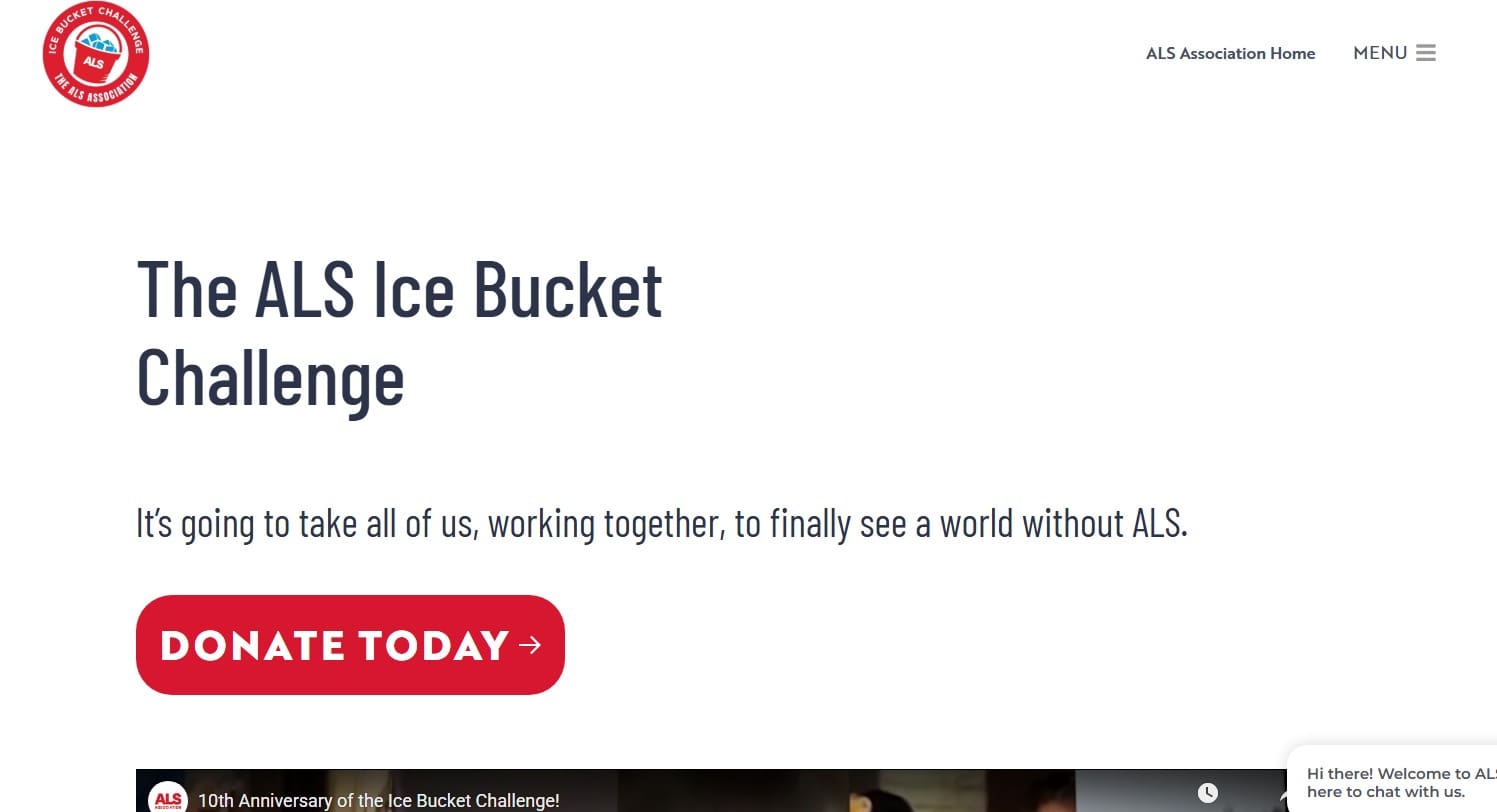
Participants filmed themselves dumping ice water over their heads, posted the video on social media, donated, and nominated others to do the same. The challenge spread quickly across platforms because it was visual, participatory, and easy to share.
Result:
The campaign raised over $115 million for ALS research.
Why it worked for social media promotion:
- Content was highly visual and native to social platforms
- Participation was public and repeatable
- Nominations created built-in sharing loops
- Promotion came from individuals, not the organization
Tip 3: How to promote a fundraiser through email
Email is the highest converting channel for fundraisers, with 33% of donors saying that email is the tool that most inspires them to give (29% social media).
Why?
People who open your emails already know you, which makes email one of the most reliable channels for fundraising, if it’s used correctly. It’s where interest turns into action.
Leverage recurring donors
Start with your warmest audience first: past donors, volunteers, parents, alumni, or members. These are the people most likely to give without needing heavy persuasion.
📍 Did you know:
50% recurring donors make additional gifts
If you segment them right and send a personal appeal, your loyal donors will be more than happy to make additional donations!
A strong fundraiser email is simple:
- A clear subject line that signals urgency or impact
- One short paragraph explaining why the fundraiser exists
- A direct ask with a single donation link
Avoid overloading emails with multiple CTAs or long backstories. Clarity beats creativity here.
Pro tip: Don’t stop at one email. Follow-ups are where most donations come from. A mid-campaign update (“We’re halfway there”) and a final reminder close to the deadline often outperform the initial send.
Tip 4: How to promote a fundraiser via text
Text is the most direct fundraising channel you have. No feeds, no algorithms, no distractions. If someone opens your message, they’re already one tap away from donating.
You can promote a fundraiser via text in three ways:
Share the fundraiser as a direct link or QR code
This is the simplest approach. You send a donation link via messaging channels, email, and supporters tap through to give.
This works best when:
- The fundraiser has been mentioned on social media or email beforehand
- The message is short and time-bound
Keep the text clear and minimal, one sentence of context and one link. Anything longer lowers clicks.
Use Text-to-Give tools for campaigns and events
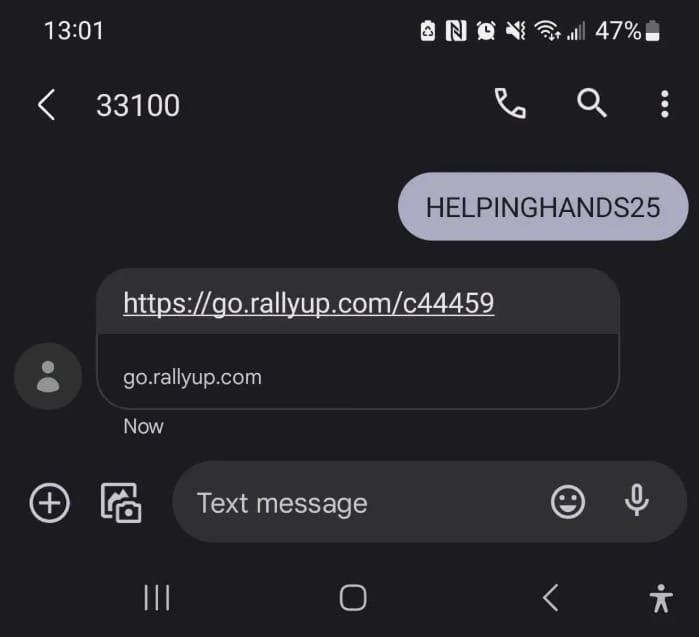
Text-to-give tools let supporters donate by texting a keyword to a short code.
This method works best when:
- You’re promoting during an event or announcement
- People are hearing the ask in real time
- Speed and simplicity matter
You can enable Text-to-Give on your RallyUp campaign or donation page by simply toggling a button and adding your trigger keyword.
Note: Text is a trust-based channel. Do not cold-text donation links to strangers. Only text people who opted in; always include opt-out language; follow local regulations.
That’s how messages get ignored, or worse, reported as spam. Best practice is to keep texts limited to your existing circle, event attendees, volunteers, or a local community that already knows the cause.
Allow a peer-to-peer fundraising link
Peer-to-peer fundraising is one of the most effective ways to promote a fundraiser. Instead of messages coming from an organization, they come from friends, parents, volunteers, or team captains sharing the donation link directly.
This works because:
- The trust is already there
- Messages feel personal, not promotional
- Small networks convert better than cold lists
Case study: Peer-to-peer text promotion through a community event
Lifting Little Hands, via the RallyUp platform, used peer-to-peer promotion to drive participation and donations for its annual 5K Walk/Run for Childhood Cancer.
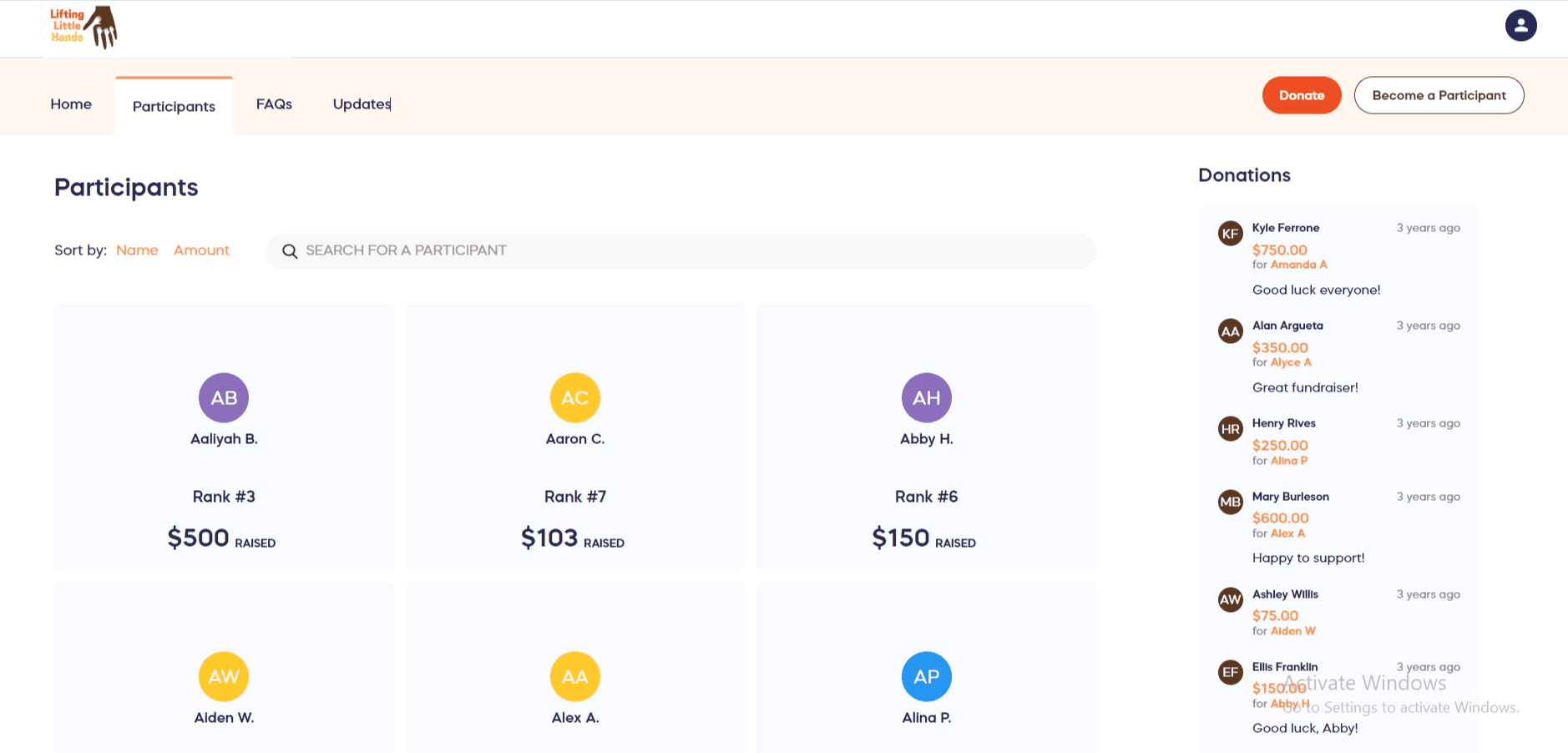
The fundraiser encouraged walkers and runners to share the event and donation links directly with friends and family, often through personal texts and messages.
This worked because the message didn’t feel like a mass appeal. It came from the participants themselves, who were emotionally invested in the mission, helping children and families going through cancer treatment.
Why this worked for text-based peer promotion:
- Messages came from known contacts asking to support them more than the cause
- The ask was tied to a clear action (walk, donate, support)
- Local and personal context made sharing feel natural
Tip 5: How to promote an in-person fundraiser
In-person promotion shines at galas, fundraisers, school events, and community gatherings because giving feels social, not transactional.
This is where structure matters. A casual verbal ask helps, but live moments bring in the biggest results.
For example, for galas and events, promotion works best when donations are:
- Visible (people see others giving)
- Guided (clear moments to participate)
- Frictionless (no forms, no confusion)
Tease your bidding items
Tease auction or raffle items in flyers and posters in your locality so attendees know there’s something tangible to participate in. This gives people an extra reason to attend and brings in supporters who prefer bidding over direct donations.
Promote hybrid events as “attend from anywhere”
Hybrid events expand your reach beyond the room. Promotion should clearly state that remote attendees can still participate in auctions, see live progress, and engage in real time, without being physically present. This removes location as a barrier.
Engage sponsors and major supporters in person
In-person events are also a promotional opportunity with your most valuable supporters.
Use the event to personally invite sponsors, major donors, and partners into the fundraiser. Explain the impact, ask for visibility or matching support, and encourage them to help spread the word within their own networks.
Keep links handy
Pair every door-to-door moment with an immediate action. QR codes, text-to-give, or on-screen prompts, and don’t assume people will “do it later.” They won’t.
Tip 6: Promote your fundraiser through partners and communities
Partner-led promotion works best when there’s audience overlap. Sponsors, schools, local businesses, and community groups help your fundraiser reach people who already trust the messenger.
Make it easy for partners to share
Don’t ask partners to figure out what to say. Give them a short description, a donation link, and a suggested message they can personalize. Promotion works faster when friction is removed.
Engage sponsors beyond logo placement
When sponsors are involved, promote their participation and ask them to share the fundraiser internally or publicly. A single sponsor share can open up an entirely new donor network.
Read everything you need to know about corporate sponsorshipUse community and local groups
Local parent groups, volunteer networks, and neighborhood communities can outperform public social posts. This especially works when the cause is close to their heart.
Avoid over-sharing in the wrong places
On the opposite spectrum, relevance matters more than reach. A fundraiser shared without context feels intrusive. A fundraiser shared by the right person, with a clear reason, feels like an invitation.
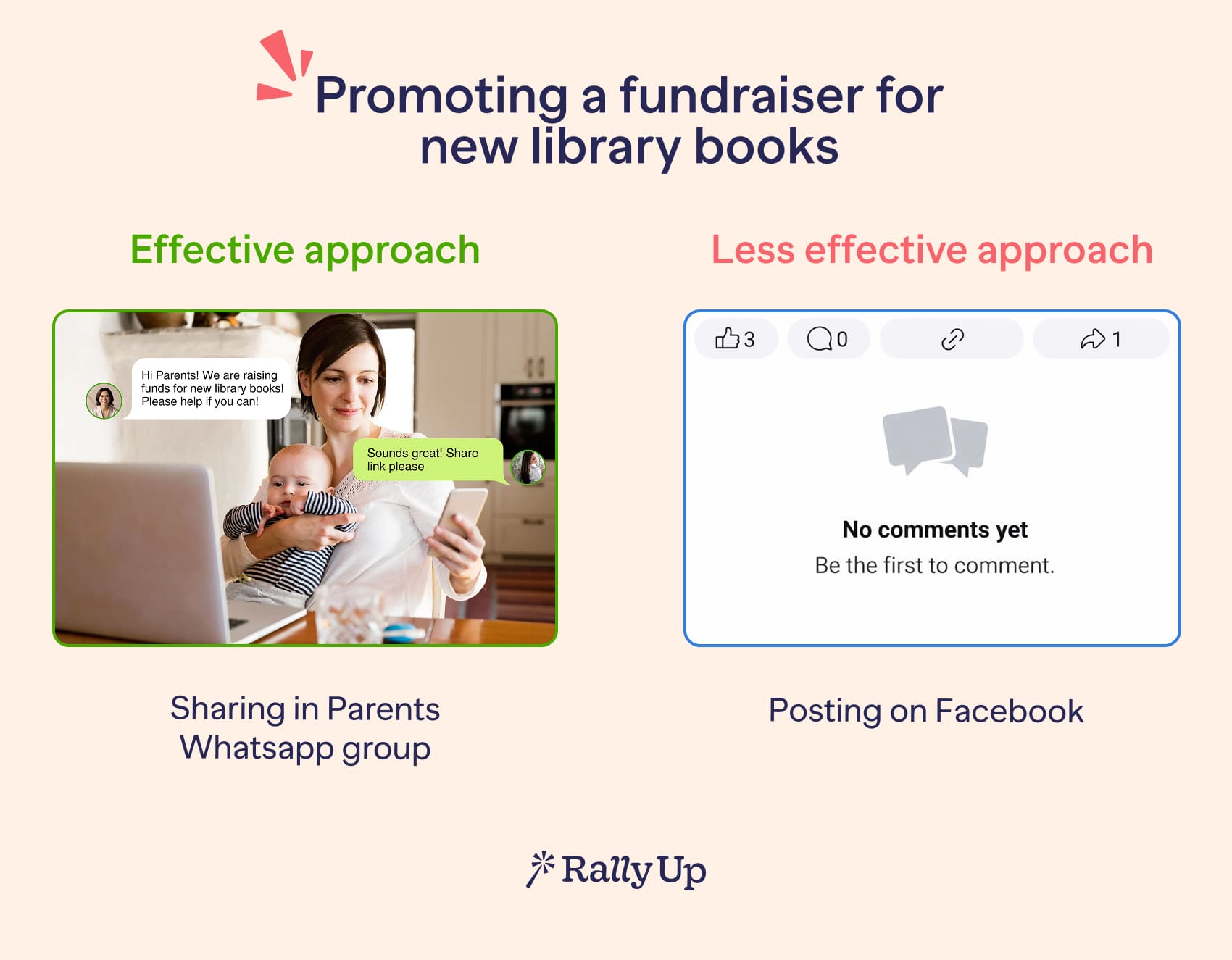
For example,
A school board member will gain more traction sharing a fundraiser for new library books in a parent WhatsApp group than by posting a fundraiser link on Facebook with the caption “Please support our cause and show up for kids”.
Case study: Charity: Water’s September campaign
Charity: Water built one of the most effective community-driven fundraising campaigns by flipping how promotion worked.
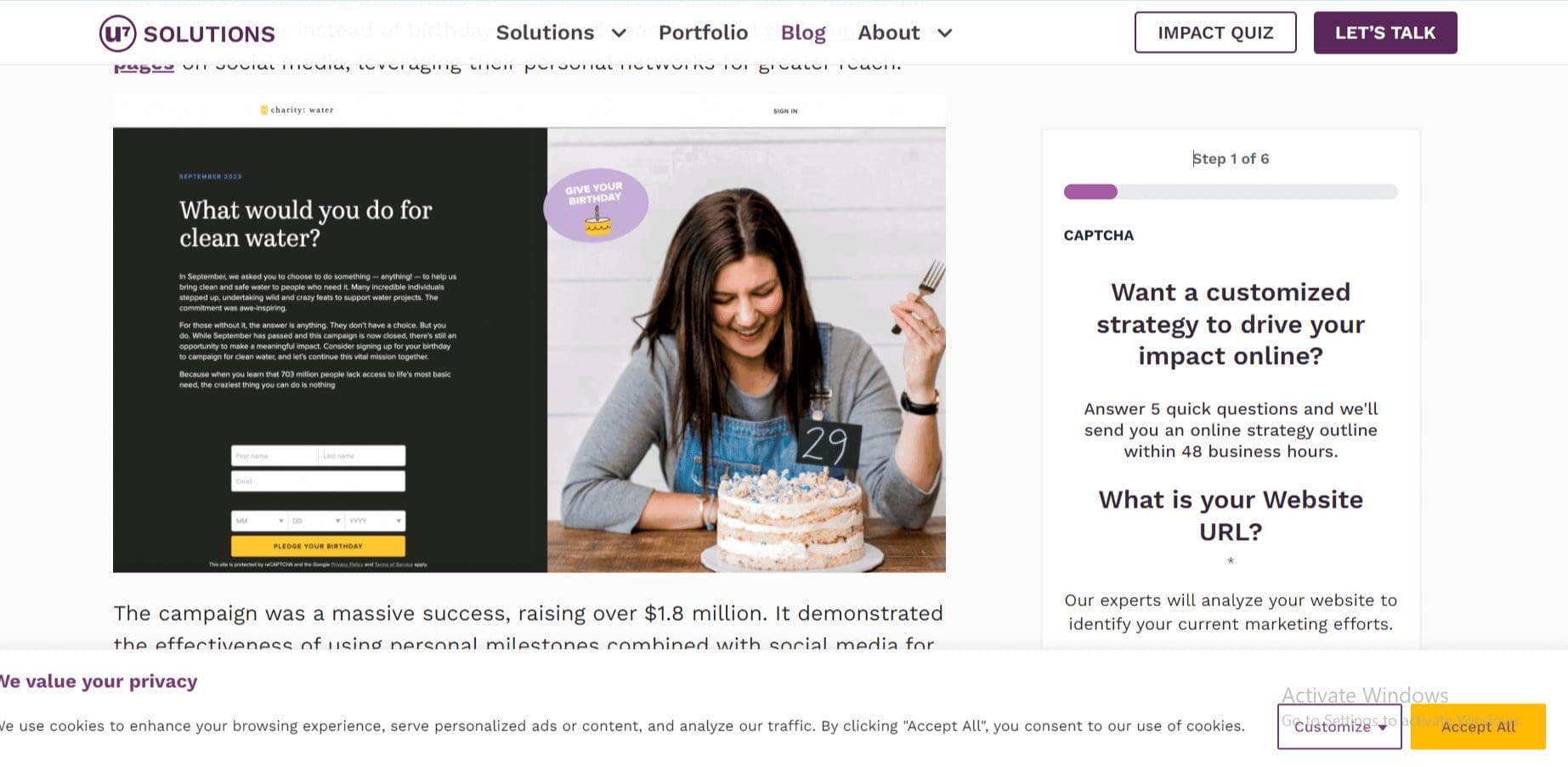
Instead of relying on brand-led promotion, their September Campaign encouraged people celebrating birthdays to ask friends for donations instead of gifts. Participants created personal fundraising pages and shared them within their own communities and networks.
Result:
The campaign raised $1.8 million in a single run, driven largely by peer-led sharing.
Why it worked for community promotion:
- Promotion came from individuals, not a brand
- The ask was tied to a natural, personal moment
- Sharing felt normal and social, not transactional
Tip 7: Use paid promotion strategically
Paid promotion should solve a specific problem, not act as a blanket visibility fix. Nonprofit spending for paid digital ads increased by 11% in 2024. It has proven to be a working method.
Here are some tips to begin a paid promotion strategy for nonprofits:
1. Use paid promotion to extend what’s already working
Marketing and fundraising go hand in hand when it’s used to extend reach, not create interest. If a post, email, or event announcement is already getting engagement organically, paid promotion can help it travel further. If nothing is resonating yet, ads won’t fix that.
2. Use Google Ads, especially if you’re eligible for ad grants
Nonprofits should prioritize Google Ad Grants, which provide up to $10,000/month in free search ads through Google Ads.
These ads appear when people are actively searching for causes, events, or missions related to your fundraiser, making search one of the highest-intent paid channels. This is best used for:
- Event-specific searches
- Branded nonprofit keywords
- Mission-aligned queries
The grant is free, but it comes with restrictions, like poorly managed accounts often underperform. Many nonprofits choose an experienced fundraising marketing agency to fully use the budget.
Check out 65 more free resources for nonprofits [Coming soon]3. Use Meta and Instagram Ads for fundraiser visibility
Fundraising marketing with Meta Ads (Facebook and Instagram) is most useful for:
- Promoting fundraising events
- Supporting major campaign moments
- Retargeting people who have already engaged
Their strength lies in audience targeting, by location, interests, and behavior, rather than cold discovery. These ads work best when tied to specific moments like GivingTuesday or campaign deadlines.
4. Use LinkedIn Ads for sponsors and corporate giving
LinkedIn Ads make sense when the goal is to reach:
- Corporate sponsors
- CSR teams
- Professional decision-makers
They’re less effective for mass fundraising, but useful for campaigns involving matching gifts, partnerships, or sponsor visibility.
Case study: Using Google Ad Grants to promote a fundraiser and website
We Care Animal Rescue is a Napa Valley-based nonprofit funded entirely through donations and fundraising. After launching a new website, their goal was to make it easier for the local community to donate, volunteer, and engage.
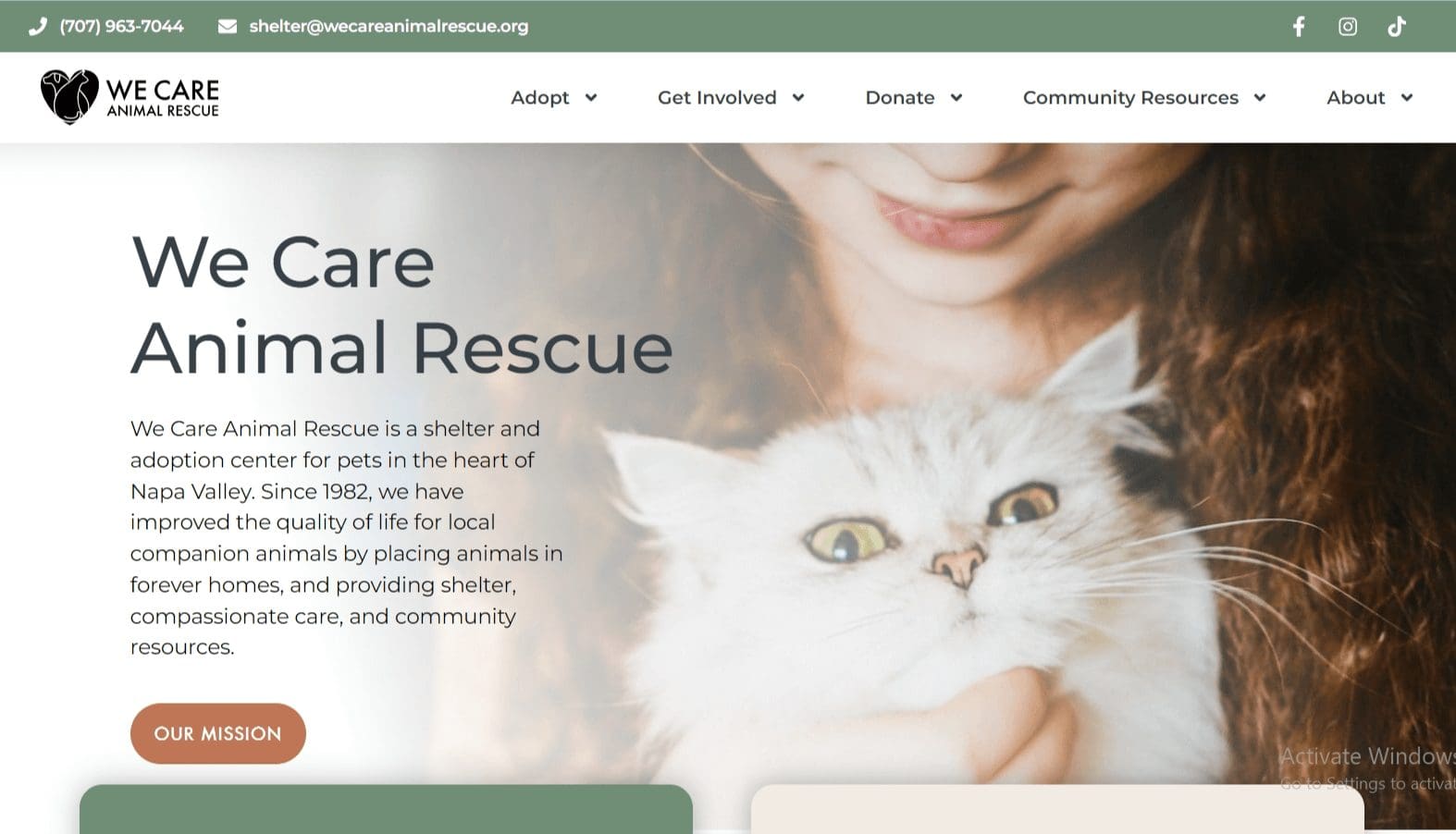
To promote the new site and support fundraising efforts, the team used Google Ad Grants. The focus was to show up when people were actively searching for animal rescue, volunteering, or donation-related queries in their area.
The results were immediate:
- 350% increase in website activity
- 125% increase in online applications
- Ads began driving traffic the same day they were launched
Instead of trying to convince cold audiences to care, the campaign worked because it reached people who were already looking for ways to help.
Tip 8: Use visuals and video to promote your fundraiser
Most people don’t read fundraiser posts line by line. They skim, scroll, and decide in seconds whether to stop. That’s why visuals and video play such a big role in how a fundraiser spreads.
Use one strong hero visual across all channels
Pick a single image that represents the cause clearly and emotionally. Use it everywhere: social posts, emails, event pages, so people instantly recognize the fundraiser when they see it again.
Use short videos to explain the fundraiser quickly
A 30-60 second video explainer about what the fundraiser is performs better than long written copy. These don’t need to be professionally made – authentic videos from organizers or volunteers work best.
Reuse visuals instead of creating new ones every time
Consistency beats variety. Reusing the same visuals across channels builds familiarity, which makes people more likely to stop, click, and share.
Show people or impact
Photos or videos that show who or what the fundraiser supports are easier to understand than long explanations. If someone gets your cause in two seconds, they’re more likely to engage.
Tip 9: Promote updates and share progress regularly
Most fundraisers get stuck because nothing new happens after the launch. Progress updates fix that by giving people a reason to notice and act again.
Share milestones
Instead of repeating the same ask, share what’s changed: “We’re 40% there,” “Halfway in 5 days,” or “One sponsor just matched donations.” New information earns attention.
Turn updates into reasons to act
Tie each update to a clear next step. Progress without an ask is just noise. Add one line that explains why now is the moment to give or share.
Use updates across channels
The same update can live in multiple places:
- A short social post
- A quick email to warm supporters
- A text reminder during key moments
Consistency beats novelty here.
Save the strongest update for the final push
The last few days deserve their own update. Remind people how close you are with a fundraising thermometer visual and what happens if the goal is met. Urgency works best when progress is visible.
Tip 10: Thank supporters and keep the momentum going
Research from Cornell University shows that publicly acknowledging supporters doesn’t reduce motivation; it often increases participation and visibility.
In multiple experiments and a real-world field study, researchers found that highlighting thank-you incentives and recognition increased engagement, even among highly motivated donors. Importantly, it did not backfire or “cheapen” the act of giving.
What the research found
Most large charities offer thank-you incentives, but rarely promote them
- Making recognition or thank-you gifts more visible increased the likelihood of giving
- Highly motivated donors were not discouraged by public acknowledgment
In a field study with over 22,000 alumni donors, publicly pairing gratitude with a small thank-you gift led to higher engagement without reducing donor trust.
How to use this in promotion
Public thank-yous work because they act as social proof. When people see names, groups, or sponsors being acknowledged, it signals that the fundraiser is active and supported.
Instead of a generic “Thanks, everyone”:
- Thank a sponsor by name
- Acknowledge a volunteer group
- Highlight community participation
These posts tend to get more reaction and shares than standard updates.
See how to personalize your thank you notes for more impactFundraiser promotion checklist
By the time a fundraiser launches, most promotion decisions are already locked in, for better or worse. This checklist is meant to catch the gaps before that happens.
Use it as a final pre-launch review to make sure your fundraiser is easy to understand, easy to share, and supported across every channel you plan to use.
Get my fundraiser promotion checklistPromote your fundraiser with RallyUp
RallyUp – an end-to-end fundraising platform is built to support most of the promotion methods covered in this guide, without forcing you to stitch together multiple tools.
Promotion works best when everything points to one clear destination. With RallyUp, every campaign and its related fundraisers live on a single, centralized page.
That means:
- Run in-person and hybrid events with features like paddle raises, silent auctions, and live displays that can be promoted before and during events
- Enable text-to-give and mobile-friendly giving for high-intent moments
- Support peer-to-peer and community sharing so supporters can promote on your behalf
- One shareable link you can use across social, email, text, and partner outreach
- One QR code that works for in-person events, posters, and signage
- One place where supporters land, no confusion, no dead ends
Final thoughts: Turning good causes into supported ones
Successful fundraising promotion isn’t about finding a magic channel. It’s about making it easy for the right people to hear about your fundraiser, understand it quickly, and act without friction.
When your message is clear, your promotion is intentional, and your tools support – not slow down – the process, fundraising becomes far more predictable.
Combine strong promotion with the right setup, and you’re no longer hoping people will show up. You’re giving them every reason to.
That’s how fundraisers grow. Consistently, not accidentally.
Run and promote your fundraisers using RallyUp and reach out to a wider donor base.
FAQs on how to promote a fundraiser
Focus promotion on warm audiences first (past donors, community groups, partners), then amplify what’s already getting engagement. Momentum beats reach.
Give them a personal reason and make it easy. People fundraise more when the ask is tied to identity or moments (birthdays, events) and when they’re given share-ready links and copy.
You can’t force virality, but you can design for sharing. Campaigns spread when participation is public, repeatable, and visual, with a simple action others can copy and pass on quickly.
Now that you’ve seen it in action, are you ready to start fundraising?
Get Started