What fundraiser should we run if we have only one week?
In this article
- Challenge-based viral fundraising
- What is the quick answer? Run a one-week online giving challenge
- Why is online fundraising the best default when time is short?
- How do you choose your fundraiser based on what you already have?
- What does a practical 7-day fundraiser plan look like?
- What compliance checks should you run before you launch?
- What should you NOT run if you only have one week?
- What is the one-sentence test?
- Frequently asked questions
- So, what fundraiser should you run?
You only have one week to raise money.
With seven days, the best fundraiser is the one with the fewest dependencies.
TL;DR
If you only have one week to raise money, run a one-week online giving challenge — one goal, one deadline, one ask — because it has the fewest dependencies and can launch the same day.
Quick answers:
- Online is the best default because it launches the same day with no printing, permits, or vendors — and donors can give in seconds from a phone.
- Choose your format by what you already have: a great prize → raffle; supporters ready to help → peer-to-peer sprint; an event this week → a live appeal or Fund-a-Need; a sponsor or major donor → a matching-gift challenge. With nothing prepared, run a simple donation page.
- Run a tight 7-day plan: set one goal and message (Day 1), build the page (Day 2), announce it (Day 3), share a story (Day 4), ask your inner circle to spread it (Day 5), add a mini-challenge (Day 6), and make a hard deadline push (Day 7).
- Check compliance before you launch: confirm your nonprofit status and state charitable-registration rules, and avoid anything that needs gaming permits or licenses (like a raffle) if your state doesn’t allow online ticket sales.
For most organizations, that means a simple online giving challenge: one goal, one deadline, one reason to give, and one place where supporters can take action.
If you already have a great prize, you can make it a raffle fundraiser.
Or if you already have an event on the calendar, you can add a live appeal or paddle raise.
If you have enthusiastic supporters ready to help, you can add peer-to-peer fundraising.

Challenge-based viral fundraising
Movember / Ice Bucket style
For example, large-scale campaigns like ALS Ice Bucket Challenge and Movember succeeded because of simple participation loops.
Core mechanics:
- One simple action (do a challenge, get nominated, donate)
- Must be easy to copy and share
- Social pressure + visibility drives rapid spread
7-day adaptation:
- “Do X or donate”
- Post daily progress updates
- Tag friends each day to keep it moving
“Birthday / personal milestone fundraising” model
A widely used proven format is turning a short time window (like a week or birthday week) into a donation event.
Real pattern from successful campaigns:
- People ask for donations instead of gifts
- They activate their personal network heavily in a short burst
- Strong results come from direct messages + reposts
Why it works in 7 days:
Everyone already understands the occasion → no explanation needed.
What ALL successful 7-day fundraisers have in common
Across studies + real campaigns, the pattern is consistent:
- Strong emotional hook (instant understanding)
- Heavy social sharing (especially days 1–3)
- Repeated posting (not just one announcement)
- Clear goal + urgency
- Simple participation (donate in 1 click, no complexity)
What is the quick answer? Run a one-week online giving challenge
A one-week online giving challenge is exactly what it sounds like. You set a short-term fundraising goal, explain why it matters, and ask your community to help you reach it before the deadline.
For example:
“We’re raising $10,000 by Friday to replace the playground equipment.”
Or:
“Help us fund 1,000 meals for local families this week.”
Or:
“We have seven days to send 30 students to camp.”
This format works because it is easy for supporters to understand. They do not need to buy tickets, attend an event, wait for an auction to close, or figure out how to participate. They just need to visit your campaign page, make a gift, and share it with someone else.
A crowdfunding campaign is a natural fit for this kind of short fundraising sprint because it gives your goal a central home. Your supporters can see what you are raising money for, how close you are to the goal, and how their gift helps move the campaign forward.
The formula is simple:
One goal. One deadline. One ask.
That is the fundraiser to run when you only have one week.
Why is online fundraising the best default when time is short?
When you are working with a one-week timeline, every extra step matters.
A new in-person event requires logistics. An auction requires items, photos, descriptions, and promotion. A merchandise fundraiser may require design, production, and fulfillment. A large volunteer-led fundraiser requires coordination.
An online giving challenge is different. It can be built around what you already have: your story, your supporters, your email list, your social channels, and your fundraising goal.
Online giving also matches how people already respond to urgent campaigns. According to M+R’s 2026 Benchmarks, online revenue for the average nonprofit increased 15% in 2025, and one-time online revenue increased 17%. The same benchmark report found that the final week of the year generated 10% of annual online revenue, showing how powerful deadline-driven giving moments can be (M+R Benchmarks 2026, via NonProfit PRO).
That does not mean every one-week fundraiser will automatically succeed. It does mean that urgency, convenience, and a clear digital giving path can work together.
Your supporters should be able to open your campaign on their phone, understand the need in a few seconds, and give without friction. RallyUp’s donation pages are built for that kind of simple, mobile-friendly giving experience.
How do you choose your fundraiser based on what you already have?
The biggest mistake organizations make with a last-minute fundraiser is choosing an idea that depends on things they do not already have.
With only one week, do not ask, “What would be fun?” Ask, “What can we launch well with what we already have?”
Here is the simplest way to decide.
| If you have… | Run this | Why it works in 7 days |
|---|---|---|
| Nothing prepared | Donation page campaign | Lowest friction; built from your story and email list |
| A clear dollar goal + impact levels | Crowdfunding campaign | Rallies people around a visible goal and progress bar |
| A prize people want | Raffle | Quick excitement — only if prize + rules are ready |
| Engaged supporters | Peer-to-peer sprint | Expands reach through your supporters’ networks |
| An event already on the calendar | Fund-a-Need / Paddle Raise+ | Guests are already gathered and emotionally connected |
| A sponsor or major donor | Matching-gift challenge | Adds urgency and doubles perceived impact |
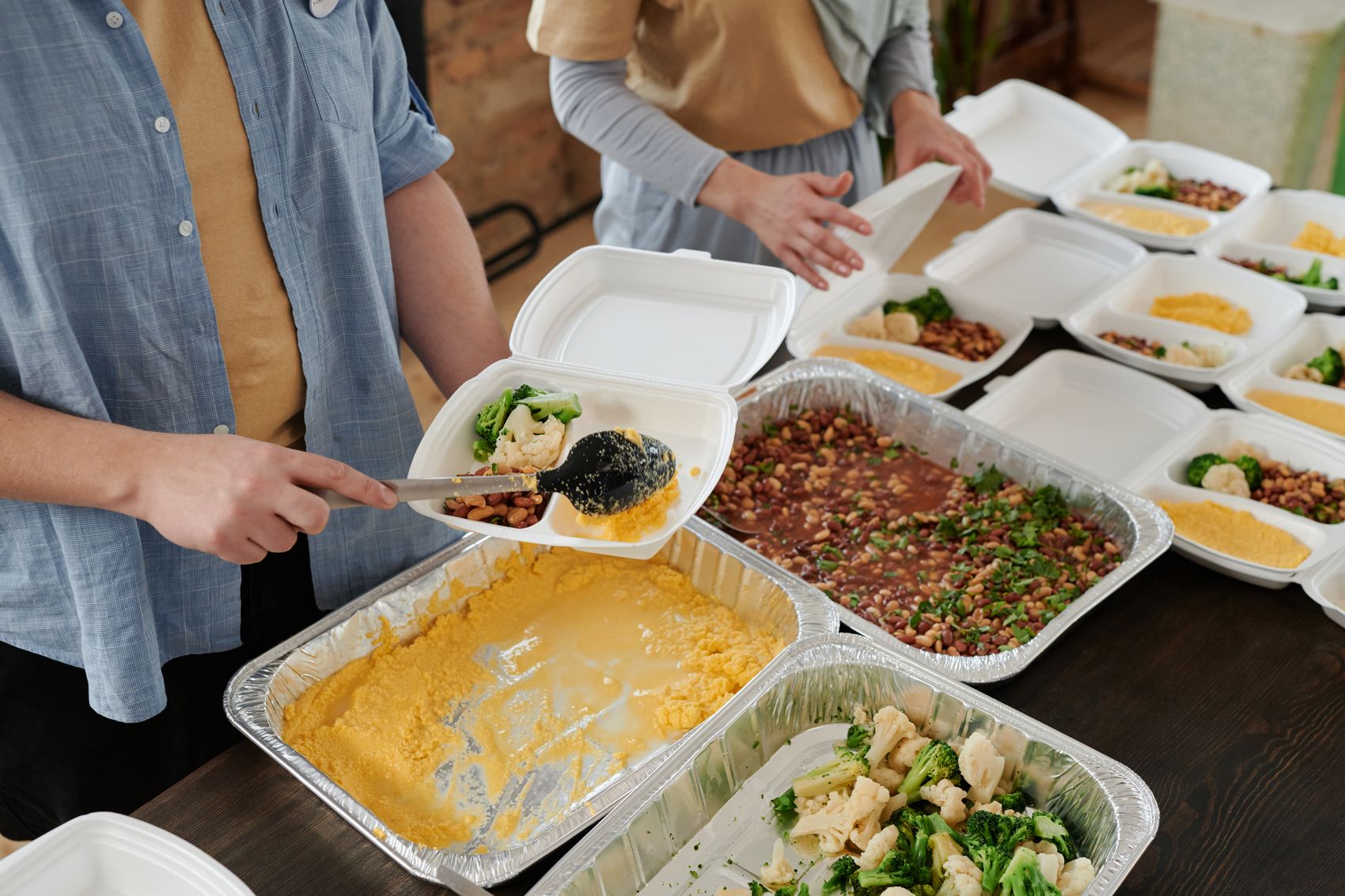
If you have nothing prepared: run a donation page campaign
If you do not have a prize, sponsor, event, or volunteer team ready, keep the fundraiser as simple as possible.
Launch a donation page campaign and focus all of your energy on the message.
Your campaign should answer three questions:
What are we raising money for? Why does it matter right now? How can someone help today?
For example:
We have one week to raise $5,000 for new classroom supplies. Every $50 gift helps provide materials for one student. Please donate today and share this campaign with someone who cares about our school.
This is the lowest-friction option. It works especially well for emergency needs, school expenses, animal rescue costs, community projects, faith-based campaigns, medical-related support, team expenses, and deadline-driven nonprofit appeals.
The key is specificity. “Support our organization” is easy to ignore. “Help us raise $5,000 by Friday to provide emergency care for 12 rescued dogs” gives people a reason to act now.
If you have a specific goal: run a crowdfunding campaign
A donation page is great for simple giving. A crowdfunding campaign is ideal when you want to rally people around a visible goal. For more on getting a campaign live fast, see our guide to online fundraising.
Use crowdfunding when you can say:
- How much you need
- What the money will fund
- When you need it
- What different gift amounts make possible
For example:
- “$25 provides art supplies for one student.”
- “$50 covers one uniform.”
- “$100 funds one week of meals.”
- “$250 sponsors transportation for a family.”
- “$500 helps cover emergency care.”
These impact levels make the campaign feel tangible. Supporters are not just giving to a general fund. They are helping create a specific outcome.
RallyUp’s crowdfunding tools make this approach especially useful for a one-week fundraiser because you can create a branded campaign page, add giving levels, share updates, and keep donations moving toward one clear goal.
Speed and a clear goal can do a lot in a short window. USA Field Hockey raised $120,000 in just 10 days with a single RallyUp campaign — a roughly 300% increase over their prior effort — proof that a focused goal and a short deadline can move real money fast.
If you already have a great prize: run a raffle fundraiser
A raffle can be a strong one-week fundraiser if one important thing is already handled:
You already have a prize people want.
That prize could be:
- A donated gift basket
- Event tickets
- A vacation stay
- A local restaurant package
- A school spirit bundle
- A signed item
- A VIP experience
- A “principal for the day” prize
- A reserved parking spot
- A service donated by a local business
A raffle fundraiser can create quick excitement because the value is easy to understand. Supporters get to back a good cause and enter for a chance to win something appealing.
But raffles also need extra care. Raffle and gaming rules vary by location, and not every organization is eligible to run every type of prize-based fundraiser. The IRS notes that gaming activities can include raffles and lotteries, and these activities may be regulated by state and local law. Before launching, check what your state’s agencies allow for the online sale of raffle tickets through resources like the IRS overview of gaming for tax-exempt organizations (Publication 3079).
The practical rule is simple: if the prize and the applicable rules are ready, a raffle can work well in a week. If you still need to find the prize, confirm what your state permits, and understand the rules, choose a donation page or crowdfunding campaign instead. If you are unsure which prize-based format fits, our guide to sweepstakes vs. raffles vs. auctions breaks down the differences.
This information is provided for general informational purposes only and does not constitute legal advice. Laws change frequently. Consult a licensed attorney in your jurisdiction before running a fundraising event.
If you have supporters ready to help: run a peer-to-peer sprint
Sometimes your biggest fundraising asset is not a prize or an event. It is your people.
If you have board members, parents, alumni, volunteers, team captains, staff, or loyal donors who are willing to reach out to their own networks, a peer-to-peer fundraiser — where supporters create their own personal fundraising pages and raise money on your behalf — can help you expand quickly beyond your organization’s usual audience.
For a one-week timeline, keep the structure simple:
“Can 20 supporters each raise $250 in 7 days?”
That creates a $5,000 goal without asking one person to do everything.
Give each participant a short message they can copy, paste, and personalize:
I’m helping [organization] raise $5,000 this week for [specific need]. My personal goal is $250, and every gift helps us get closer. Please donate through my page and share it with someone who may want to help.
Peer-to-peer works best when participants do not have to invent their own campaign from scratch. Give them the goal, the story, the deadline, the link, and two or three sample messages. Then make it easy for them to share.
This is a good option when your community is already engaged. It is not the best choice if you have to spend the whole week convincing people to participate.
If you already have an in-person event this week: add a live appeal, Fund-a-Need, or Paddle Raise+
If your organization already has an event scheduled, you may not need a new fundraiser at all. You may just need a focused giving moment inside the event.
That could be a live appeal, Fund-a-Need (a live giving moment where you connect each donation amount to a specific program need), or Paddle Raise+ (RallyUp’s in-room giving tool where guests raise a paddle or give from their phones as the total climbs on screen).
This works because guests are already gathered. They are paying attention, they are emotionally connected, and they can respond together in the moment. If part of your audience is joining online, see how hybrid fundraising events let in-person and virtual supporters give side by side.
The best live giving appeals are specific. Instead of saying, “Please give what you can,” connect each gift amount to a real need:
- “$100 provides supplies for one classroom.”
- “$250 funds a week of meals.”
- “$500 covers emergency care.”
- “$1,000 sponsors a full program participant.”
Then make giving easy from the room. Guests should be able to donate from their phones, see progress toward the goal, and feel like they are part of a shared moment.
This is a strong one-week option only if the event already exists. Do not try to plan a brand-new gala, dinner, or large gathering from scratch in seven days.
If you have a sponsor or major donor: run a matching-gift challenge
A matching-gift challenge can add urgency to almost any one-week fundraiser.
The message is powerful:
“Every gift made by Friday will be matched up to $5,000.”
A match gives supporters a reason to act immediately because their gift feels like it can go further. It also creates a natural deadline and an easy progress update:
- “We have $2,000 left to unlock.”
- “We are halfway to the full match.”
- “Today is the last day to double your impact.”

But this only works if the match is already secured. If you have to spend most of the week finding a sponsor, negotiating details, and confirming the amount, it may slow you down.
Use a match as an accelerator, not as a requirement. A simple online giving challenge can still work without one.
What does a practical 7-day fundraiser plan look like?
Once you choose the right format, the next step is execution. Here is a realistic seven-day plan for a last-minute online fundraiser.
Day 1: Choose one goal and one message
Do not start by brainstorming 20 ideas. Start with one clear sentence:
“We are raising $X by [deadline] so we can [specific outcome].”
Examples:
- “We are raising $7,500 by Friday to send 30 students to camp.”
- “We are raising $3,000 this week for emergency vet care.”
- “We are raising $10,000 in seven days to replace damaged equipment.”
- “We are raising $5,000 by Sunday to fund meals for local families.”
Then write a short campaign story. It does not need to be long. It needs to be clear, human, and specific. Explain what happened, why the need matters, how much you need, and what donations will make possible.
Day 2: Build your RallyUp campaign page
Your campaign page should include:
- A clear headline
- A short explanation of the need
- A specific fundraising goal
- A deadline
- Suggested giving amounts
- Photos or video, if available
- A simple call to donate
- Social sharing options
Do not delay the launch because the page is not perfect. A clear campaign that goes live today is better than a polished campaign that launches after the deadline has passed. Your RallyUp campaign page becomes the central place where supporters can give, participate, and share.
Day 3: Announce the campaign
Send the first email. Post on your main social channels. Ask your staff, board, volunteers, or closest supporters to share the campaign personally.
Your announcement should be direct:
We have one week to raise [amount] for [specific need]. Every donation helps us [specific impact]. Please give through our RallyUp campaign today and share the link with someone who may want to help.
Keep the message short enough that people can understand it quickly. The goal is not to explain every detail of your organization. The goal is to move people to one action.
Day 4: Share a story, not just another ask
By the middle of the week, people have already seen the announcement. Now give them a reason to care more deeply.
Share:
- A story from someone affected by your work
- A quote from a participant, parent, volunteer, or staff member
- A short behind-the-scenes video
- A photo that shows the need
- A progress update connected to impact
For example:
We are 40% of the way to our goal. That already represents supplies for 16 students. Help us reach the next 10 by tonight.
The best updates make progress feel real.
Day 5: Ask your inner circle to share personally
Public posts help, but personal messages often do more.
On day five, ask your most engaged supporters to send the campaign directly to five people.
Give them a message they can use:
I’m supporting [organization] this week because [reason]. They are trying to raise [amount] by [deadline] for [specific need]. Would you consider making a gift or sharing the campaign?
This is where a one-week fundraiser can gain momentum. Your organization’s audience is limited. Your supporters’ combined networks are much larger.
Day 6: Create a mini-challenge
Give the campaign a fresh reason to be shared.
For example:
- “Help us get 50 donations today.”
- “We are $1,200 away from our next milestone.”
- “A donor will match gifts today up to $1,000.”
- “Can we raise the final 25% before tomorrow?”
- “Every gift today helps unlock the next impact level.”
A mini-challenge keeps the campaign from feeling repetitive. It gives supporters a new reason to act before the final deadline.
Day 7: Make the final deadline push
The final day should be clear and energetic.
Send a final email. Post morning, afternoon, and evening updates if your audience is active on social media. Ask your closest supporters to share one more time.
Use direct language:
Today is the final day to help us reach our goal. We are so close, and every gift matters. Please donate through our RallyUp campaign before midnight and share the link with one more person.
After the campaign ends, thank people quickly. Share the result, explain what happens next, and tell supporters what their generosity made possible. A strong thank-you is part of the fundraiser. It helps donors feel connected to the outcome, not just the ask.
What compliance checks should you run before you launch?
A fast fundraiser still needs the right checks.
This does not mean you need to turn your one-week campaign into a legal research project. It does mean you should pause long enough to understand which rules may apply.
If your organization has 501(c)(3) status, you’re all set. Fundraising for other nonprofit causes—such as schools or youth sports programs—is generally acceptable as well. If you have any questions about eligibility, the IRS guidance on state charitable solicitation registration is a useful place to begin.
Be especially careful with raffles, sweepstakes, and other prize-based fundraisers. Rules vary by location and organization type, so check what your state permits before you launch.
What should you NOT run if you only have one week?
Some fundraisers are excellent with enough planning time. They are just not ideal when you have seven days.
Avoid starting from scratch with:
- A full online auction that requires item collection, photos, descriptions, bidding rules, and promotion
- A gala, dinner, or large in-person event
- A merchandise fundraiser with design, production, shipping, or pickup logistics
- A fundraiser that requires permits, vendors, rentals, or printed materials
- A complicated campaign with too many ways to participate
- Any idea your team cannot explain in one sentence
An online auction can be a strong fundraiser when the items are ready and your team has time to promote them well. But if you are starting with nothing and only have one week, a simple giving challenge is usually the better choice.
The same is true for events. A live appeal can work beautifully inside an event that already exists. Planning a new event from zero is a different story.
What is the one-sentence test?
Before you launch, describe your fundraiser in one sentence.
Try this format:
“We are raising [amount] in seven days so we can [specific outcome], and supporters can give through our RallyUp campaign.”
For example:
“We are raising $10,000 in seven days to replace playground equipment, and every gift through our RallyUp campaign gets us closer.”
If the fundraiser takes three paragraphs to explain, it is probably too complicated for a one-week timeline. Your campaign should be easy to say, easy to share, and easy to support.
Frequently asked questions
What is the best fundraiser to run in one week?
The best one-week fundraiser is a one-week online giving challenge: a short-term goal, a clear reason to give, and a single campaign page where supporters can act. It has the fewest dependencies — no permits, vendors, or printed materials — so a small team can launch it the same day. Online revenue for the average nonprofit rose 15% in 2025 (M+R Benchmarks 2026), and deadline-driven moments drive a disproportionate share of giving. With RallyUp, your team can build and share a campaign page quickly.
Can you really raise money in just 7 days?
Yes. Short, urgent campaigns work because they pair a deadline with a clear ask. The 2026 M+R Benchmarks found that the final week of the year alone generates about 10% of annual online revenue (NonProfit PRO), showing how powerful a tight deadline can be. As one example, USA Field Hockey raised $120,000 in 10 days using a single RallyUp campaign. The key is a specific goal and an easy way to give.
What’s the difference between a donation page and a crowdfunding campaign?
A donation page is the lowest-friction option: supporters land, give, and share. A crowdfunding campaign adds a visible goal, a progress bar, and impact levels (“$50 covers one uniform”), which makes the ask feel tangible. Use a donation page when speed matters most; use crowdfunding when you can clearly say how much you need and what each gift funds. RallyUp supports both.
How do I make a one-week fundraiser successful?
Lead with specificity. “Support our organization” is easy to ignore; “Help us raise $5,000 by Friday to provide emergency care for 12 rescued dogs” gives people a reason to act now. Set one goal, one deadline, and one ask, then follow a simple daily rhythm: announce, tell a story, ask your inner circle to share, run a mini-challenge, and make a strong final-day push.
Do I need to register or check legal rules for a quick fundraiser?
Often, yes. Many states require charities to register before soliciting residents, and that can apply to email, social, text, QR codes, or your website (IRS state registration guidance). If donors receive goods or services in return for a gift, quid pro quo disclosure rules may apply (IRS quid pro quo contributions). When in doubt, run a simple donation campaign — it’s the easiest format to launch quickly.
So, what fundraiser should you run?
If you only have one week, run the fundraiser with the fewest dependencies.
For most organizations, that is a one-week online giving challenge built around a clear goal, a specific need, and a deadline.
Then add only what is already ready:
If you already have a prize, run a raffle. If you already have supporters ready to share, add peer-to-peer fundraising. If you already have an event, add Fund-a-Need or Paddle Raise+. If you already have a sponsor, add a matching-gift challenge. If you have none of those, keep it simple with a donation page or crowdfunding campaign.
You do not need months to rally your community. You need a clear message, a realistic goal, and a simple way for people to give. If you want more inspiration, browse dozens of fundraising ideas for nonprofits.
RallyUp helps organizations create online fundraising campaigns, collect donations, engage supporters, and keep everything organized in one place. When the deadline is close, that simplicity matters.
Ready to turn one week into real momentum?
Now that you’ve seen it in action, are you ready to start fundraising?
Get Started