Read-a-Thon, Walk-a-Thon, Bike-a-Thon: which A-thon raises the most?
TL;DR
For most organizations, a Walk-a-Thon raises the most in total — not because walking beats reading or biking, but because everyone can participate, and participation is what drives A-Thon revenue.
Quick answers:
- Walk-a-Thons win on totals because every age and ability can join — schools average around $23,765 raised online per event.
- Read-a-Thons win on simplicity: indoor, weather-proof, zero equipment, and loved by teachers — a typical school raises $5,000–$20,000 in two weeks.
- Bike-a-Thons win per participant: longer distances mean bigger per-mile pledges and strong sponsor appeal, but the equipment barrier keeps groups smaller.
- The real formula is participants × average pledge — pick the activity your community will actually show up for, then multiply reach with participant fundraising pages.
A Walk-a-Thon usually raises the most money in total, a Read-a-Thon is the easiest to run, and a Bike-a-Thon raises the most per participant. Which one is right for you comes down to one question: which activity will get the most people from your community to sign up?
All three are A-Thon fundraisers (events where participants collect pledges per unit of activity — laps walked, minutes read, miles biked). The pledge model is identical across formats. Only the activity changes — and with it, who participates.
Here’s how the three compare, with real numbers, so you can pick the right A-Thon fundraiser for your organization.
In this article
What is the quick answer? Walk-a-Thons usually raise the most
Walk-a-Thons raise the most in total for most organizations because they have the lowest barrier to entry: every age and every ability can walk, so participation is highest — and in A-Thon fundraising, participation is the number that matters most.
But “usually” isn’t “always.” If your participants are elementary schoolers in January, a Read-a-Thon will beat an outdoor walk. Let’s compare properly.

How do Read-a-Thons, Walk-a-Thons, and Bike-a-Thons compare?
Walk-a-Thons lead on total raised, Read-a-Thons lead on ease and cost, and Bike-a-Thons lead on dollars per participant. Here’s each one, ranked by total raised:
1. Walk-a-Thon: the biggest totals
The Walk-a-Thon is the highest-raising A-Thon for most organizations, and the reason is simple: it has the lowest barrier to entry. Every age and every ability can walk, so participation is highest — and in A-Thon fundraising, participation is the number that matters most.
The results back it up. Schools running Walk-a-Thons through online platforms average $23,765 raised online per event, with the typical student raising about $145, according to Get Movin’ Fundraising data. And at scale, the format can transform an organization’s results: RallyUp’s case studies include Make-A-Wish Southern Florida, which raised $138,884 with an A-Thon — a 463% increase in donations — enough to grant 27 wishes.
A Walk-a-Thon is the right call when:
- You want maximum, all-ages participation — students, parents, grandparents, staff
- You have a field, gym, blacktop, or nearby path to use
- You want a big shared community moment with strong sponsor visibility
The one thing to plan for: weather. Set a rain date or an indoor backup like a gym loop, and most of the risk disappears — pledges are collected online before event day anyway.
2. Read-a-Thon: the easiest money
The Read-a-Thon is the easiest A-Thon to run — no venue, no route, no equipment, no volunteers directing traffic, and no weather plan. Students read at home or in class, log their minutes, and sponsors pledge per page, per minute, or with a flat gift.
A typical school Read-a-Thon raises $5,000–$20,000 over one to two weeks, and because there’s almost nothing to spend on, nearly all of it is net revenue. Sycamore Elementary School raised $34,551 across two A-Thon campaigns on RallyUp — one school, two events, every student’s page working like a mini-fundraiser.
It’s the go-to format for elementary and middle schools and libraries: indoor, weather-proof, academically aligned, and championed by teachers because the fundraiser itself is a literacy program.
3. Bike-a-Thon: the most per participant
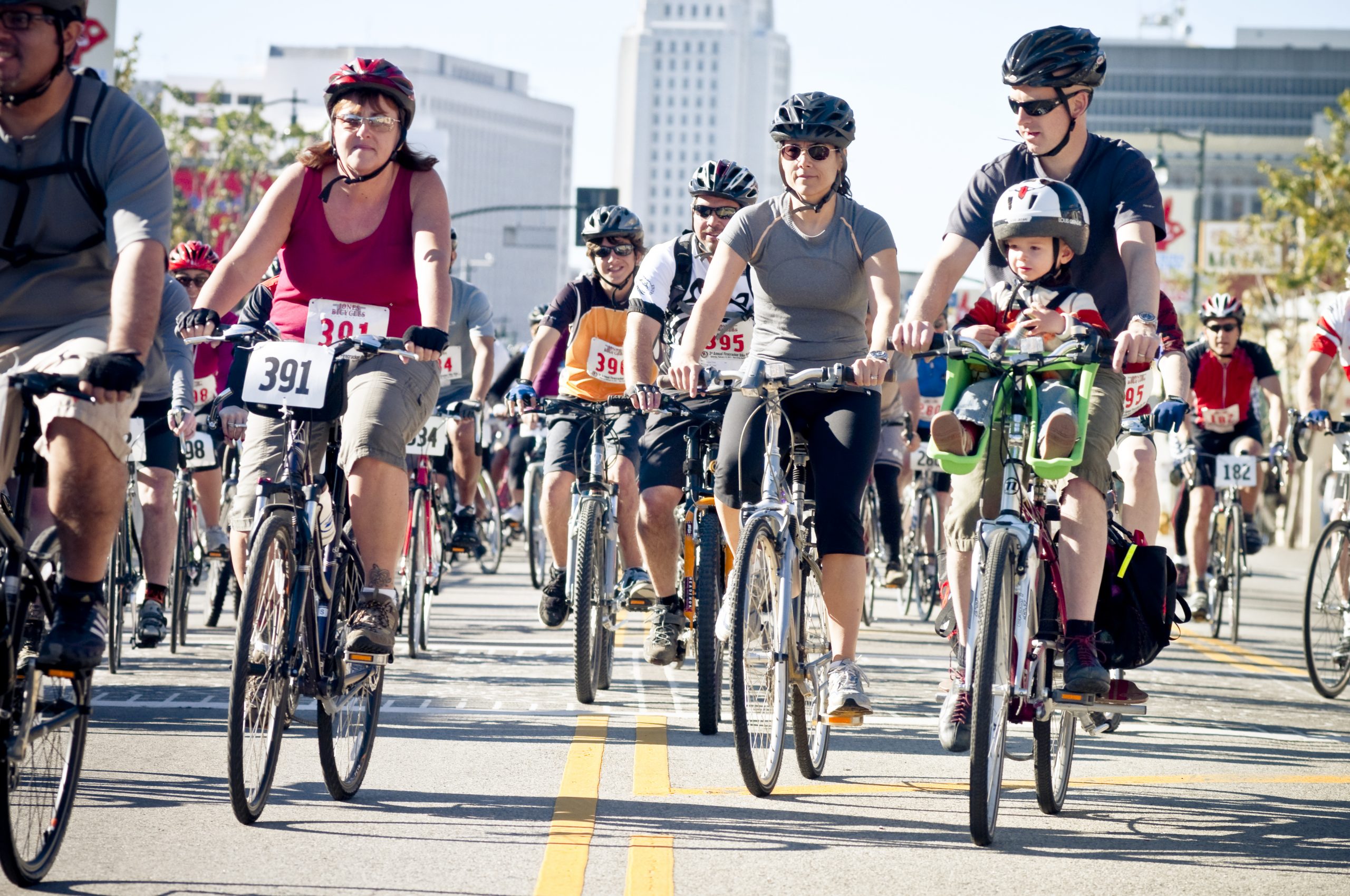
The Bike-a-Thon raises the most per participant. A rider covering 25–50 miles gives sponsors many more units to pledge against than a walker doing two miles, so per-mile pledges add up to bigger individual totals — and endurance events attract premium corporate sponsorships.
The tradeoff is participation. Bikes, helmets, route safety, and fitness requirements shrink the group, which is why Bike-a-Thons rarely beat Walk-a-Thons on total dollars. They shine for cycling clubs, sports organizations, and adult audiences who will ride far and fundraise hard.
Here’s the full side-by-side:
| Walk-a-Thon | Read-a-Thon | Bike-a-Thon | |
|---|---|---|---|
| Typical results | $5,000–$25,000+ per event | $5,000–$20,000 over 1–2 weeks | Smaller groups, higher per-rider totals |
| Who can join | Everyone — all ages and abilities | Every student, K–12 | Riders with bikes and helmets |
| Weather risk | Yes — plan a rain date | None — fully indoor | High — routes and safety depend on it |
| Effort to run | Medium — route, volunteers, event day | Low — no venue, no equipment | High — route planning, safety, support stops |
| Best for | Schools, PTAs, community nonprofits | Elementary and middle schools, libraries | Sports clubs, cycling communities, adults |
Notice what the table is really saying: the “winner” depends on which constraint matters most to you — total dollars, ease, or per-person impact. A Walk-a-Thon with 100 walkers averaging $50 raised each brings in about $5,000, while events with 500+ walkers and corporate sponsors can clear $25,000, according to CharityAuctions benchmarks. The activity didn’t change between those two events — the participation did.
What actually decides how much an A-Thon raises?
Three numbers decide your A-Thon total: how many people participate, how many sponsors each participant recruits, and the average pledge. The activity itself matters far less than these three levers.
Pledges come in two forms:
- Per-unit pledges — “$1 per lap,” “$10 per 100 pages,” “$2 per mile.” These build excitement because the total grows with the effort.
- Flat donations — a fixed $25 regardless of laps or pages. Simpler for donors who just want to give.
The highest-raising A-Thons offer both. On RallyUp, the A-Thons Component supports per-unit and flat pledges for anything you can count — laps, minutes, pages, miles, even hotdogs eaten — and every participant gets their own fundraising page through Peer-to-Peer fundraising, so each student or rider reaches their own circle of family and friends.
That per-participant reach is why small organizations post outsized numbers — it’s the same engine behind Sycamore Elementary’s back-to-back campaigns.
Which A-Thon should your organization pick in 2026?
Pick the A-Thon your community can join with zero friction. Here’s the decision, org by org:
- Elementary or middle school → Read-a-Thon. Indoor, weather-proof, no equipment, and it doubles as a literacy program teachers will champion. Our guide to running a Read-a-Thon right covers the setup.
- PTA or community nonprofit that wants a big shared moment → Walk-a-Thon. Highest participation, all-ages event day, and strong sponsor visibility.
- Sports club, cycling community, or adult audience → Bike-a-Thon. Fewer participants, but longer distances support bigger per-mile pledges and premium sponsorships. If you’re raising for a team, see the 4-week, $5,000 sports team fundraiser plan.
- Not sure, or short on time → run the simplest one your people will join. A Read-a-Thon can launch this week with nothing but a sign-up page — and if a week is genuinely all you have, here are one-week fundraiser options too.
One more move worth knowing: many schools run a Walk-a-Thon in one semester and a Read-a-Thon in the other — two fundraisers a year without doubling the work. If you’re new to running campaigns online, our online fundraising guide covers the basics.
So, which A-Thon raises the most?
The one with the most participants — and for most organizations, that’s the Walk-a-Thon.
But don’t overthink the activity. The pledge model is the same whether people walk, read, or ride. Pick the format your community joins without hesitation, offer both per-unit pledges and flat donations, and give every participant their own fundraising page so each one reaches a new circle of donors.
RallyUp’s A-Thons Component handles all of it — any activity you can count, both pledge types, automatic totals, and Peer-to-Peer pages for every participant. Set it up once and let your walkers, readers, or riders do what they do best.
Whichever your community picks, you can sign up on RallyUp for free and have your A-Thon page live the same day.

Frequently asked questions
Which A-Thon fundraiser raises the most money?
Walk-a-Thons usually raise the most in total because every age and ability can participate, and participation is the biggest driver of A-Thon revenue. Schools running Walk-a-Thons average around $23,765 raised online per event (Get Movin’ Fundraising). Read-a-Thons and Bike-a-Thons can beat that in the right community — the pledge model is identical, so the format that gets the most sign-ups wins. RallyUp’s A-Thons Component supports all three with the same setup.
How much does a Walk-a-Thon raise?
A typical school or community Walk-a-Thon raises $5,000–$25,000, depending on participant count and sponsors: about 100 walkers averaging $50 each brings in $5,000, while 500+ walkers with corporate sponsors can clear $25,000 (CharityAuctions). At the high end, Make-A-Wish Southern Florida raised $138,884 — a 463% increase — with a RallyUp A-Thon campaign. Participant fundraising pages are the multiplier: each walker reaches their own network.
How much does a Read-a-Thon raise?
A typical school Read-a-Thon raises $5,000–$20,000 over one to two weeks, with per-student averages commonly in the $35–$150 range depending on how many sponsors each student recruits. Because there’s no venue, equipment, or weather risk, nearly all of that is net revenue. Sycamore Elementary School raised $34,551 across two A-Thon campaigns on RallyUp — proof a single school can post big numbers with back-to-back events.
Do Bike-a-Thons raise more per participant?
Often, yes. A rider covering 25–50 miles gives sponsors many more units to pledge against than a walker doing 2 miles, so per-mile pledges add up to larger individual totals — and endurance events attract premium corporate sponsorships. The tradeoff is participation: bikes, helmets, safety planning, and fitness requirements shrink the group. Bike-a-Thons work best for cycling clubs and adult audiences; on RallyUp you can track miles per rider with per-unit pledges automatically.
How do A-Thon pledges work?
Sponsors either pledge per unit of activity or give a flat donation. Per-unit example: a grandparent pledges $10 per 100 pages, the student reads 500 pages, the pledge totals $50. Flat example: a neighbor gives $25 regardless of results. The highest-raising A-Thons offer both options, because some donors love watching the total grow and others just want to give once. RallyUp’s A-Thons Component handles both pledge types and calculates totals automatically as results come in.
What is the easiest A-Thon to run?
The Read-a-Thon is the easiest A-Thon to run. There’s no venue to book, no route to plan, no equipment, no volunteers directing traffic, and no weather backup plan — students read at home or in class and log their minutes. That’s why it’s the go-to for elementary schools and libraries, and why many organizations pair it with a Walk-a-Thon in the opposite semester. With RallyUp, a Read-a-Thon page with participant fundraising pages can be live the same day.
Now that you’ve seen it in action, are you ready to start fundraising?
Get Started