How to Host a Mental Health Fundraiser: Planning, Ideas, and Fundraising Toolkit
Mental Health Fundraiser Ideas & Planning
Planning a mental health fundraiser starts with safety, thoughtful messaging, and the right tools. From promotion and participation to donation tracking, having a clear structure ensures your event is supportive, inclusive, and impactful.
RallyUp is an end-to-end fundraising platform built to simplify every step of a mental health fundraiser, helping you run campaigns smoothly while keeping the focus on awareness and care.
Popular mental health fundraiser ideas include a Mindfulness Marathon, Paint Your Feelings Workshop, Kindness Scavenger Hunt, Puzzle Night, and an Art-for-Anxiety Auction.
Mental health fundraising comes with its own set of responsibilities. The difference here is the level of emotional sensitivity involved. You’re working in a space where privacy, language, and safety directly affect how people feel while participating.
The need is urgent. The World Health Organization reports that more than 1 billion people are living with mental health disorders, yet many support programs operate with limited funding or volunteer-only capacity.
Fundraisers help with that, but only when they’re designed with care. Whether you’re fundraising because of a friend, a cause you support, or your own organization, knowing how to walk through the process with a head held high matters.
This guide breaks down how to plan a stigma-free, supportive, action-oriented mental health fundraiser. Find everything from safety guidelines and planning steps to unique ideas and digital tools that make organizing easier.
In this article
- Why mental health fundraising needs a different approach
- How to plan a mental health fundraiser
- Mental health fundraising ideas (unique + outside-the-box)
- Community-driven ideas
- Creative expression events
- Workplace-friendly ideas
- Inclusive, low-pressure ideas
- Teen and youth-centered* ideas
- How to promote your mental health fundraiser
- Safety, ethics, and accessibility checklist
- Takeaway: Bring your mental health fundraiser to life
- FAQs on mental health fundraiser
Why mental health fundraising needs a different approach
Mental health sits at the intersection of emotion, privacy, and lived experience, which means the usual “fun event first, fundraising second” formula doesn’t always work here.
The approach needs to be quieter, more intentional, and less performative. Here’s what sets it apart:
Emotional sensitivity and privacy considerations
Participants may be dealing with ongoing stress, past trauma, or personal experiences they don’t want publicly discussed. Events need to respect emotional boundaries and give people full control over how much they share.

Avoiding trauma-triggering language
Words matter. Even well-meaning messages can slip into conversations and come across as dismissive, accusatory, or overly clinical (e.g., using illness-first language). Keeping communication supportive and non-sensational helps prevent harm.
Clear consent and safe participation
Photos, personal stories, interviews, and social posts should always be opt-in, not assumed. Some participants may prefer to support anonymously or off-camera.
Community connection over spectacle
You don’t need heavy, dramatic storytelling to make people care. Mental health fundraisers consistently perform better when they create a sense of calm, connection, and belonging.

Researchers conducted an experiment that proves this: people engage more when they feel included, not pressured. Shock tactics grab attention for a second, but supportive, low-stress environments keep people involved. Exactly what a mental health fundraiser needs.
How to plan a mental health fundraiser
Planning a mental health fundraiser isn’t more complicated than other fundraisers, but it does need more intention than a typical charity event.
You’re designing something that feels safe, low-pressure, and respectful while still giving people easy ways to participate. Here’s how to build that foundation.
Step 1: Define the purpose
Mental health is a broad space, so clarity helps people understand exactly what they’re supporting. Your purpose could be:
- funding crisis support hotlines
- sponsoring therapy sessions or subsidies
- starting a peer-support or youth wellbeing program
- supporting a school or workplace mental health initiative
- funding community wellness resources (journaling kits, art supplies, etc.)
A clear goal helps shape the event, the messaging, and the impact story. Having that is a lot better than leading with “It’s to support mental health”, which is not clear enough, even though it comes from a good place.
Step 2: Choose the right fundraising format
Some formats work better than others because they naturally feel calmer and less performative. Instead of high-pressure events, lean toward:
- peer-to-peer campaigns
- workshops
- small community gatherings
- wellness-themed activities
- hybrid and digital events
These formats meet people where they are, which matters when you’re dealing with something as personal as mental health. You could choose a simple mix-and-match fundraising format to keep it more engaging.
Step 3: Create safe event guidelines
Safety is more than a box to check at a mental health fundraiser. Plan for clear, trigger-aware communication so nothing feels sensational or heavy-handed. Make sure the event is accessible, with calm areas, breaks, and quiet spaces for anyone who needs them.

Keep the experience inclusive by offering alcohol-free participation and by giving people hybrid options like livestreams or virtual check-ins. It also helps to brief a few volunteers on how to offer supportive, neutral responses if someone becomes emotional or overwhelmed.
Step 4: Build a realistic budget + timeline
Once you know your format, map out the timeline and the essentials you’ll need to cover. This may include:
- facilitator fees
- accessibility needs
- materials for workshops or raffles
- signage
- simple tech for livestreams and online engagement
Step 5: Prepare volunteers for supportive communication
Volunteers don’t need professional mental health training, but they should be equipped with basic guidance. A short briefing on respectful language, privacy, and how to calmly redirect difficult conversations can make a noticeable difference.
Their role is to create a reassuring atmosphere and know when to point someone toward professional resources if the moment calls for it.
Mental health fundraising ideas (unique + outside-the-box)
Community-driven ideas
1. Mindfulness marathon
In a long guided or silent mindfulness session, people can join whenever they’re comfortable.
Ask participants to donate per hour attended or register with a pay-what-you-can ticket. Keep it calm with quiet zones and a virtual option.

Add-on fundraising tool: Livestreaming lets people drop in virtually and donate as they join.
2. Compassion circles
Small groups gather to talk, listen, or simply sit in supportive silence. It can be open to groups of friends or individuals.
Use a simple registration fee or sponsorship-per-hour model, and make sharing optional so no one feels pressured.
Add-on fundraising tool: Peer-to-peer pages. Each participant can quietly raise small amounts from their network.
3. Kindness scavenger hunt
A feel-good challenge where participants complete small positive tasks.
Teams collect pledges based on points earned or milestones reached; keep tasks low-pressure and give solo options.
Creative expression events
4. “Paint your feelings” workshop
A guided art session where people express emotions through color and simple prompts.
Charge a small entry fee or sell art kits; keep the environment judgment-free and offer private creation spaces for shy participants.
Add-on fundraising tool: Silent auction or digital store. Auction off finished pieces or sell prints afterward.
5. Music for mental clarity concert
A small acoustic or community-musician concert focused on expressive sets.
Sell tickets or collect donations at the door; keep volume levels comfortable and provide quiet breakout areas.
Add-on fundraising tool: Ticketing + livestream. Sell entry passes and livestream access for remote supporters.
6. Short-film showcase on lived experiences
Screen short films about resilience, recovery, or emotional well-being (with creator consent).
Use ticketed entry or suggested donations, and add clear content warnings so viewers know what to expect.

7. Zine-making fundraiser about resilience
A hands-on session where people create mini-magazines about coping tools, identity, or hope.
Charge for materials or sell finished zines online; offer prompts for those who don’t want to overshare.Add-on fundraising tool: Digital store. Sell physical or digital copies of the zines created.
Workplace-friendly ideas
8. Brain-break challenge
A week of short, scheduled wellbeing breaks that teams commit to taking together.
Have departments collect pledges for completing all breaks; keep activities simple so no one feels singled out or rushed.
Add-on fundraising tool: Peer-to-peer challenge pages where teams or departments raise money based on completion streaks.
9. Digital detox hour
A company-wide hour where everyone logs off, resets, and does something calming.
Ask employees to donate what they’d normally spend on a coffee or snack; make participation optional to avoid pressure.
10. Walking meetings week
Teams replace regular meetings with light walks to refresh their minds.
Track steps or distances and convert milestones into donations; provide an indoor or seated alternative for accessibility.
11. The trivia hour
A fun, low-noise trivia session built around logic puzzles, hyper-specific facts, and pattern-recognition questions.
Charge a small entry fee or let teams compete for sponsored donations; keep it sensory-friendly with soft lighting, low volume, and written questions for clarity.
Add-on fundraising tool: Raffles. Sell raffle tickets during the trivia session for wellness prizes.
Inclusive, low-pressure ideas
12. Puzzle night for peace
A calm evening where people work on jigsaw puzzles, crosswords, or logic games together.
Use a small entry fee or sponsorship per puzzle completed; keep lighting soft for low stimulation.
13. Therapy pet meet-and-greet
A relaxed session with certified therapy animals that people can visit or sit with.

Take donations at the door or charge for time slots; make sure handlers are certified and visitors respect the animals. Add a Q&A session where handlers explain how the animals work.
Add-on fundraising tool: Simple ticketing. No need for fancy tools. It’s safe and straightforward.
14. Story-sharing booth
A private booth where people can record or write short reflections about resilience or things that help them cope.
Ask for a donation to unlock the booth or to add stories to a community montage; keep all submissions optional, anonymous, and moderated for safety.
15. Guided journaling pop-up
A simple, slow-paced session with journaling prompts focused on grounding and self-reflection.
Sell journaling kits or ask participants to contribute before joining; offer alternative prompts for anyone who prefers non-emotional topics.
Add-on fundraising tool: Digital store for journaling kits. Sell kits or downloadable prompts.
16. Livestream mental health Q&A
A moderated livestream with a licensed mental health professional offering general psychoeducation (not personal treatment advice), answering general mental health questions to break stigma and spread awareness.
Use donation-based access or real-time contribution prompts; keep questions pre-screened and avoid anything that feels like giving medical advice.
Add-on fundraising tool: Livestream trivia. Viewers donate to play while watching.
17. Peer-to-peer “support sprint”
Supporters run their own mini-pages and share one small action they’ll commit to for a week (like journaling, hydration, or mindful breaks).
Each action becomes a fundraising goal on their page; provide copy-paste guidance so no one feels pressured to overshare.
18. Online raffle for wellness gifts
A simple digital raffle featuring prizes like self-care kits, books, plants, or local wellness services.
Sell raffle entries online and draw winners live; clearly explain rules and avoid prizes that imply “fixing” mental health.
19. Meditation lounge event
A virtual meditation meet where participants join at scheduled times to relax with guided sessions.

Sell access passes or suggested donations; provide content notes, adjust session lengths, and offer subscriptions.
Teen and youth-centered* ideas
20. Art-for-anxiety youth auction
Students create art pieces around themes like calm, hope, or identity, and the community/parents bid on them.
Host a small auction, online or in person, and keep participation voluntary so no one feels judged on their work.
21. Gaming night with donation milestones
A cozy gaming session where teens play co-op or chill titles and unlock donation goals as they progress.
Set simple milestones, like completing levels or achieving team scores, and pair them with sponsor contributions; keep chat moderated and pressure low.
22. School kindness challenge
Classes earn points for acts of kindness, small helpful tasks, or peer support gestures.
Convert point totals into pledged donations from families or local sponsors; design tasks so they’re inclusive and don’t single anyone out.
*Important safety notes for youth-focused fundraisers
- Get parental or guardian consent for any youth participation—especially for online events, photos, recordings, or sharing personal reflections.
- Clearly explain what the event involves, how donations work, and how the young person’s privacy will be protected.
- Follow local rules for background checks when adults are supervising minors.
- Maintain an appropriate adult-to-youth supervision ratio for in-person activities.
- Have a simple protocol for mandatory reporting (abuse, self-harm risk) in case a minor shares something concerning.
- Keep all activities opt-in, non-pressured, and easy for teens to leave at any time.
How to promote your mental health fundraiser
Raising awareness is the engine behind a mental health fundraiser. People can’t support what they don’t understand, so your promotion needs to explain the cause clearly and make it easy for anyone to share.
Let’s say you’re hosting a Mindfulness Marathon to raise funds for community support programs for people living with anxiety disorders. Here’s how the promotion would look using each of the steps below.
1. Build a message that doesn’t sensationalize
Your core message focuses on the reality: many people with anxiety disorders struggle to access consistent support – or aren’t even aware of their disorders.
You’d phrase it simply: “This event helps fund ongoing community sessions for people managing anxiety.” No fear-based messaging, no dramatic language.
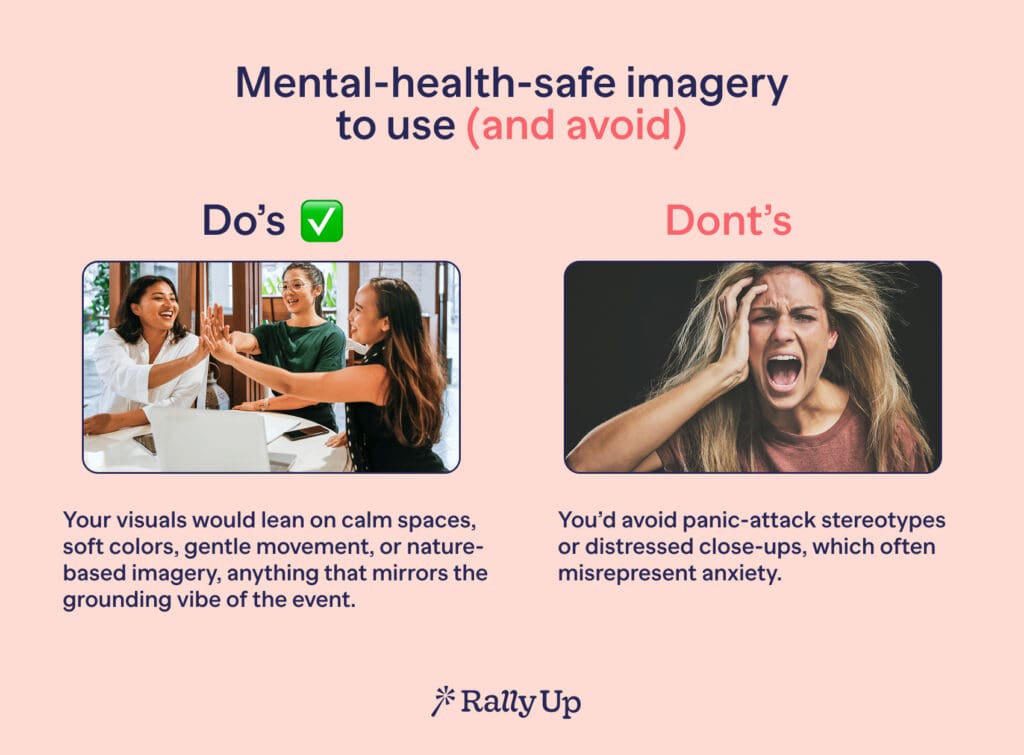
2. Mental-health-safe imagery to use (and avoid)
Your visuals would lean on calm spaces, soft colors, gentle movement, or nature-based imagery, anything that mirrors the grounding vibe of the event.
You’d avoid panic-attack stereotypes or distressed close-ups, which often misrepresent anxiety.
3. Where to share: workplaces, support groups, schools, online communities
Promotion goes on where people discuss or care about anxiety: workplace wellness groups, college counseling centers, local support groups, neighborhood WhatsApp or Discord groups, and online communities focused on mindfulness and coping tools.
4. How to involve local therapists, counselors, and NGOs
You’d reach out to therapists who specialize in anxiety, local mental-health NGOs, or wellness studios to help spread the word. They’re often willing to share accessible, community-friendly events that align with their mission.
5. Using social proof ethically (with consent)
If you include impact stories, you keep them anonymous and gentle, something like, “Community sessions helped me feel less alone with my anxiety”. No personal details, no triggering specifics, and only shared with explicit permission.
Safety, ethics, and accessibility checklist
When you’re hosting a mental health fundraiser, the event itself becomes part of the cause. People attending may be living with the very condition you’re raising funds for, so the setup, language, and data handling can’t be an afterthought.
Use this checklist to make sure your fundraiser doesn’t accidentally exclude, overwhelm, or put someone in an unsafe position while they’re trying to support the cause.
Safety, Ethics, and Accessibility Checklist
1. How to keep language safe
2. Data privacy guidelines
3. Crisis-resource linking requirements
4. Accessibility for neurodivergent participants
5. Alcohol-free event considerations
6. Consent for stories, photos, and videos
Takeaway: Bring your mental health fundraiser to life
If this guide proves anything, it’s that mental health fundraisers work best when they stay simple, safe, and human. No walking on eggshells, no stereotypes, just awareness.
Pick one idea, shape it around your cause, and focus on making the experience comfortable for anyone who shows up. No pressure, no dramatics, just clear purpose and thoughtful setup.
One last piece of advice: don’t underestimate small events. A calm workshop or community challenge often raises more awareness than a flashy campaign.If you want the setup to feel smoother with tickets, raffles, livestreams, peer-to-peer, the whole nine yards, RallyUp – an end-to-end fundraising platform keeps everything in one place without adding stress.
FAQs on mental health fundraiser
Pick a clear goal, choose a low-pressure format, and set up a simple page with calm, straightforward messaging.
Use easy options like raffles, workshops, livestreams, or team challenges. Keep everything optional and transparent so people feel comfortable contributing.
Mindfulness sessions, journaling pop-ups, art workshops, quiet community meetups, or nature walks all work well. The key is offering calm, predictable activities with no pressure to share personal details.
Now that you’ve seen it in action, are you ready to start fundraising?
Get Started