
8 Best CMS Platforms to Run Winning Fundraising Campaigns in 2026
Best CMS Platforms for Fundraising
The right CMS platform shapes how donors interact with your campaign and choose to give. Here are the top 8 tools for fundraising success:
- WordPress + GiveWP
- NationBuilder
- Squarespace
- HubSpot Content Hub
- Webflow
- Drupal + CiviCRM
- Wix
- Hygraph
We all know, a clunky website can kill even the most inspiring fundraising idea. Donors don’t wait around for slow pages or confusing forms. They click away.
That’s why the right content management system (CMS) is so important; it shapes how people experience your cause and how easily they choose to support it.
The best CMS platform will help you tell your story clearly, collect donations effortlessly, and track what’s actually working. It lets your team update pages fast, share impact stories, and personalize donor experiences without needing any developer on standby.
We’ve rounded up the list of top 8 CMSs for fundraising campaigns in 2026, platforms that combine storytelling power with conversion-ready features.
In this article
5 ways your CMS choice impacts your fundraising success
Your content management system is the backbone of your fundraising. The right CMS can amplify your story, simplify operations, and strengthen donor relationships.
Here’s how your CMS choice directly shapes campaign success:
1. It defines your storytelling power
A great fundraising CMS helps you tell stories that inspire people to take action. With flexible design tools and multimedia support, you can highlight donor impact, share updates, and build emotional connections. A strong visual narrative increases engagement and boosts conversions across campaigns.
2. It shapes the donor experience
The smoother the giving process, the higher the conversion rate. A CMS with integrated donation tools, mobile optimization, and clear calls to action removes friction and builds trust. Donors who experience an effortless checkout are far more likely to give again.
3. It determines your marketing efficiency
Modern fundraising relies on data and automation. A CMS that integrates with email platforms, CRMs, and analytics tools helps your team work faster and smarter.
Automating follow-ups, segmenting donors, and tracking results supports your nonprofit marketing plan, allowing you to focus on what matters: building relationships, not managing technology.
4. It drives visibility and reach
SEO, social media sharing, and analytics integration are critical for growing awareness. A CMS with built-in SEO tools and schema support helps your campaigns rank higher and reach new donors. Every page and story becomes an opportunity to grow your supporter base.
5. It strengthens donor retention
A CMS that supports recurring donations, personalized thank-you messages, and progress updates helps you nurture long-term supporters. When donors see transparency and ongoing impact, they stay invested in your mission.
Pro Tip: Select a CMS that seamlessly integrates with your online fundraising platform. This keeps your donation forms, campaign pages, and donor data connected, creating a smooth experience for both your team and your supporters.
8 best CMS platforms to power successful fundraising campaigns
Now that we understand why having a strong CMS is important, selecting the correct tool becomes equally crucial. Let’s look at the 8 CMS tools that do it best:
1. WordPress + GiveWP – best for flexibility and storytelling
WordPress paired with GiveWP is a flexible solution for online fundraising. It allows organizations to build custom donation pages, share stories, and track donor activity all in one dashboard.
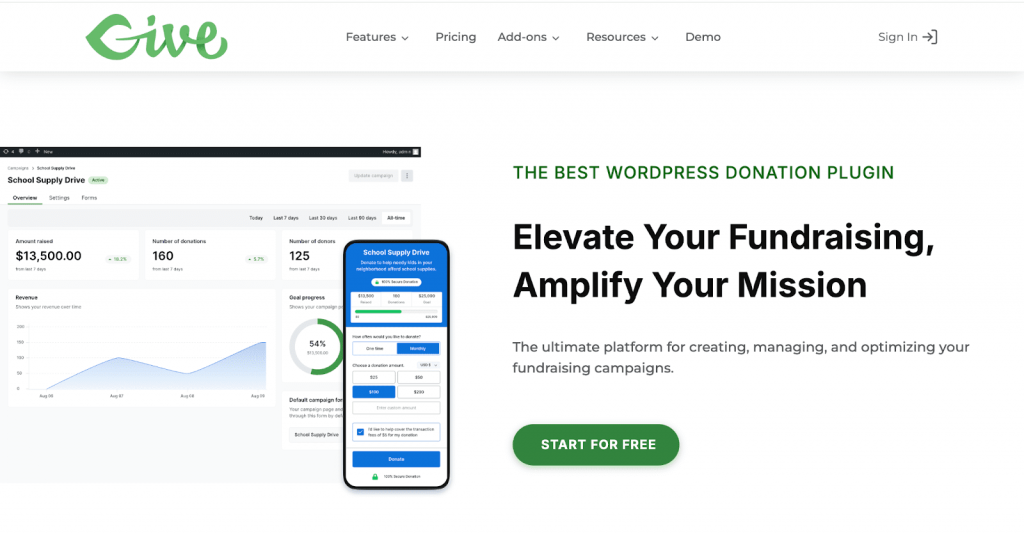
GiveWP extends WordPress with features like secure payments, recurring donations, and real-time goal tracking. The setup supports flexibility without locking users into a single platform or vendor, making it ideal for those who want scalability and personalization.
Why it’s great for fundraising: Huge plugin ecosystem, flexible content tools, and donation management through GiveWP, Donorbox, or PayPal.
Notable integrations: GiveWP, Donorbox, GA4, Mailchimp, Zapier, Salesforce, HubSpot.
Strengths: Fully customizable, SEO-friendly, and community-supported.
Challenges: Requires regular maintenance and hosting setup.
2. NationBuilder – best for political and advocacy campaigns
NationBuilder was designed specifically for advocacy and political fundraising, but it’s equally effective for community-driven causes. It combines a CMS, CRM, and outreach tools in one place, helping teams connect with supporters more personally.
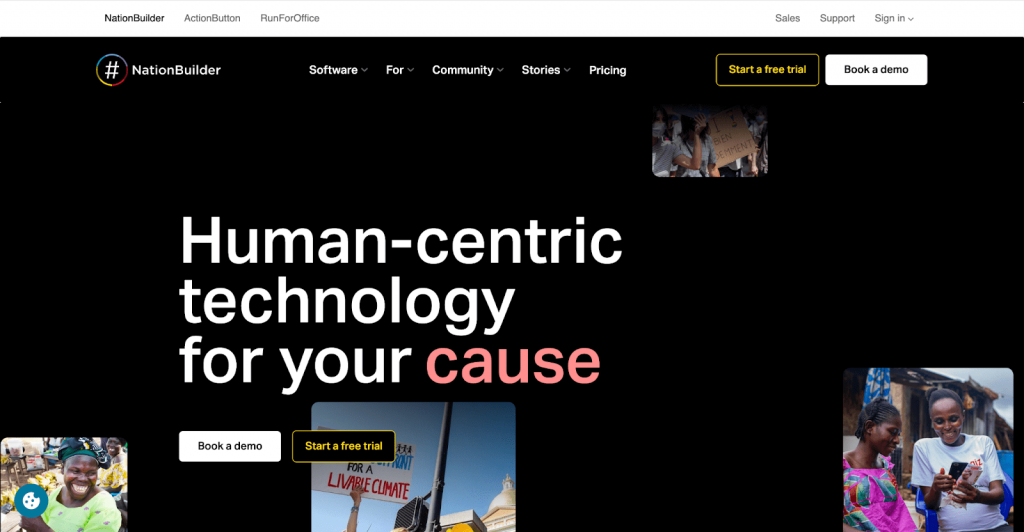
You can manage donations, segment contacts, and automate follow-ups without juggling multiple systems.
The built-in database tracks every action (from event sign-ups to contributions), giving you a full view of your movement. For mission-led organizations, NationBuilder makes managing people and purpose seamless.
Why it’s great for fundraising: Designed for advocacy and political campaigns with built-in donation and supporter management.
Notable integrations: ActBlue (for U.S. political campaigns), NationBuilder Payments (powered by Stripe), Zapier, Google Analytics, Facebook Ads, Mailchimp.
Strengths: Unified CRM, fundraising tools, and community management.
Challenges: Limited design flexibility compared to traditional CMSs.
3. Squarespace – best for small nonprofits and personal fundraisers
Ideal for small nonprofits and independent fundraisers, Squarespace offers a clean, modern site that is easy to use and navigate. Its drag-and-drop builder makes it easy to create professional-looking campaign pages in minutes.
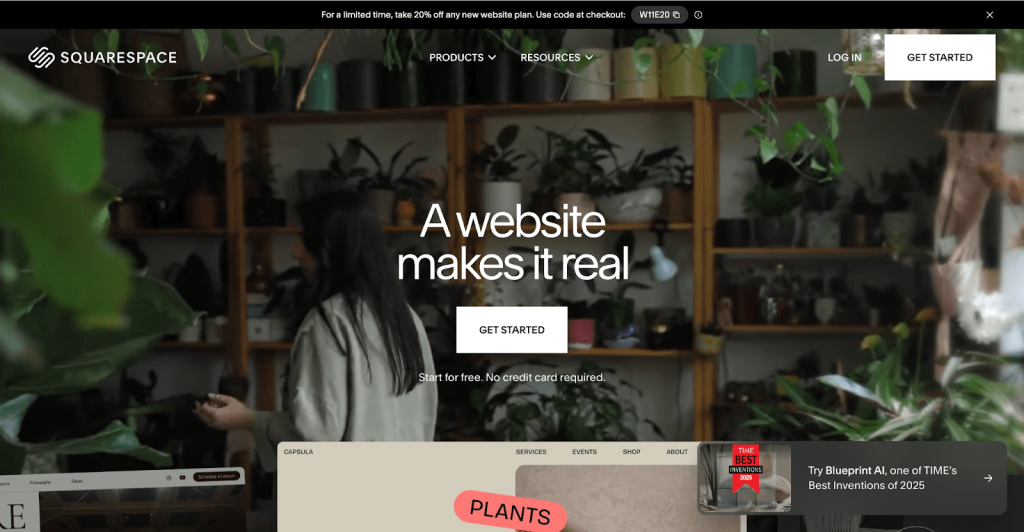
You can collect donations through built-in payment blocks, track contributions, and share updates effortlessly. The platform also features analytics and SEO tools to track performance and enhance visibility, enabling campaigns to reach a wider audience of supporters.
With its balance of design, simplicity, and reliability, Squarespace suits teams that want a visually cohesive and trustworthy online presence without the need for complex setup.
Why it’s great for fundraising: Built-in donation blocks, beautiful templates, and analytics in one dashboard.
Notable integrations: Stripe, PayPal, GA4, Zapier, Meta Pixel, Mailchimp.
Strengths: Simple, fast setup with polished design templates.
Challenges: Limited scalability and custom donation logic.
4. HubSpot Content Hub (formerly HubSpot CMS) – best for growth-focused fundraising teams
If you want to give your fundraising team the full power of marketing automation and CRM in one integrated platform, then HubSpot CMS might be your best bet. You can create landing pages, segment donors, and automate personalized email follow-ups based on user behavior.
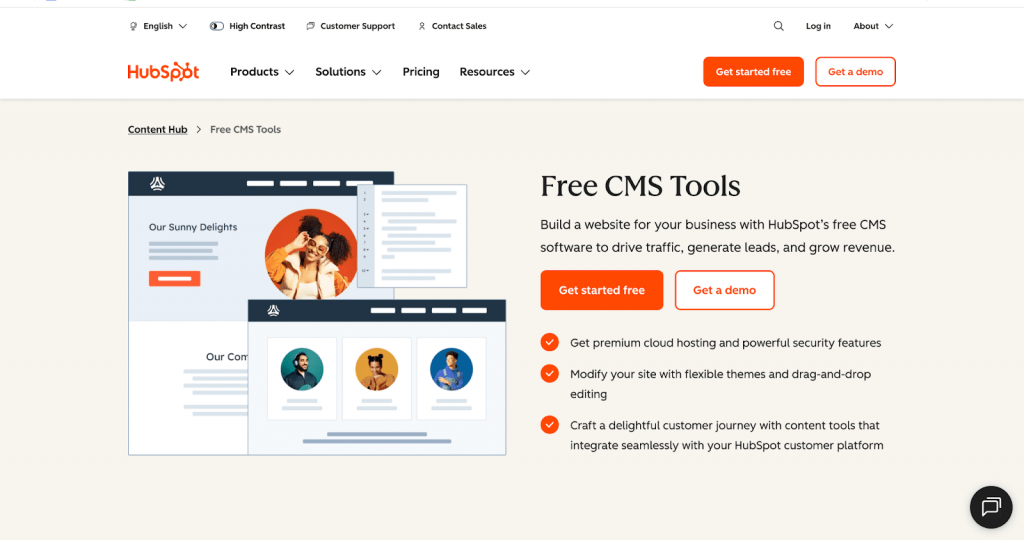
Every donation, page view, and interaction is tracked inside the CRM, providing deep insights into campaign performance. With HubSpot, your donor journey becomes measurable and repeatable.
Why it’s great for fundraising: All-in-one CRM, email automation, and content personalization.
Notable integrations: HubSpot CRM, Stripe, GA4, Zapier, LinkedIn Ads, Google Ads.
Strengths: Centralized donor data, automated marketing, and robust analytics.
Challenges: Higher cost for smaller organizations.
5. Webflow – best for design-led fundraising campaigns
When campaigns rely heavily on design and visual storytelling, Webflow offers a practical way to create responsive fundraising pages without coding. It gives teams control over structure, layout, and storytelling while keeping site management simple.
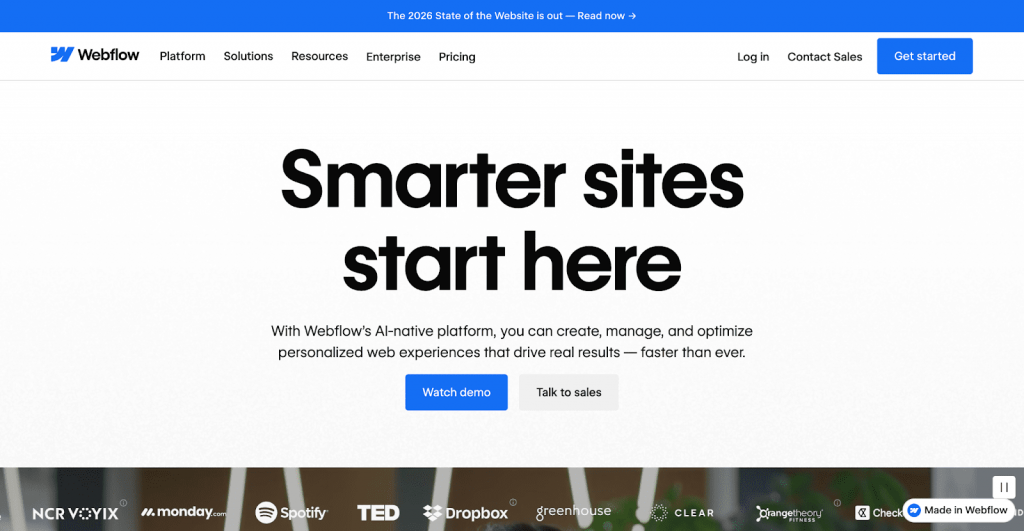
Donation forms, CRMs, and email tools can be connected through simple no-code integrations, keeping data and communication aligned.
Because Webflow sites are lightweight and SEO-friendly, campaign pages load quickly and perform well in search, making it a reliable option for creative teams focused on storytelling and performance.
Why it’s great for fundraising: Combines design control, SEO, and donation integrations for compelling campaigns.
Notable integrations: Donorbox, Stripe, PayPal, Zapier, GA4, HubSpot.
Strengths: Design flexibility, speed, and modern performance.
Challenges: Requires some learning for non-designers.
6. Drupal + CiviCRM – best for large nonprofits and complex operations
The combination of Drupal and CiviCRM offers strong flexibility and control for large nonprofits managing extensive donor networks and multiple fundraising initiatives.
Together, they support deep customization, advanced reporting, and secure data handling – all essential for high-volume fundraising environments.
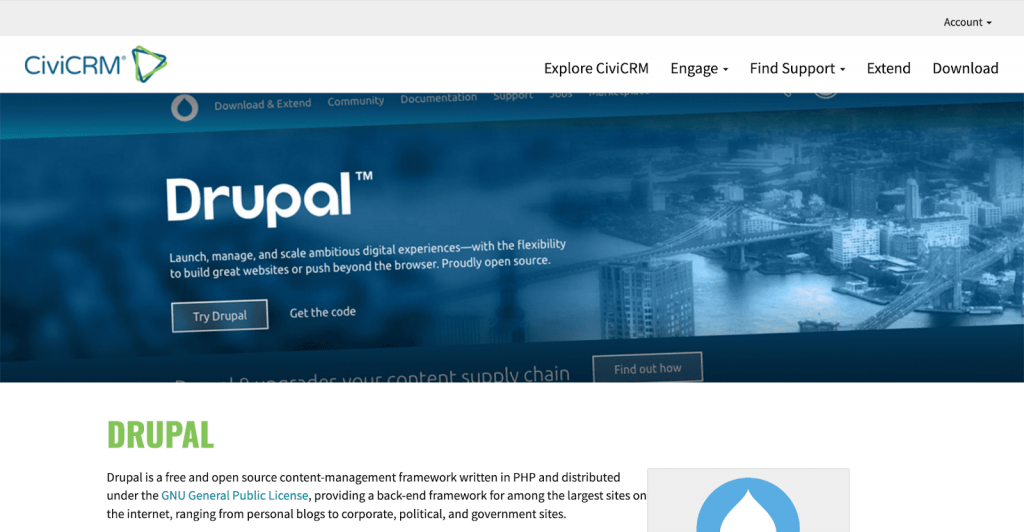
CiviCRM handles donor tracking, recurring gift management, and event registration, while Drupal provides the content structure and scalability.
Though setup requires technical expertise, this pairing delivers a reliable, data-driven framework suited to organizations that prioritize governance and long-term sustainability in their fundraising operations.
Why it’s great for fundraising: Enterprise-level content and CRM management with strong community support.
Notable integrations: CiviCRM, GA4, Salesforce, Mailchimp, Stripe.
Strengths: Scalable, secure, and tailored for complex nonprofit operations.
Challenges: Requires developer support and regular maintenance.
7. Wix – best for beginners and quick launch campaigns
Many small nonprofits and community projects need a CMS that’s quick to learn and easy to manage. Wix offers a user-friendly platform for creating donation pages, automating simple workflows, and analyzing campaign results with minimal technical effort.
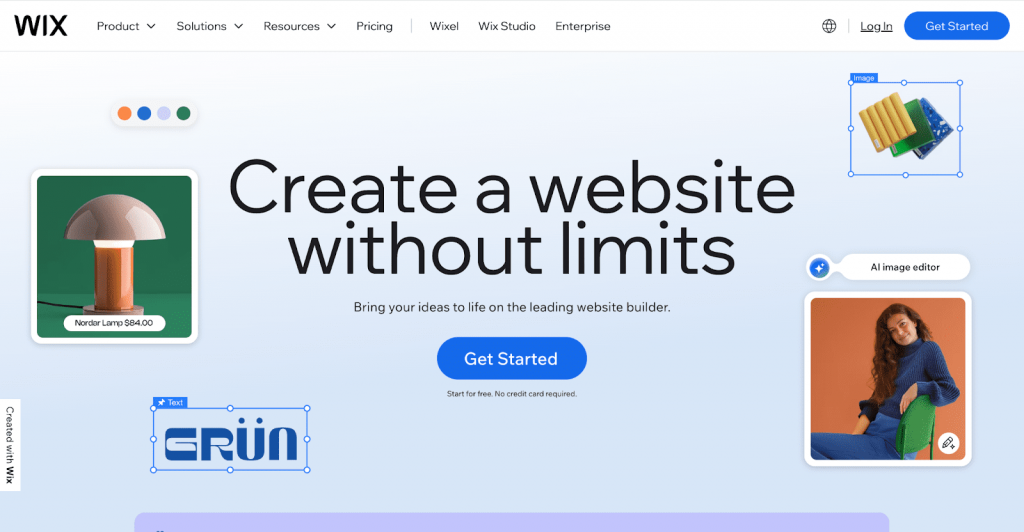
Built-in templates, payment tools, and analytics help teams start collecting donations quickly while monitoring engagement and SEO performance.
This makes Wix a practical option for organizations that want to prioritize campaign storytelling and donor communication over complex setup or development work.
Why it’s great for fundraising: Fast setup, low learning curve, and integrated donation and email tools.
Notable integrations: Wix Payments, Stripe, PayPal, Mailchimp, GA4, Zapier.
Strengths: Beginner-friendly, quick to launch, and visually appealing.
Challenges: Limited customization for complex fundraising structures.
8. Hygraph – best for data-driven, multichannel fundraising
Hygraph is a GraphQL-native headless CMS designed for scalable, multi-channel content delivery. It enables teams to manage content centrally and distribute it across websites, apps, and other platforms, ideal for complex fundraising campaigns.
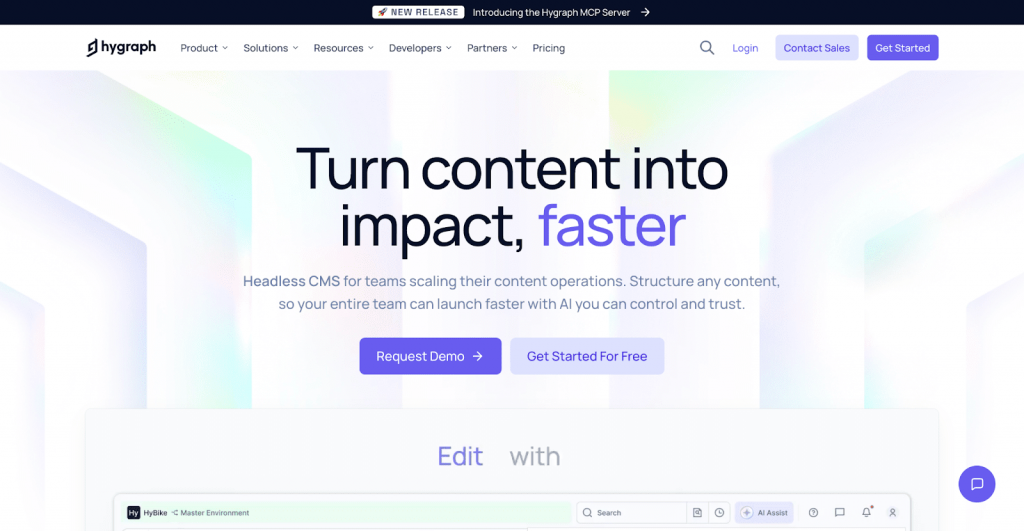
With its API-first approach, you can connect donation forms, analytics, and CRM tools so you can use those systems to track supporter journeys in real time while Hygraph manages the content layer.
For organizations that use data to guide fundraising strategy and want full control of content delivery, Hygraph stands out.
Why it’s great for fundraising: Provides a structured content layer and reusable components that help build engaging campaigns while supporting analytics and personalization.
Notable integrations: Segment, GA4, Snowplow, Mixpanel, Stripe/PayPal via external APIs, custom CRM integrations, Looker/Tableau for BI.
Strengths: API-driven flexibility, omnichannel content delivery, scalability, and developer/marketer collaboration.
Challenges: Requires more setup and technical expertise than simpler CMS options.
How to choose a CMS for your fundraising needs
Your CMS should help you tell your story, manage donations, automate communication, and track performance in one place.
Whether you’re running a grassroots fundraiser or managing a national nonprofit, the goal is the same: a system that makes giving easy and storytelling powerful.
So, how do you find the CMS that matches your team’s needs and growth plans? Let’s break it down.
1. Start with your mission and team size
Before diving into features, clarify your organization’s goals. Are you running small community campaigns or managing large-scale donor operations?
Smaller teams benefit from simple, all-in-one platforms like Squarespace, Wix, or WordPress + GiveWP, which are easy to launch and maintain.
Larger nonprofits or advocacy groups need scalable systems like HubSpot, NationBuilder, or Drupal + CiviCRM, which combine CRM, automation, and advanced reporting.
2. Prioritize donation and CRM integration
Your CMS should make donation management effortless. Look for platforms that integrate smoothly with Stripe, PayPal, Donorbox, or your CRM tools.
The best systems track every contribution, automate receipts, and segment donors for targeted outreach. Seamless data flow between your CMS and CRM ensures you never lose track of supporter activity or campaign performance.
Specifically, CMS platforms such as Drupal + CiviCRM, NationBuilder, and HubSpot are central to donor relationship management, but make sure that offline fundraising activities (like events or check donations) are integrated into these workflows for a complete donor history.
3. Focus on storytelling and engagement
Fundraising success starts with storytelling. The most effective teams apply nonprofit content marketing best practices to plan their stories strategically, align messaging across campaigns, and strengthen donor engagement.
In this context, the role of a CMS is to make it easy to share updates, publish impact stories, and include visuals that connect emotionally. Choose platforms with flexible design tools, built-in blogs, and social media sharing options so you can reach more people and keep them inspired.
4. Check analytics, SEO, and automation capabilities
You can’t improve what you can’t measure. Pick a CMS that integrates with GA4, HubSpot, or Mailchimp to monitor engagement and conversions.
Built-in SEO tools help your campaigns rank better, while automation features simplify thank-you emails, progress updates, and donor follow-ups, saving your team time while boosting results.
5. Think about growth and scalability
Your fundraising platform should evolve in tandem with your mission’s expansion. Choose a CMS that supports multi-page campaigns, recurring donations, and new integrations over time.
Cloud-based and API-first solutions like HubSpot or Hygraph ensure your system can evolve as you add more campaigns, staff, or global reach.
A CMS that aligns with your fundraising goals builds trust, strengthens storytelling, and scales your impact. Choose wisely, and your platform will become the digital heartbeat of your cause.
6. Hire a helping hand when needed
We know how it may be overwhelming to pick the right CMS, especially when you need to balance fundraising needs, technical limitations, and long-term strategy.
Bringing in an external consultant can streamline the process and help your team choose tools that fit both your mission and your operational model.
7. Check accessibility & compliance support
Accessibility and legal compliance are critical factors for nonprofits, especially in regions like the U.S., Canada, the UK, and the EU. Ensure your CMS supports accessibility standards (such as WCAG 2.1 AA) to cater to all users, including those with disabilities.
For government-funded or publicly supported organizations, meeting accessibility requirements is often a legal obligation.
Additionally, confirm that your CMS complies with data protection regulations like GDPR/CCPA, cookie consent management, and data residency requirements to protect both donors and your organization. Make sure that your platform can easily handle accessibility and compliance needs before committing to a CMS.
Ready to power your fundraising journey?
The right CMS for fundraising helps you share stories that move people and make giving effortless. It should support clean design, smooth donation management, and reliable performance tracking, all while freeing your team from constant technical fixes.
But even with the best CMS, your fundraising toolkit isn’t complete without a platform that unites everything in one place.
RallyUp does exactly that. It’s an all-in-one fundraising platform built to run campaigns, collect donations, manage donors, and host events, without needing multiple tools or plugins. Your CMS can focus on storytelling, while RallyUp handles the entire fundraising experience from start to finish.
FAQs on the best CMS platforms
The best fundraising software depends on your needs, but RallyUp stands out as a strong option if you need an all-in-one fundraising platform for campaigns, donations, events, and donor engagement.
The 80/20 rule in fundraising means that roughly 80% of donations come from 20% of donors, emphasizing the importance of nurturing major supporters.
WordPress is the most popular CMS, powering over 40% of websites and widely used by nonprofits for content management and fundraising campaigns.
WordPress is often considered the best free CMS for fundraising because it’s open-source, customizable, and integrates easily with donation plugins like GiveWP.
Now that you’ve seen it in action, are you ready to start fundraising?
Get Started