
Year-End Giving Guide: How to Inspire Support and Close Strong
Year-End Giving Strategy for Nonprofits
Year-end giving can generate up to 30% of a nonprofit’s annual donations, making December the most important fundraising period of the year. Success depends on a focused strategy that includes reviewing past performance, refining messaging, using the right mix of channels, creating urgency, and strengthening donor retention. With the final weeks carrying the most impact, RallyUp helps nonprofits manage all fundraising efforts seamlessly through one end-to-end platform.
The final weeks of the year carry an uneven weight for fundraising, and it’s not what you’re thinking. Around 30% of annual donations are made in December, with 10% occurring in the final three days. That’s far more than seasonal coincidence – it’s behavioral psychology.
It happens because people are closing out their year financially, emotionally, and sometimes for tax reasons. Budgets are wrapped. Support is reconsidered. Giving becomes a final act of intent.
This stretch of holidays and events is all about timing. Donors are paying attention, and the decisions they make now can shape your entire year’s outcome. We’ll walk you through an entire year-end giving strategy with steps and examples to close (and begin) the year strong.
In this article
- The year-end giving donor mindset
- Prep phase: Audit your year before you ask
- Build a year-end giving campaign one step at a time
- Channel strategy for year-end fundraising
- Incentives to go the extra mile during year-end giving
- The final week: Your push phase
- Post-Dec 31 retention strategy
- Year-end fundraising email and messaging kit
- Set yourself up for a cleaner, stronger new year with RallyUp
- FAQs about year-end giving strategy
The year-end giving donor mindset
Every December, a familiar pattern kicks in. Not just more gifts, but more deliberate ones.
CAF America surveyed 1,028 US adults about their giving patterns. While 57% of Americans donated between January and October, a full 62% said they plan to give in November or December. That includes 15% who only donate during this window.
So what’s behind this final push?
- Cause-driven motivation:
- About 72% of donors give because they feel strongly about a specific cause.
- 61% say it’s because they feel fortunate and want to help others.
- 56% say donating simply makes them feel good.
- Tax timing: December 31 marks the cutoff for charitable deductions. Many donors, especially those giving larger gifts, wait until this point to finalize their contributions.
- Annual reflection: People review nonprofits while giving. Which organizations followed through? Which ones stayed visible and consistent? This is when trust gets rewarded.
- Sense of closure: Some donors treat giving as their final act of the year. A reset button with real-world impact.
- Institutional factors: Corporations are wrapping up CSR allocations. Donor-Advised Fund holders are making final disbursements. Employer match programs are approaching cutoff dates.
To make the most of this mindset, nonprofits need visibility and a focused, well-timed strategy. The window is short, and the stakes are high. Let’s break down how to prepare for it.
Prep phase: Audit your year before you ask
Before launching your year-end giving campaign, take a step back and assess where things stand. A strong year-end strategy starts with a clear understanding of what you’ve achieved and what still needs support.
1. Review your year honestly
Look at your programs, campaigns, and outreach. What delivered? What didn’t? Which donors stayed engaged? An honest review keeps your messaging grounded and makes the next steps sharper.

2. Define one specific outcome
Decide what the final-month fundraising should accomplish. That could mean reaching a funding target, supporting one last urgent program, or launching a new initiative. The more specific, the easier it is for donors to respond.
3. Gather real proof
Use stats, photos, quotes, and stories that show what’s been done so far. Even though donors give generously in these months, they still need a reason to give to your cause. Highlight the tangible outcomes of donor support. Keep it visual, concise, and tied to real results.
4. Clean your donor list
Check your records and segment your audience so you can spread your message to the right people.
- LYBUNT: Gave last year, but not this year
- SYBUNT: Gave some year, but not this one
- Regular givers, first-time donors, match-eligible contacts – tag and group them
A clean segmented list will later help you with the new year’s strategy.
Build a year-end giving campaign one step at a time
Think of it like building thatch roofing before the cold sets in. You wouldn’t place the straws haywire; you’d place each section with intention, knowing time is limited, and every move needs to count.
A year-end giving campaign works the same way. It’s not about doing more. It’s about building the right message, delivered to the right people, in the window where it matters most.
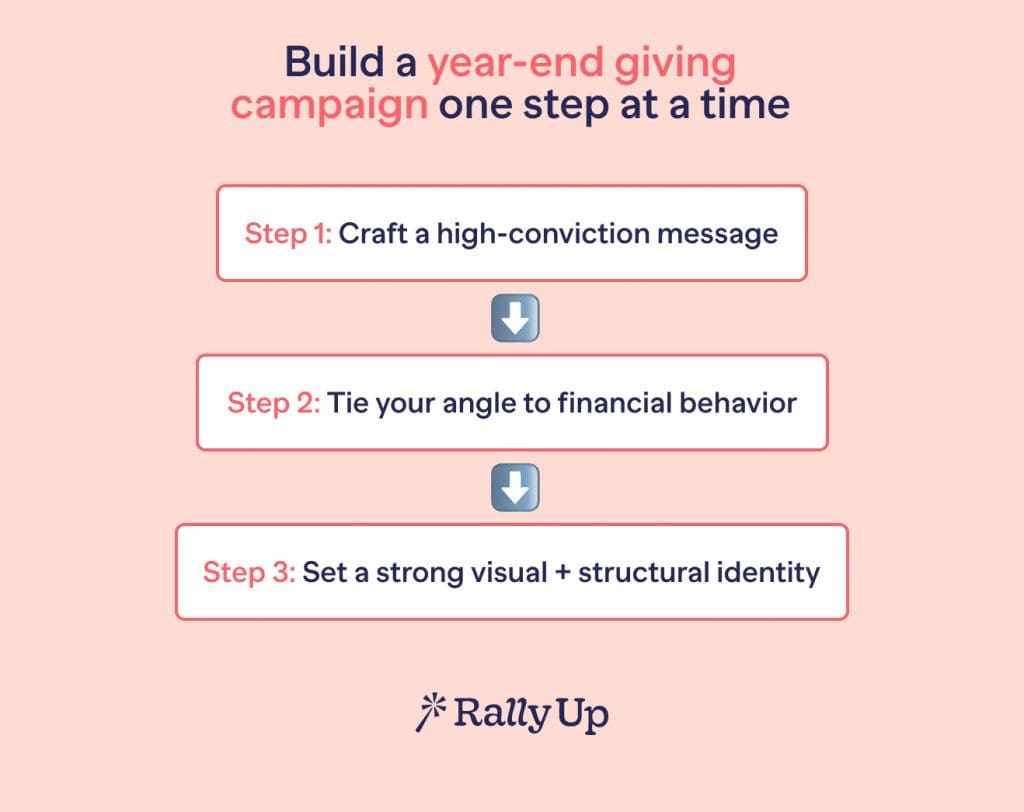
Step 1: Craft a high-conviction message
Start with one clear line:
This is what we’ve done. This is what we still need before Dec 31.

The last thing donors want to see is vague encouragement. They need proof and a reason to act now. Show them exactly what’s been accomplished, what’s left unfinished, and how their support will close that gap.
Build one story that holds across every channel. Emails, posts, calls, and donation pages should all unify the same intent.
Step 2: Tie your angle to financial behavior
This is a moment where personal values and financial planning overlap. Use that.
- Point out that donations made by Dec 31 may be tax-deductible.
- Remind people that many employer match programs expire with the calendar year.
- Offer a monthly giving option for those thinking ahead to next year.
Sometimes, a more practical type of person needs to hear the statistics to push their decision further.

Step 3: Set a strong visual + structural identity
Clarity matters more than clever design. Build a visual system that signals this campaign is distinct from your regular content without veering into holiday aesthetics.
Consider:
- A simple, year-end theme or banner
- An impact meter that shows real progress
- A countdown clock that keeps the urgency visible
- A badge for any match challenges you’re running
Every visual should do one of two things: show progress or point toward the deadline. That’s how you keep people moving.
Channel strategy for year-end fundraising
A strong message only works if it’s delivered the right way. Between family visits and meal preps, donors in December are moving fast, scanning inboxes, skipping fluff, and picking what fits the spirit.
Your campaign needs a clear path through that noise, built on channels that work and supported by timing that respects attention spans.
1. Email: Your highest-ROI workhorse
No channel drives more direct action than email. Not even close. Email prompted 31% of online donations made by Gen Xers, and boomers reported that they regularly check their email. Moreover, email subscribers are the highest among nonprofit channels.
Set up a focused 5-email sequence:
- Intro: Lay out the story and the ask
- Match: Announce any matching gift windows
- Mid-campaign: Show progress, remind of the goal
- Urgency: Push as the final days approach
- Last 48 hours: Give clear instructions and a deadline
This is where your segmented LYBUNTs and SYBUNTs come in. Remind them of their past donations during the holidays to trigger nostalgia. Don’t batch-and-blast. Targeting is what makes year-end email work.
2. Website and donation page
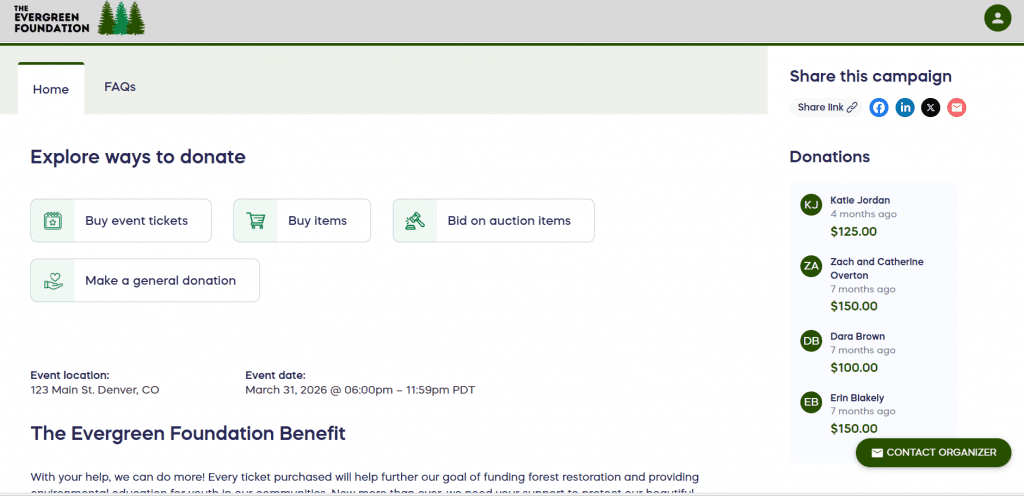
Update your homepage, donation forms, and pages to reflect your year-end fundraising campaign.
- Add a banner or countdown timer for visibility
- Use an impact calculator, thermometer, or clear donation-to-outcome mapping
- Simplify your form and make sure monthly giving is pre-selected
Note: Ensure donors are aware of the default selection and knowingly choose recurring donations.
If someone lands on your page after clicking a CTA, they should see an up-to-date, holiday-centered goal.
3. Social media
Nonprofits must plan socials months in advance during the year-end giving season. These cannot include your generic “Merry Christmas” engagement posts. Keep everything tied to the campaign.
- Share short donor stories or testimonials
- Post progress updates and match reminders
- Film quick clips from staff or volunteers asking directly for support
- In the final week, increase frequency, and go live if that fits your tone
Urgency matters more than aesthetics here. Your feed should become part of the spirit – like something’s happening.
4. Direct mail (for orgs that use it)
Instead of standard direct mail, partner with local schools or youth volunteers to deliver handwritten holiday notes alongside your year-end appeal.
Note: Ensure written permissions, child privacy, and opt-outs from donors are followed to respect donor preferences.

Each envelope includes:
- A personal note from a student or young volunteer (age-appropriate, uplifting, non-religious)
- A one-pager from your org with a clear story, campaign goal, and QR code to donate
- A photo or quote from someone impacted by your work this year
This does two things at once:
- It softens the mailing process – recipients feel seen, not solicited
- It brings in community energy, showing younger generations supporting the mission
It’s ideal for long-time donors, older supporters, and anyone who values thoughtfulness over urgency.
5. Major donor + corporate strategy
Year-end is prime time for major gifts, but you won’t get them with simple emails. These supporters expect a direct, personal approach, especially in December, when they’re finalizing financial decisions.
| Strategy Area | Key Action | Recommended Approach | Why It Matters at Year-End |
|---|---|---|---|
| Major Donor Strategy | Personal outreach | Call, meet in person, or send handwritten notes before the third week of December; avoid mass emails | Personal contact strengthens trust and increases last-minute giving decisions |
| Corporate Supporter Strategy | Highlight expiring match programs | Remind partners of December 31 deadlines and share tools like Double the Donation or Benevity | Urgency around matching gifts often unlocks larger corporate contributions |
| Donor Messaging | Use tailored communication | Reference each donor’s past impact and clearly explain where the next gift will be applied | Specific outcomes make year-end gifts feel purposeful and timely |
| Year-End Giving Ask | Request one-time contributions | Frame the ask as a final opportunity to support before the year closes | Donors are more open to one-time gifts during financial planning season |
| Leadership Engagement | Ask leaders to participate | Position support as helping unlock a match, close a campaign, or lead by example | Leadership gifts build momentum and social proof |
| DAF Giving | Share donor-advised fund reminders | Encourage year-end disbursements with clear instructions or links to DAF portals | DAF funds are often time-sensitive and underutilized at year-end |
| Recognition Opportunities | Offer visibility options | Name a match, feature the donor publicly, or offer logo placement if appropriate | Recognition incentives can motivate higher or faster commitments |
Incentives to go the extra mile during year-end giving
Even the most thoughtful campaign sometimes needs an extra push. The right incentive doesn’t reduce the credibility of the ask. These pushes should stay focused on the goal without turning the campaign into a festive trend.
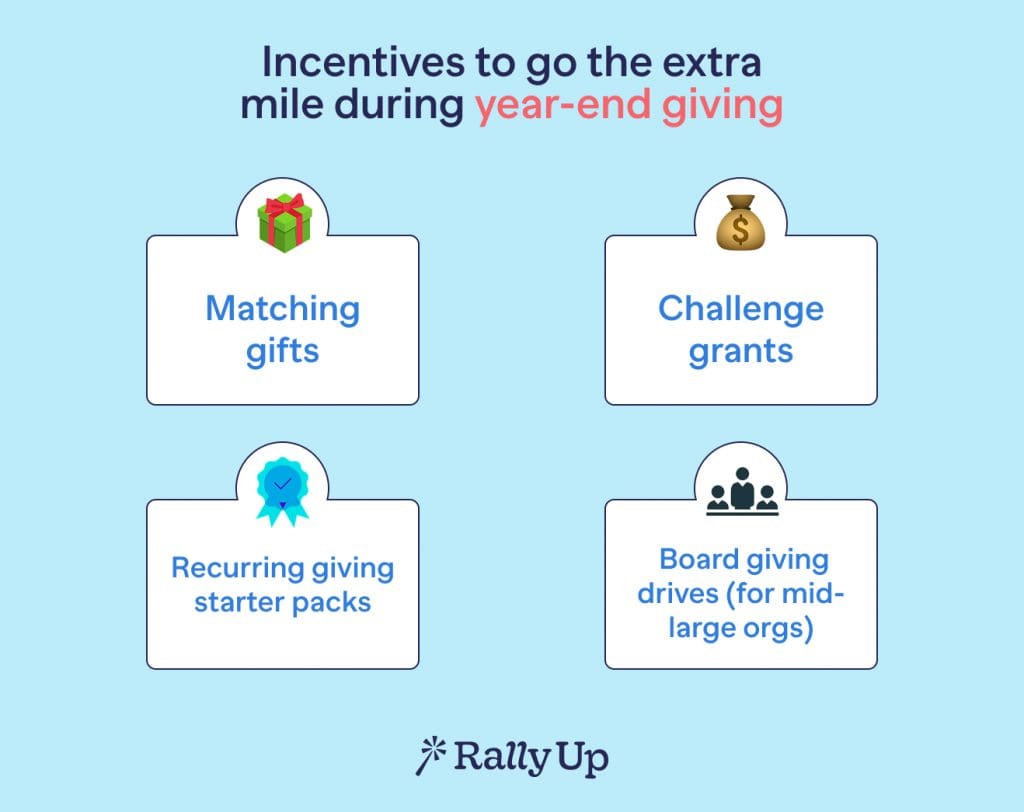
Here are four that work in December without drifting into holiday territory:
1. Matching gifts
If you have a matching donor, make that the headline. Whether it’s a $5K match or a $50K one, 84% of donors are more likely to give when they know their gift will be doubled. Promote the match heavily, especially in subject lines, donation forms, and social media banners.
Tip: Set a clear deadline, “Match ends Dec 31 at midnight”, which increases urgency.
2. Challenge grants
Challenge grants work well when you want to achieve a bigger donation by reaching a smaller group goal.
For example: “If we raise $10,000 by Dec 28, the Smith Family Foundation will contribute another $10,000.” This pulls in both small and mid-size donors who want to help hit the mark.
3. Recurring giving starter packs
Offer a lightweight incentive or recognition badge to anyone who starts a monthly gift in December.
Ideas:
- Name listed on a Year-End Founders Wall (digital or physical)
- Early access to next year’s impact reports
- One-time thank-you gift (like a digital wallpaper or card from beneficiaries)
The goal is to build long-term retention through donor engagement without relying on transactional perks.
4. Board giving drives (for mid-large orgs)
Ask your board to pool personal gifts into a challenge fund or public-facing goal. This adds credibility and shows donors that leadership is all-in.
Example: “Our board has pledged $20,000 if we hit 500 donors by year-end.”
Tip: Avoid running seasonal sales or giveaways that feel like holiday marketing – this isn’t about merchandise. Keep every incentive tied to impact, leadership, and long-term commitment.
The final week: Your push phase
This is where the fundraising pressure gets to you. The last 7 days, especially the final 3, are when donors act the fastest. Your job now is to keep the message clear, visible, and moving fast without getting chaotic.
Use daily micro-updates
Show that things are happening. Post small, timely updates every day:
- Current total on the impact meter
- Donor milestones (“We just passed 400 gifts”)
- Match progress (“$2,000 left in our match fund”)
- Quick stories or photos from the field
Keep it light, frequent, and easy to engage with.

Send updates on Dec 29, 30, and 31
Yes, send for all three. These aren’t regular emails; think of them as deadline reminders.
Keep each one short, urgent, and tied to a real outcome. If you have a match, say what’s left. If there’s a program deadline, name it. If your cause is time-sensitive, push it. This is real scarcity. Tax deadlines. Program timelines. Match expiration.
You don’t need to fabricate pressure if it’s already there. Just state it clearly, and let the deadline do its job.
Simplify your CTAs
Every touchpoint should lead to one thing:
Donate before midnight, Dec 31.
No multi-step asks, no side content, no newsletter blurbs. Just a clean, direct path to the donation form.
Post-Dec 31 retention strategy
The clock has hit 12, your program has ended, and a new year has begun. Let’s think ahead because your work will go on. What you do in the first two weeks of January decides whether those donors stay one-time or become long-term supporters.
| Action | What to Do | When to Send / Do It | Why It Matters |
|---|---|---|---|
| Automated Thank-You | Send an instant email confirming the donation with a short, heartfelt message of gratitude | Immediately after the gift is made | Acknowledges the donor while their intent and goodwill are still fresh |
| Personal Follow-Up for Key Donors | Write a handwritten note or personalized email referencing the specific impact of their gift | Within 2–3 days after receiving the donation | Strengthens relationships and builds long-term trust |
| Impact Report | Share total funds raised, campaign results, and what happens next | First or second week of January | Closes the loop and reinforces that the donor made the right decision |
| Recurring Gift Invitation | Invite donors to become monthly supporters with a message like “Continue what you started” | Around January 10–15 | Transforms one-time donors into ongoing, reliable supporters |
Year-end fundraising email and messaging kit
This 5-part email sequence is built to help you raise more in the final days of the year. Each message is structured for speed: short, clear, and donor-first. Includes copy blocks, subject lines, and extra CTA options for multichannel use.
Set yourself up for a cleaner, stronger new year with RallyUp
A year-end giving campaign comes down to timing, clarity, and follow-through. Start by auditing your year. Shape one clear message. Use channels that reach people when they’re paying attention. Push with urgency in the final week. And don’t let the momentum die after Dec 31.
This is a focused campaign with a clear sequence – one that helps you finish strong and move into Q1 with direction.
If managing all that across platforms gets complicated, RallyUp, an end-to-end fundraising platform, helps simplify it. Build multi-channel campaigns, manage matching gifts, track progress, and customize donation pages, all from one dashboard.
FAQs about year-end giving strategy
End-of-year giving refers to donations made during the final weeks of the calendar year, often driven by tax deadlines and annual reflection. It’s a critical fundraising period for most nonprofits.
Many donors give in December to support causes they value, take advantage of tax deductions, or do so because it aligns with their financial and emotional year-end planning.
Keep the ask clear, time-bound, and tied to impact. Use direct messaging, a deadline (Dec 31), and specific outcomes to make it easy for donors to act.
Now that you’ve seen it in action, are you ready to start fundraising?
Get Started