7 Kickstarter Alternatives Worth Switching To in 2026
Top Kickstarter Alternatives in 2026
Kickstarter is a reward-based crowdfunding platform built for creative projects. However, its all-or-nothing funding model,
8–10% in combined fees, and lack of support for nonprofits or charity fundraising lead many users to explore other options.
Here are the top 7 Kickstarter alternatives in 2026:
1. RallyUp
2. Indiegogo
3. Patreon
4. GoFundMe
5. FundRazr
6. Gamefound
7. Wefunder
For nonprofits specifically, RallyUp, an end-to-end fundraising platform, stands out as the strongest choice.
It combines crowdfunding with raffles, auctions, peer-to-peer fundraising, galas, and more — all in one platform with no subscriptions
or contracts required.
Kickstarter is one of the most recognizable names in crowdfunding, but it’s not always the right fit. The all-or-nothing model feels risky for a lot of campaigns. The 5% fee adds up fast.
Additionally, if you’re a nonprofit or running a Kickstarter for donations, the platform can feel like it wasn’t really built with you in mind.
Plenty of creators and organizations are making the switch to better Kickstarter alternatives, and the options in 2026 are genuinely impressive. We’re breaking down the top 7 right here.
In this article
What is Kickstarter?
Kickstarter is an online crowdfunding platform launched in 2009, built specifically for creative projects. It connects creators, such as designers, filmmakers, game developers, musicians, and inventors, directly with people who want to back their ideas.
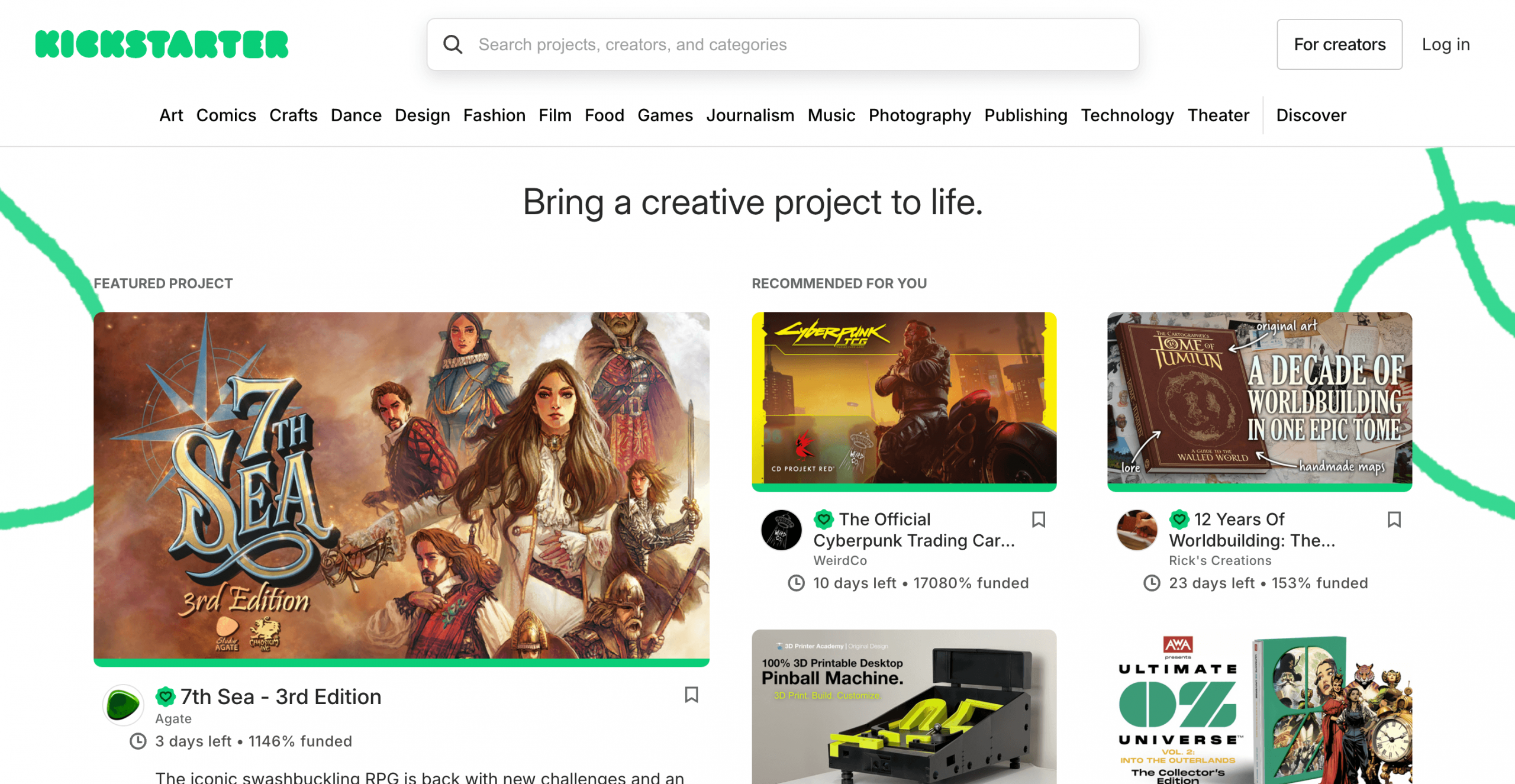
Instead of going to a bank or investor, creators pitch their project publicly, set a funding goal and deadline, and collect pledges from backers around the world.
The platform runs on a rewards model, where backers receive perks or early access in exchange for pledging. It does not support equity, donations, or charity campaigns.
The big thing to know about Kickstarter is its all-or-nothing model. Backers aren’t charged unless your campaign hits its goal, and even then, their cards aren’t charged until the very end of your campaign. Hit your goal, and you get the funds. Miss it, and everyone gets refunded.
Key features:
- Reward-based crowdfunding with tiered backer perks
- Project prescreening before campaigns go live
- Built-in pledge manager for post-campaign fulfillment
- Campaign discovery, including “Projects We Love” features
- Livestreaming and real-time campaign updates
Pricing:
- Free to create and launch
- 5% platform fee on successfully funded projects only
- Payment processing fees between 3% + $0.30 per pledge
- Pledges under $10 have a discounted micropledge fee of 5% + $0.08
- No fees if the campaign doesn’t reach its goal
5 reasons people are looking for Kickstarter alternatives
Kickstarter works well for the right project, but it has some real limitations that send creators, nonprofits, and backers looking elsewhere. Here’s what the reviews actually say.
1. The all-or-nothing model is a big risk
Miss your funding goal, and you walk away with nothing – not a single dollar. For smaller campaigns or first-time creators, that pressure is genuinely stressful. It also forces a lot of people to set lower goals than they actually need, just to guarantee hitting the target.
It’s one of the most common reasons people start searching for Kickstarter alternatives in the first place.
2. The fees add up fast
Kickstarter’s 5% platform fee plus 3%–5% in payment processing means losing 8%–10% of every dollar raised. Reviewers on G2 note that the combined platform and payment processing fees can take a significant cut from project creators.
On a $50,000 campaign, that’s up to $5,000 gone before you’ve spent a cent on your actual project.
3. No room for nonprofits or anything non-creative
Kickstarter thrives in a narrow lane: art, design, tech, games, and film. Step outside that, and the platform starts to feel like a mismatch. It also doesn’t support charity campaigns, Kickstarter for donations, or equity fundraising, and it even restricts creators from giving a portion of funds to charity.
For Kickstarter nonprofit causes, community projects, or Kickstarter online fundraising beyond the creative world, it simply wasn’t built for you.
4. The approval process can be painfully slow
Every project gets prescreened before going live, which sounds fine in theory. In practice, it frustrates creators who need to move quickly.
G2 reviewers note that the approval process can sometimes take a long time, and if there are issues with a listing, it can drag things on much longer. For time-sensitive campaigns, that wait can cost momentum.
5. Limited accountability when things go wrong
This is the loudest complaint across every review platform. Kickstarter receives a 1.1/5 rating based on 1,100+ reviews on Trustpilot due to failure to respond to complaints.
Backers who fund campaigns that never deliver are largely left on their own. Reviewers describe prolonged silence from creators and a lack of transparency, with Kickstarter offering little intervention even on projects carrying its own endorsement badges.
Top 7 Kickstarter alternatives in 2026
Kickstarter is solid, but it’s not for everyone. The all-or-nothing model and restrictions on donations push a lot of people to explore other options. The world of Kickstarter and crowdfunding has exploded with platforms built for every campaign type.
Here are the top 7 Kickstarter alternatives worth knowing in 2026.
1. RallyUp – Best end-to-end fundraising platform for nonprofits
If you’re a nonprofit, RallyUp is where Kickstarter online fundraising meets its match. Unlike Kickstarter, which focuses on creative product launches, RallyUp is built exclusively for nonprofits.
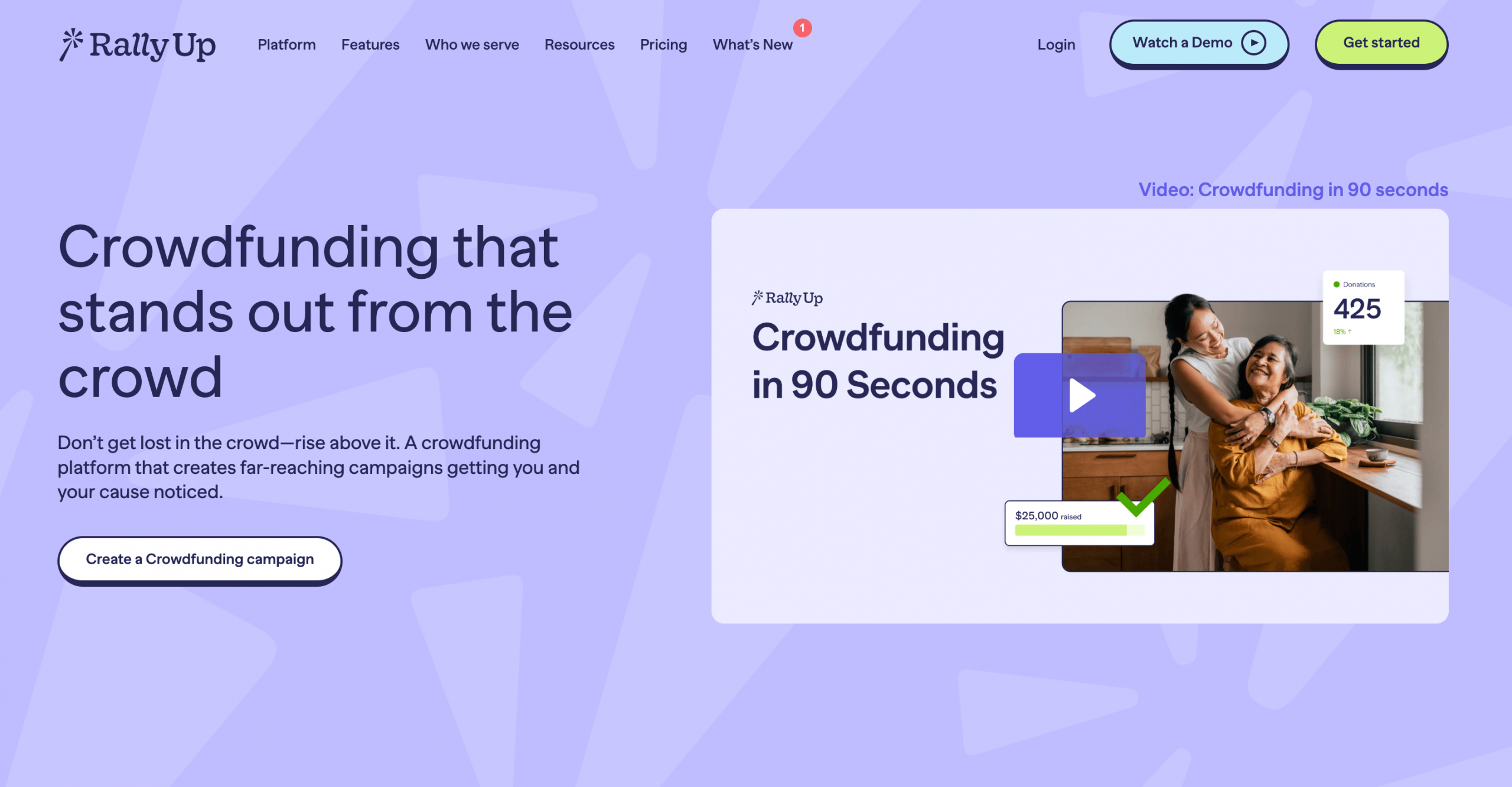
Your crowdfunding campaign isn’t just a donation box; you can stack perks, peer-to-peer fundraising, and live events on the same page. For Kickstarter nonprofit needs done right, this is the most complete solution out there.
Key features:
- Crowdfunding with donation tiers, preset amounts, and donor perks
- Stackable campaigns – combine crowdfunding with raffles, auctions, peer-to-peer, storefronts, and more
- Donation Feed, where donors leave comments and dedications
- Multiple fund options so donors can choose where their money goes
- Done-for-you campaign setup at no extra cost
- Integrations with Salesforce, HubSpot, Zoho CRM, and Pipedrive
- Full test-drive mode before going live
Pricing:
- Free plan: No platform fee – donors leave an optional tip at checkout
- Flex plan: No donor tipping. Platform fee depending on campaign type:
- 0% for Donation Pages, Peer-to-Peer, Livestreaming
- 2.9% for Ticketing & Registration and Storefront; 4.9% for Auctions, A-Thons, Crowdfunding, Fund-a-Need; 6.9% for Raffles & Sweepstakes, plus standard payment processing fees
- Enterprise plan: Custom pricing for large campaigns and in-person events
- Payment processing: 1.9%–2.9% + $0.30 per transaction via Stripe or PayPal
- No contracts, subscriptions, setup fees, or minimums
Why it’s the best Kickstarter alternative for nonprofits: Kickstarter doesn’t allow charity campaigns or donation-based Kickstarter fundraising. RallyUp does, and goes well beyond a basic crowdfunding page. No all-or-nothing pressure, subscriptions, and expert support built right in.
Want more nonprofit-focused picks? Here are 12 more crowdfunding platforms2. Indiegogo
Indiegogo is the most direct competitor to Kickstarter. It’s the first platform most creators consider when exploring alternatives for Kickstarter fundraising. Founded in 2008, it supports campaigns across tech, hardware, film, design, and social causes.
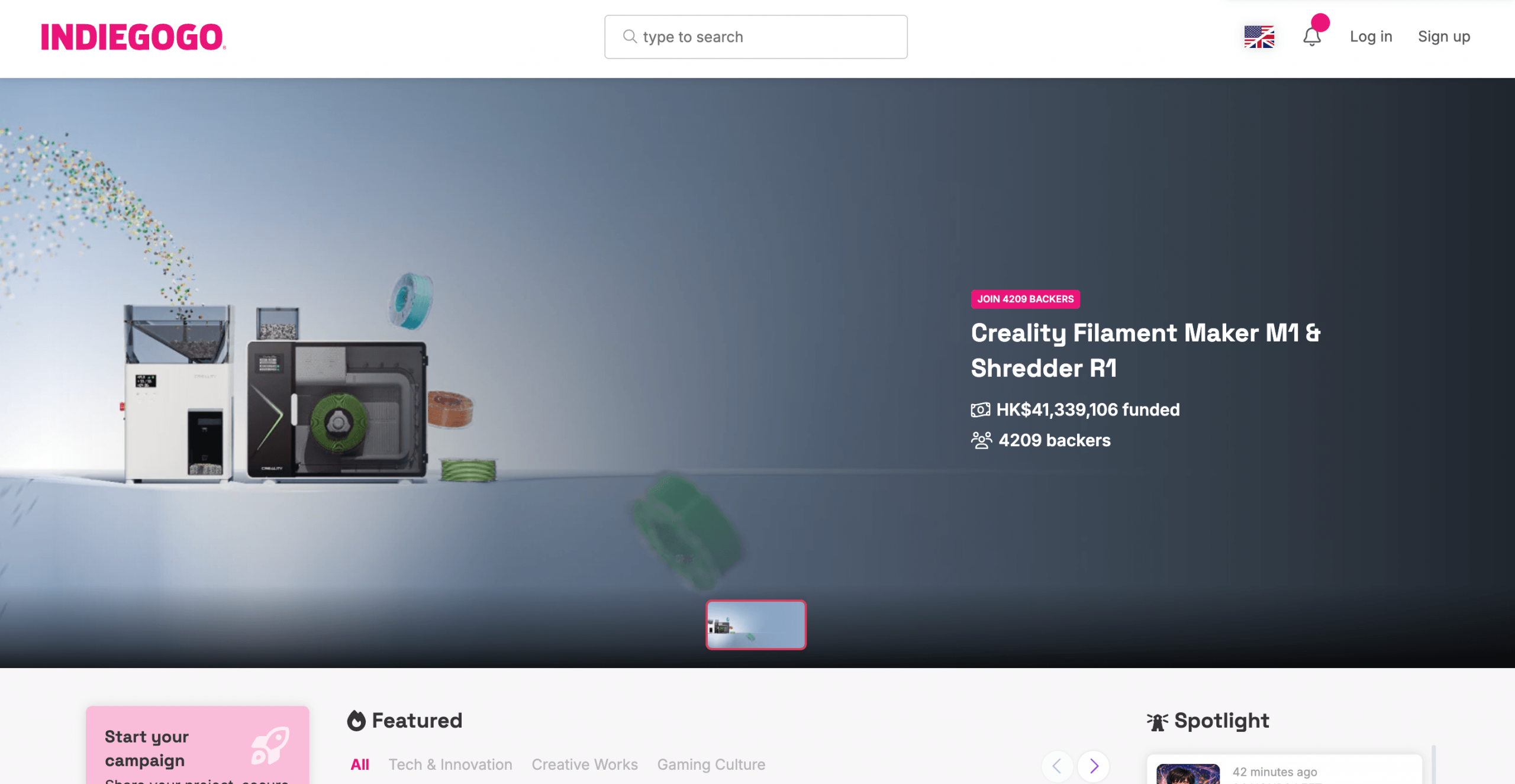
In July 2025, Indiegogo was acquired by Gamefound, combining Indiegogo’s reach of over 38 million users with Gamefound’s technology and features.
Key features:
- Flexible funding – keep what you raise even without hitting your goal
- Fixed funding option for all-or-nothing campaigns
- Late Pledge feature for continued sales after the campaign ends
- Built-in pledge manager for post-campaign fulfillment
- Global reach across 235 countries
- Supports reward-based and charity campaigns
Pricing:
- Platform fee: 5% on all successfully collected payments
- Payment processing: 3% + $0.20 per transaction (USD/EUR/GBP)
- Everything else, such as pledge management, project setup, VAT handling, support, and promotional features, is free
Why it’s a Kickstarter alternative: Indiegogo removes the all-or-nothing pressure with flexible funding. It accepts charity campaigns and now includes a built-in pledge manager. It’s the closest like-for-like swap for creators who want more flexibility.
3. Patreon
Still not satisfied and looking for Kickstarter and Indiegogo alternatives? Patreon might be it.

The platform takes a different approach to crowdfunding entirely. Instead of one-time campaigns, it’s built around recurring monthly support from a loyal audience. It works best for creators who produce content regularly and want predictable, ongoing income.
Key features:
- Membership tiers with exclusive content access
- Monthly and annual subscription options
- Native video, audio, and livestreaming tools
- Community features, including chat, DMs, and comments
- Email newsletter and exportable email list tools
- Podcast importing, syncing, and RSS feed distribution
- Analytics and automated growth tools
Pricing:
- Platform fee: 10% flat on all earnings for creators who joined after August 4, 2025
- Creators who published before August 4, 2025, keep their legacy rates – 5%, 8%, or 11%, depending on their plan
- Payment processing (USD payouts):
- 2.9% + $0.30 for credit card, Apple Pay, and US PayPal/Venmo
- 3.9% + $0.30 for non-US PayPal/Venmo
- One-time purchases: same platform fee as memberships (varies by plan) + standard processing fees
- Everything included in the 10% fee: hosted creator page, monthly and annual memberships, digital product sales, video hosting up to 100 hours/month, community tools, and audience insights
Why it’s a Kickstarter alternative: Patreon isn’t for one-off projects, it’s for creators who want a sustainable income from their community. If Kickstarter fundraising feels too short-term, Patreon offers a longer runway through monthly fan support.
4. GoFundMe
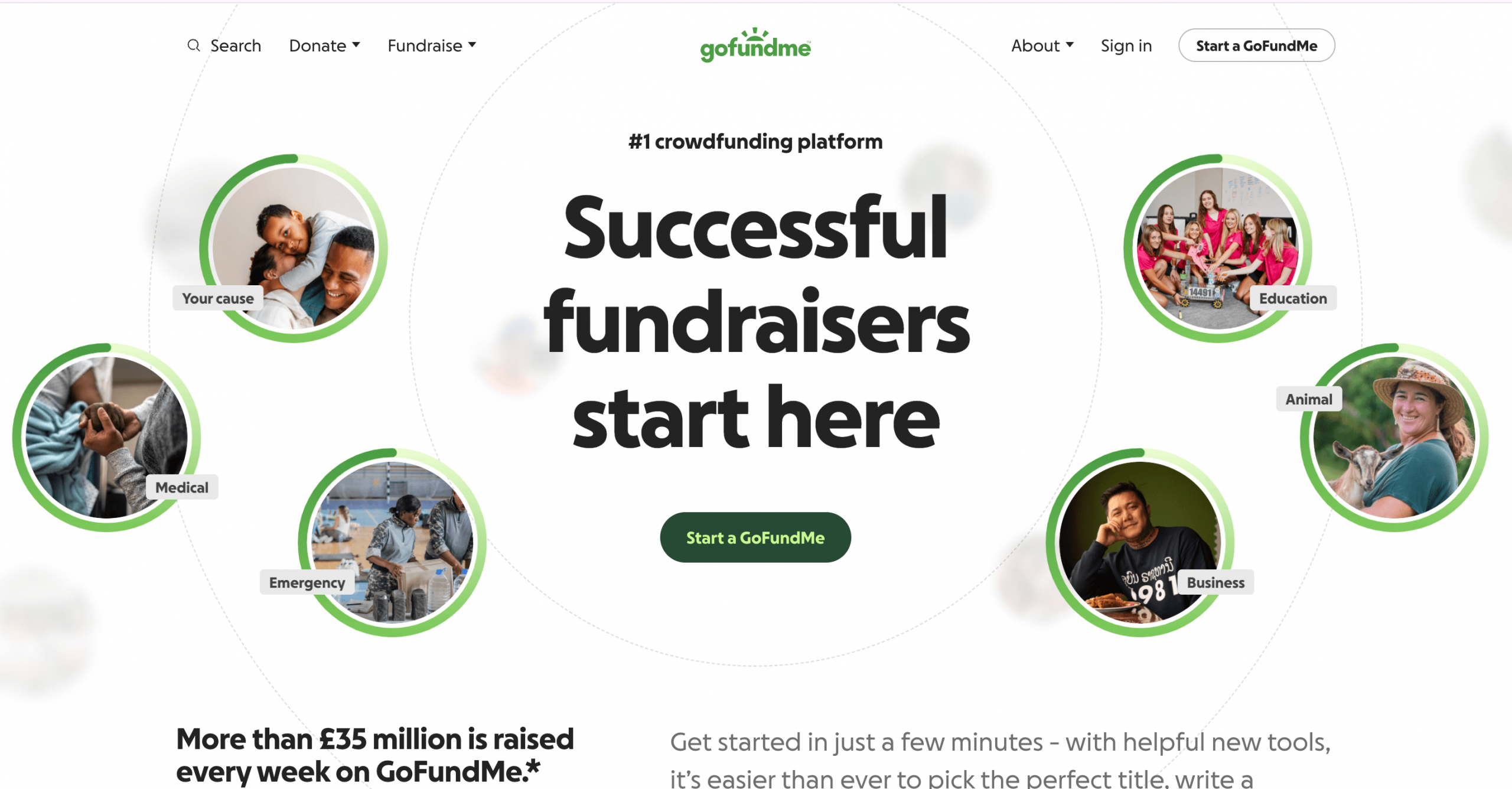
GoFundMe is the largest donation-based crowdfunding platform in the world. It skips rewards and equity entirely, with campaigns running purely on storytelling and social sharing. It’s one of the most accessible options for Kickstarter for donations and personal causes.
Key features:
- No goal requirement – keep whatever you raise
- No campaign deadline required
- Social sharing and a mobile app built in
- GoFundMe Giving Guarantee protects donors
- Simple, fast setup with no prescreening
Pricing:
- Platform fee: 0%
- Payment processing: 2.9% + $0.30 per donation
- Recurring donations: 5% fee per donation charged to the supporter
- Optional donor tips to support the platform
Why it’s a Kickstarter alternative: GoFundMe strips Kickstarter online fundraising back to its simplest form. There are no rewards, equity, or time pressure. For personal causes, emergencies, or charitable initiatives, it’s one of the lowest-cost options out there.
5. FundRazr
FundRazr has been around since 2009 and serves nonprofits, individuals, sports teams, schools, and businesses. It supports multiple campaign models, including wishlist campaigns where donors fund specific items.
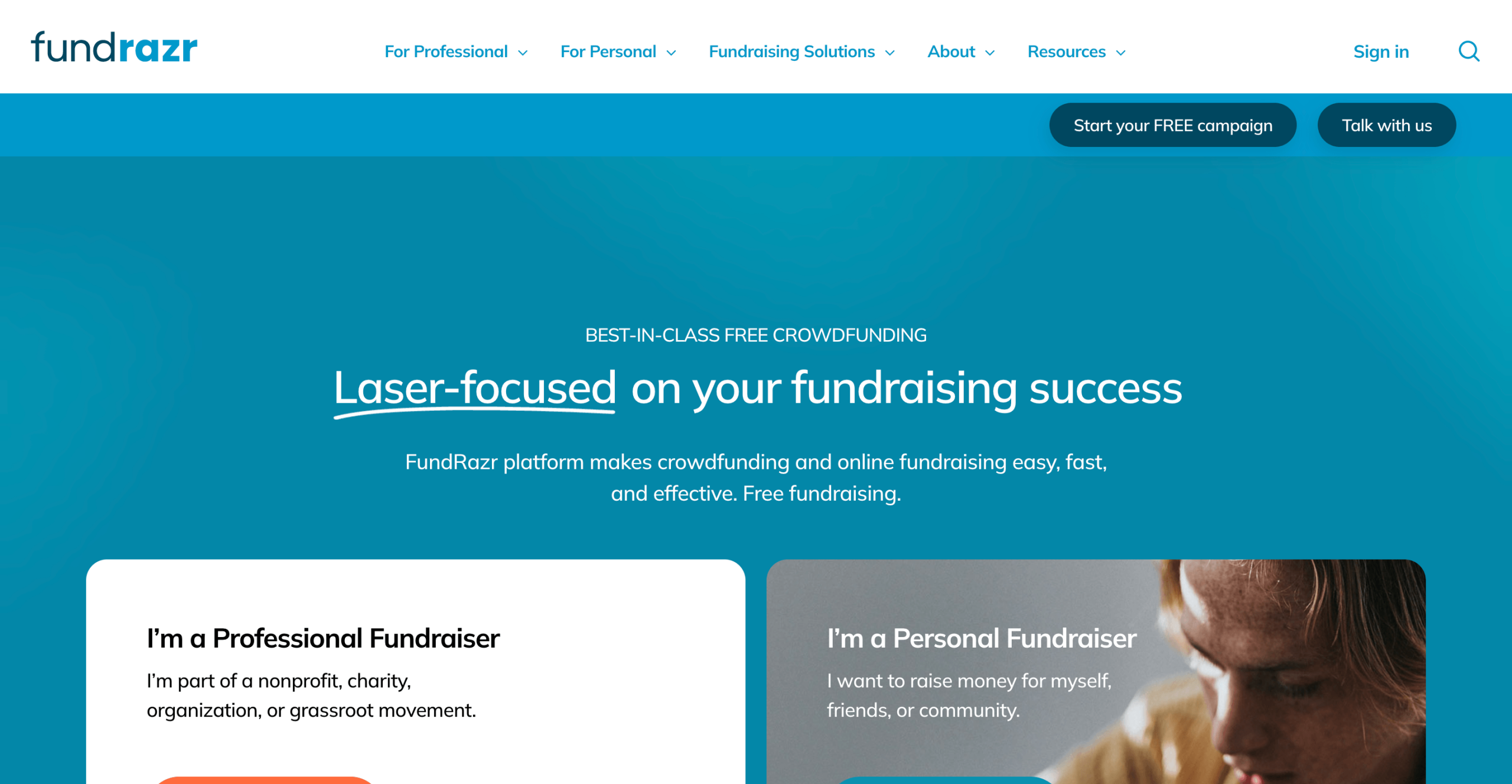
FundRazr’s genuinely free tier makes it attractive for budget-conscious Kickstarter fundraising campaigns.
Key features:
- Customizable pages with photos, videos, and templates
- Wishlist and reward fulfillment tools with perk management
- Peer-to-peer, DIY, recurring donation, and sweepstake campaign types
- Social sharing, leaderboards, and campaign cloning
- Flexible and all-or-nothing funding models available
- No campaign prescreening required
Pricing:
- Optional tips: No platform fee. Only third-party payment processing fees apply. Donors are asked to leave an optional tip to support the platform.
- Fee recovery: Donors are asked to cover both the platform fee and processing fees.
- Donation form: 1% platform fee + 2.9% + $0.30 processing
- Fundraising pages: 5% platform fee + 2.9% + $0.30 processing
- Processing rates may vary by payment processor and region. Nonprofits may qualify for a reduced rate.
Why it’s a Kickstarter alternative: FundRazr has no prescreening or mandatory all-or-nothing model, plus it comes with a free tier. It’s one of the stronger Kickstarter alternatives for nonprofits and individuals who want flexibility without the fee burden.
6. Gamefound
Gamefound started as a pledge manager and grew into a full crowdfunding platform for the tabletop and board game community. Its integrated system handles everything from the initial campaign to post-campaign pledge management, creating a seamless experience.
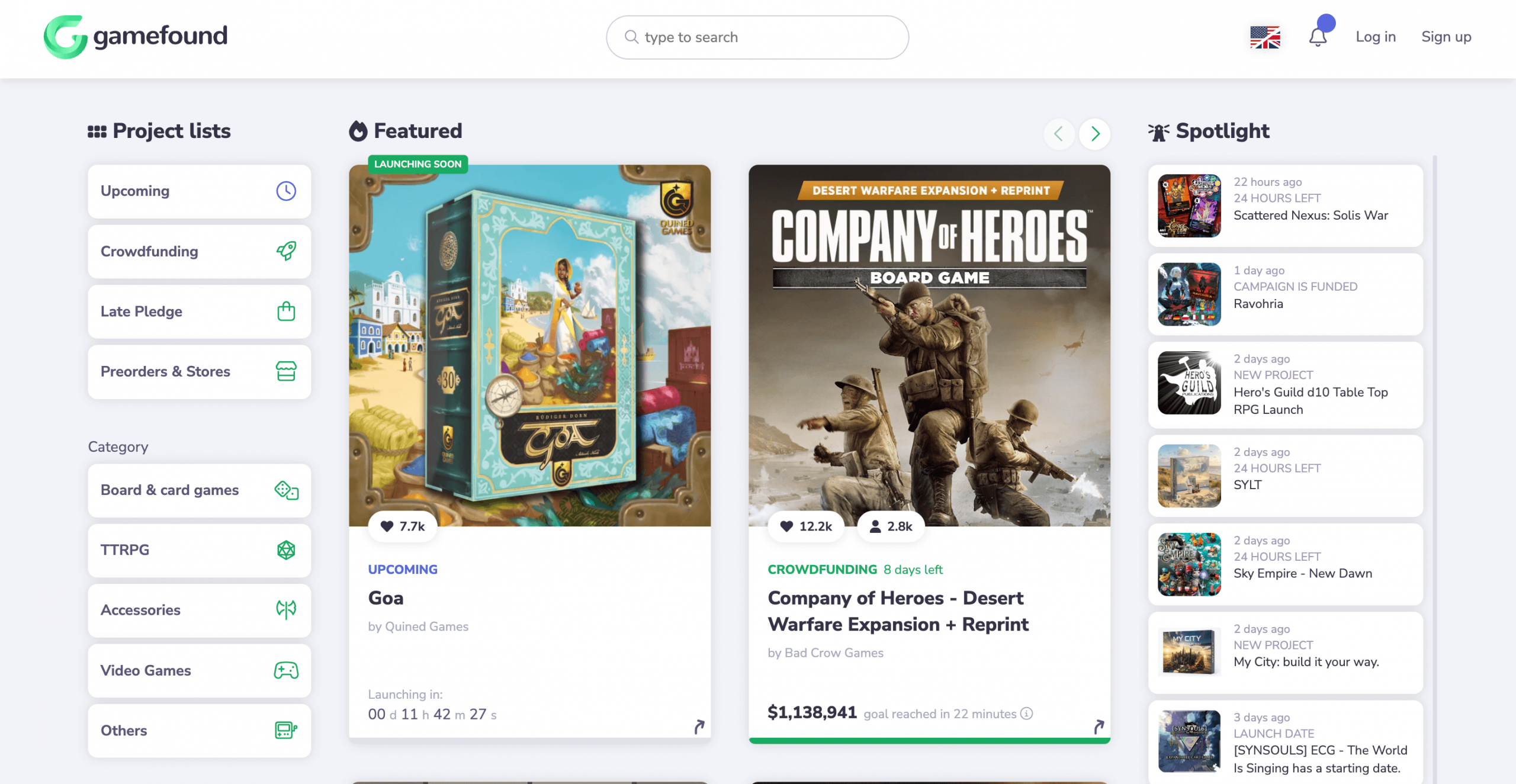
Its singular focus attracts a highly engaged audience of tabletop enthusiasts, and it now owns Indiegogo too.
Key features:
- Crowdfunding campaigns with built-in pledge management
- Late Pledge feature for continuing sales after the campaign ends
- Shipping, tax setup, and order management tools
- Dedicated tabletop gaming community and discovery
- Integrated backer surveys and address collection
- Compatible with external pledge managers for cross-platform campaigns
Pricing:
- Platform fee: 5% on all successfully collected payments
- Payment processing: 3% + $0.20 per transaction in project currency
- Performance marketing (Facebook, Google, BGG, etc.): 10% of ad revenue
- Pledge manager setup, Stretch Pay, project setup, EU VAT handling, various payment methods, premium support, and promotional features are all free
Why it’s a Kickstarter alternative: For board game and tabletop creators, Gamefound offers a built-in audience that Kickstarter has historically dominated. It’s the most targeted niche pick on this list, and now has Indiegogo’s global reach behind it too.
7. Wefunder
Wefunder operates on a completely different model. Backers don’t get rewards, but they become actual investors in your company.
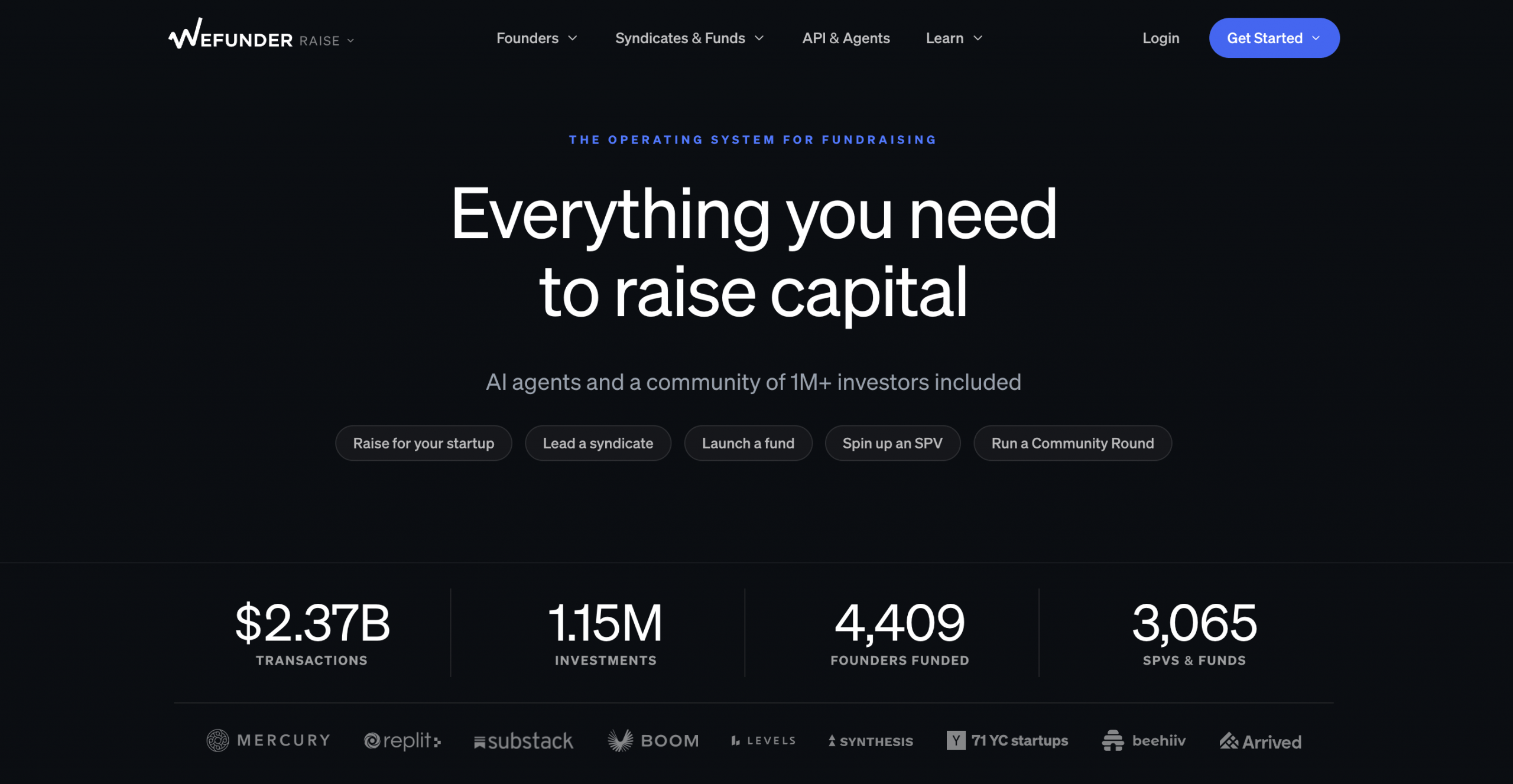
When it comes to equity crowdfunding for non-accredited investors, Wefunder is the market leader. It’s built for startups that want to raise real capital, not run a rewards-based campaign.
Key features:
- Equity and debt crowdfunding options
- Open to non-accredited investors and not just wealthy individuals
- Company profile pages with investor updates and community tools
- Supports a wide range of industries and business types
- No prescreening – open platform for eligible businesses
- Founder resources and investor relations tools
Pricing:
- Warmup (Free): $0 – build your investor list and share your company profile before committing to raise. No credit card required.
- Private Round (raise from up to 247 accredited investors):
- Free for founders – investors are charged instead
- SPV setup: $10K one-time fee
- Direct invites: 0% fee, 0% carry
- Wefunder investors: 5% fee + 10% carry + 10-year management fees
- Community Round (public raise, open to all investors from $100):
- 7.9% + $1K/year of funds successfully raised
- Reg CF compliance included
- SPV included
- Direct investments from accredited investors you already know: free
- LLCs taxed as LLCs: additional $5,000+/year for tax filings
- No setup fees or charges unless you successfully raise
Why it’s a Kickstarter alternative: Kickstarter can’t offer equity, with backers getting rewards, and not ownership. Wefunder flips that model. It’s the go-to for startups that want to raise real capital from a crowd of investors rather than run a traditional Kickstarter and crowdfunding campaign.
So, which Kickstarter alternative should you pick?
It really comes down to what you’re raising money for. Creators chasing recurring income will lean toward Patreon. Startups after real investment will find Wefunder more to their speed. Personal causes and Kickstarter for donations sit comfortably on GoFundMe, while product launches fit naturally into crowdfunding on Indiegogo.
For nonprofits, though, RallyUp, an end-to-end fundraising platform, is in a league of its own. Crowdfunding is just one piece of what it offers – stack on raffles, auctions, peer-to-peer, galas, storefronts, and more, all from a single platform. It’s the kind of fundraising flexibility that Kickstarter was never built to deliver.
If that sounds like what your organization needs, start your free RallyUp campaign today
FAQS on Kickstarter alternatives
Are there other sites like Kickstarter?
Yes. There are plenty of strong Kickstarter alternatives out there, including RallyUp, Indiegogo, GoFundMe, Patreon, FundRazr, each built for different campaign types and fundraising goals.
Who are Kickstarter’s competitors?
The biggest competitors of Kickstarter and crowdfunding include:
1. RallyUp for nonprofit Kickstarter fundraising
2. Indiegogo for product launches
3. Patreon for creator subscriptions
4. GoFundMe for donation-based campaigns
Is Gamefound or Kickstarter better?
It depends entirely on your project. Kickstarter’s audience is more than 20 times the size of Gamefound’s, making it better for games with mass appeal. Gamefound, however, is specialized for tabletop games only, attracting a highly engaged, enthusiast audience that Kickstarter’s general crowd can’t match.
Now that you’ve seen it in action, are you ready to start fundraising?
Get Started