33 Best Fundraising Platforms for Schools in 2026
The best fundraising platform for schools — RallyUp
- RallyUp is genuinely, seriously easy to use. A PTA volunteer can build and launch a school raffle, auction, or A-Thon in 15–20 minutes from an Instant Fundraiser Template.
- And it does dramatically more: raffles, auctions, ticketing, A-Thons, Peer-to-Peer (P2P) student pages, a storefront, and donations, all inside one Campaign.
- Donation Pages are free, with no donor tipping required, and the Free plan carries a 0% platform fee.
- Support starts with an AI assistant that knows the platform. Ask for a person at any point and you get one, by chat, email and phone, on every plan.
- Want to shop around first? 32 other school fundraising platforms are compared below, with pricing and eligibility.
School fundraising is no longer occasional, which is why choosing between fundraising platforms for schools has become a real budget decision rather than an afterthought.
Between February 2024 and August 2025, fundraising platform We Raise Together tracked 1,346 fundraising requests across campaigns on its platform. Schools submitted 357 of them, accounting for 26.5% of requests in that dataset.
Nonprofits and schools together made up more than 60% of total fundraising activity.
Essential school programs now depend on fundraising. This guide compares 33 platforms — RallyUp plus 32 alternatives — on pricing, eligibility, and the event and pledge tools that school groups actually use.
In this article
- The short answer: start with RallyUp
- Features that actually help schools raise more
- What are schools actually raising money for?
- 32 other fundraising platforms for schools worth knowing
- What kind of fundraiser should a school actually run?
- 4 all-in-one fundraising platforms for schools
- 5 peer-to-peer fundraising platforms for schools
- 5 crowdfunding platforms for schools
- 3 merchandise and product-based fundraising platforms for schools
- 5 donor management and school foundation platforms
- 3 raffle, auction, and sweepstakes fundraising platforms for schools
- 3 classroom and teacher project platforms for schools
- 4 text-to-give and mobile-first fundraising platforms for schools
- What changes when you're ready to grow
- How to choose the best online fundraising platform for your school
- How the right platform accelerates school fundraising
- Mistakes schools make when choosing fundraising platforms
- Final recommendation framework
- Final thoughts: funding children's education the right way
- FAQs about fundraising platforms for schools
The short answer: start with RallyUp
RallyUp is genuinely, seriously easy to use. Roughly 40% of RallyUp campaigns start from an Instant Fundraiser Template, a first campaign typically goes live in about three hours of total effort, and a simple one can be built and launched in 15–20 minutes. Ease of use is the single most cited strength in RallyUp reviews, with a 4.5/5 ease-of-use score on G2 against a 4.8/5 overall rating.
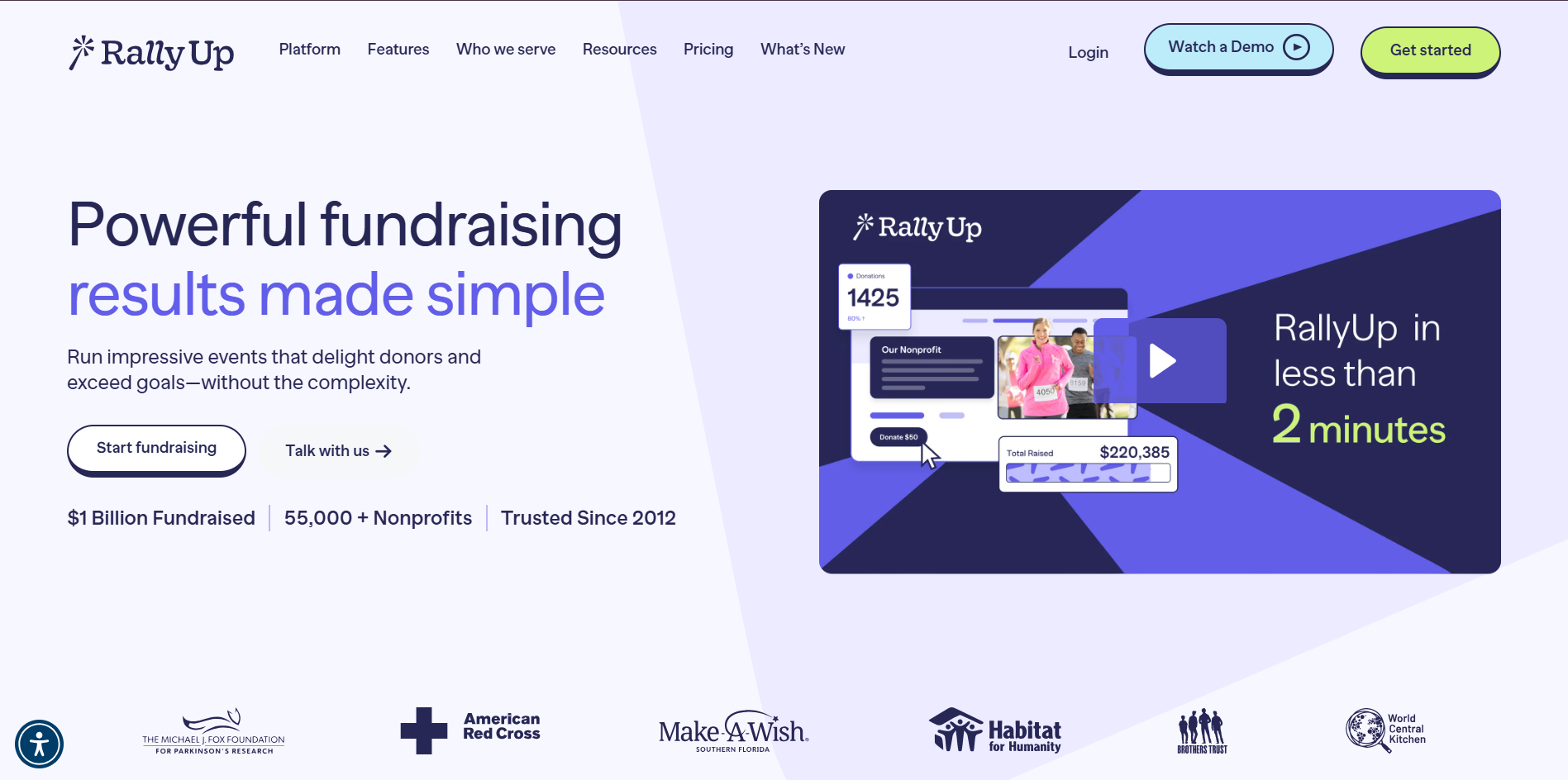
And it does dramatically more than a donation form. A PTA can sell raffle entries, run a silent auction, take gala ticket payments, launch a read-a-thon with student pages, and open a spiritwear storefront — from one Campaign, on one URL, through one checkout. If you would rather not build it yourself, Create My Campaign has a RallyUp fundraising expert build your first campaign for you at no cost.
That ordering matters for schools. Easier: templates and a free expert build mean a volunteer board can launch without training. Faster: Power Preview, RallyUp’s interactive draft mode, lets you push real test card transactions through checkout before parents see the page, so you find the wrong ticket price yourself. Cheaper: the Free plan carries a 0% platform fee, Donation Pages are free with no donor tipping required, and there are no contracts, subscriptions, or setup fees to sign before you find out whether the fundraiser works.
| What matters most to a school | RallyUp | Typical alternative |
|---|---|---|
| Launching one school fundraiser | Build and launch in 15–20 minutes from an Instant Fundraiser Template | A demo call and a quote, or a build from scratch |
| Free expert build | Create My Campaign builds your first campaign at no cost | Not offered, or paid onboarding |
| Students and classrooms | Peer-to-Peer (P2P) pages, team totals, and classroom leaderboards in the same Campaign | A separate peer-to-peer module, or a second campaign |
| Testing before parents see it | Power Preview runs real test card transactions through checkout | A static preview, or a rehearsal on the live page |
| Free to fundraise | Free plan at a 0% platform fee; Donation Pages free with no donor tipping required | A monthly subscription, or a percentage of everything you raise |
| Getting help | Ask for a human, get a human — by chat, email and phone, on every plan | Email support, with phone help gated behind a paid tier |
| When you’re ready to grow | 12+ stackable Components, addable to a Campaign that is already live | A separate tool or campaign for each format |
Features that actually help schools raise more
Features matter more than brand names. Here is what a school actually needs.
Built-in payment processing
Cards, ACH, Apple Pay, and Google Pay should work out of the box. Automatic receipts and clean reporting save PTAs hours.
Peer-to-peer fundraising tools
Personal pages expand your reach fast. Leaderboards, team pages, and classroom tracking keep participation high.
Event and a-thon support
Walk-a-thons, read-a-thons, fun runs, galas, raffles. A strong platform handles ticketing, pledges, sponsorships, and live tracking without a workaround.
Learn everything you need to know about hosting a-thons!Mobile-first donor experience
Most parents donate on their phones. Fast pages and short checkout flows increase completed donations.
Easy setup for volunteers
PTA leadership changes often. Templates and guided setup cut training time and make the annual handoff survivable.
Support matters for the same reason. PTAs and booster clubs are volunteer-run, often with a new treasurer every year, and “what happens when I get stuck at 9pm?” is a genuine decision factor. RallyUp includes an AI assistant that knows the platform, and at any point you can ask for a person and get one — on any plan, with no paid support tier.
Transparent and affordable pricing
Platform fees, processing fees, and donor-tip models should all be easy to understand before you launch.
What are schools actually raising money for?
Textbooks and learning materials top the list in many districts, followed by technology upgrades, from classroom devices to stronger infrastructure. Schools also raise funds to protect music, arts, athletics, and clubs when budgets shrink.
Special education programs need adaptive tools, and teacher development is a recurring cost. Parent groups fund field trips, playgrounds, and classroom supplies.
Take a deeper look at why schools need fundraising, plus strategies for success32 other fundraising platforms for schools worth knowing
RallyUp sits above this list because it covers the widest range of school fundraiser formats from one place. The 32 platforms below are the real alternatives, grouped by how schools actually fundraise: all-in-one campaigns, peer-to-peer drives, crowdfunding, merchandise, donor management, raffles and auctions, classroom projects, and text-to-give.
We prioritized ease of use for volunteer-led PTAs, transparent pricing with built-in payment processing, and genuine peer-to-peer or event functionality.
Fundraising platforms comparison
All 33 platforms are covered in this guide. The table below is a quick look at RallyUp and seven of the platforms schools ask about most.
- Eligibility: Schools fundraise through different groups — public schools, PTAs/PTOs, booster clubs, school foundations, and individual teachers. Platforms set their own eligibility rules, so confirm your group qualifies to create a campaign and receive funds. Some platforms require 501(c)(3) status, which many PTOs and booster clubs don’t have.
- Pricing: Platform fees and payment processing costs change frequently. All pricing in this guide was last checked in March 2026 using publicly available platform information.
| Platform | Best For | Event & A-thon Tools | Ease of Use for Schools | Eligibility |
|---|---|---|---|---|
| RallyUp | Raffles, auctions, a-thons, and hybrid school events in one Campaign | Yes | Very Easy | Nonprofits, PTAs/PTOs, school groups |
| Flipcause | Year-round school foundations | Yes | Moderate | Registered nonprofits |
| Bloomerang Fundraising | Donation forms + structured events | Yes | Moderate | Registered nonprofits |
| Mightycause | Giving days + peer-to-peer | Limited | Easy | U.S. 501(c)(3) public charities |
| Donorbox | Recurring school donations | Limited | Easy | Nonprofits, organizations, individuals |
| GoFundMe Pro | Large peer-to-peer campaigns | Yes | Moderate | Nonprofits and organizations |
| 99Pledges | Walk-a-thons, read-a-thons | A-thon focused | Very Easy | Schools and school groups |
| PledgeStar | Pledge-based school drives | A-thon focused | Easy | Schools and PTAs |
What kind of fundraiser should a school actually run?
Here’s the question behind the question. If you’re searching for a school fundraising platform, you probably haven’t settled what the fundraiser is yet, and the right platform depends on it. So start with the shortlist. These are the formats that work best for schools, and what each one suits:
- A-Thons (read-a-thon, walk-a-thon, jog-a-thon, lap-a-thon): the classic school format. Students collect pledges, and sponsors pay per unit completed.
- Raffles: fast and high-margin, and a natural fit for game nights and school carnivals.
- Silent auctions: usually the centerpiece of a spring gala or PTA event.
- Product and spirit-wear sales: an online store instead of paper order forms and cash envelopes.
- Peer-to-peer: less a format than a layer that runs across any of the above, with students fundraising to their own networks.
One caveat on raffles: the rules vary by state, and can depend on the type of group running one, so check your state’s current rules before you plan a raffle. Our guide to raffle laws by state is a good place to start.
For most schools, A-Thons are the strongest fit on that list. There’s no inventory to order, no prizes to source, and nothing to ship. The students are the fundraisers, and parents, grandparents and neighbors are the donors.
What makes them work is the pledge. Instead of giving a flat donation, a sponsor pledges per unit: per book, per lap, per mile, per minute read. That gives every student a personal number to chase, and it gives sponsors a reason to care about the outcome. A grandparent who pledged per lap wants to know how many laps got run.
It’s worth saying plainly: most fundraising platforms can handle a flat donation with a student’s name on it, but relatively few handle true per-unit pledges, where the final charge depends on what the student actually completed. RallyUp’s A-Thons do. Activity is logged as the event runs, and when the A-Thon ends, RallyUp charges each sponsor automatically based on the units actually completed. Nobody has to chase pledges by hand afterward.
Here’s what that looks like in practice. Take 120 students, each with six sponsors pledging 25 cents per page read. If students average 80 pages over two weeks, that’s 120 × 6 × $0.25 × 80, or roughly $14,400, with no prizes to buy and no inventory to manage.
If you’re planning one, our guide to running a read-a-thon the right way walks through it step by step.
4 all-in-one fundraising platforms for schools
1. Flipcause — an all-in-one suite with a built-in CRM, priced as a year-round subscription
Flipcause genuinely does bundle donation pages, event ticketing, and donor tracking into one place, and a school foundation that fundraises continuously gets real value from having the CRM sitting next to the campaigns instead of in a separate system.
The cost is a monthly subscription rather than a per-campaign fee, so a PTA running one spring gala also pays for the eleven quiet months around it. Eligibility is limited to registered nonprofit organizations, which can rule out a booster club without its own determination letter.
Versus RallyUp: RallyUp charges nothing to keep an account open — the Free plan carries a 0% platform fee — so a school group that fundraises twice a year pays only when it actually raises money.
- Subscription: Starter $125/month (paid annually) for up to $100k in revenue; Growing $200/month (paid annually) above $100k.
- Payment processing: 6.9% + $0.30 per transaction, which supporters can opt to cover.
2. Bloomerang Fundraising (formerly Qgiv) — solid donation forms and event registration, sold module by module
Bloomerang Fundraising is a well-built structured system: clean donation forms, real event registration with guest management, and the option to start lightweight and add peer-to-peer or text fundraising later.
Those additions are separate modules with their own costs — peer-to-peer adds 1% on top of the 3.95% + $0.30 card rate — and the platform is open to registered nonprofits only.
Versus RallyUp: on RallyUp, Peer-to-Peer (P2P) is a Component you switch on inside the Campaign you already built, with no module to purchase and no second campaign to rebuild.
- Subscription: Bloomerang Fundraising from $40/month; Bloomerang Volunteer from $119/month.
- Processing: 3.95% + $0.30 per card transaction; eCheck 1.95% + $0.95; AMEX +1%; peer-to-peer +1% on top of the card rate.
- Donor-covered fees: GiftAssist can be set up to 6% of the donation or a flat amount up to $10.
3. Mightycause — predictable net costs through donor-covered fees, limited event tooling
Mightycause leans hard into a donor-covered fee model backed by a price guarantee, and that predictability is a genuine advantage for a PTA that has to report a clean net number to its board.
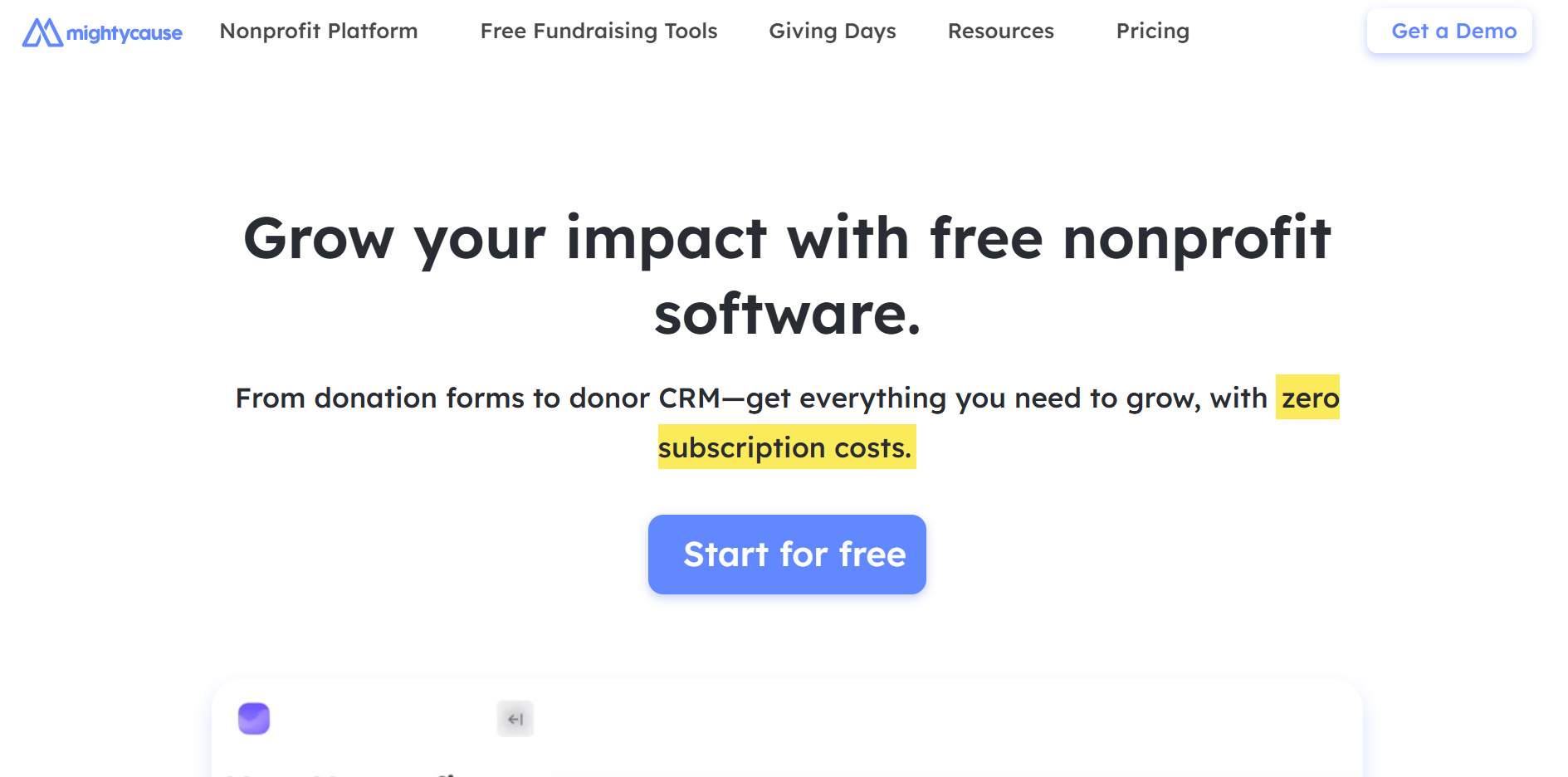
Event and a-thon tooling is limited, so a gala with ticketing and a silent auction needs a second platform alongside it. Eligibility is restricted to U.S. 501(c)(3) public charities.
Versus RallyUp: RallyUp runs the giving day and the gala from the same Campaign, and PTAs, PTOs, and school groups qualify without holding their own 501(c)(3) determination.
- Platform fee: donor-covered model, donors are asked to cover 7.9% + $0.30 per transaction; or organization-paid at the same 7.9% + $0.30.
- Processing: included within that fee structure.
4. Donorbox — excellent recurring giving forms, thin on school events
Donorbox is very good at the thing most school foundations need first: a fast, clean donation form with strong recurring giving, open to nonprofits, organizations, and individuals alike.
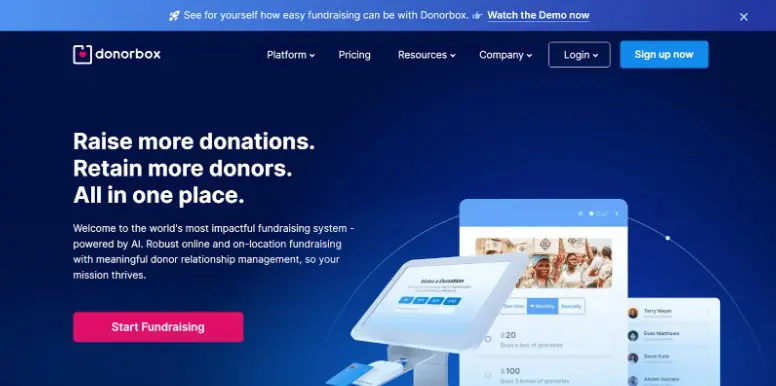
Events, memberships, and peer-to-peer all sit at the 3.95% platform fee on the Standard plan, and the cheaper rates start at $150/month on Pro. Event tooling stays light next to a purpose-built a-thon or auction system.
Versus RallyUp: A-Thons, Raffles, Auctions, and Ticketing are Components of one RallyUp Campaign rather than bolt-ons, and Donation Pages are free with no donor tipping required.
- Plans: Standard, no monthly fee, platform fees 2.95%–3.95%; Pro $150/month, 1.75%–2%; Premium custom, 1.6%–2%. Events, Memberships, and Peer-to-Peer on Standard carry a 3.95% platform fee.
- Processing: Stripe cards commonly 2.9% + $0.30, often 2.2% + $0.30 for approved nonprofits; ACH 0.8% capped at $5; PayPal commonly 1.99% + $0.49 (non-AMEX).
5 peer-to-peer fundraising platforms for schools
5. GoFundMe Pro (formerly Classy) — enterprise-grade peer-to-peer for major annual drives, contracted and quoted
GoFundMe Pro is the real deal for structured peer-to-peer: team pages, milestone challenges, and performance tracking that established school foundations use to run their biggest annual campaign.
Pricing is an annual upfront subscription plus a per-donation fee, and the exact amounts are contracted rather than published. A PTA cannot price its campaign before a sales conversation.
Versus RallyUp: RallyUp publishes its rates, and Create My Campaign will build your first school campaign for you at no cost, so the budget conversation happens before the sales call rather than after it.
- Platform: annual upfront subscription plus a per-donation transaction fee; amounts are contracted and not publicly listed.
- Processing: typical card processing 2.4% + $0.30; AMEX +1%; PayPal and Venmo from 2.5% + $0.30.
6. 99Pledges — very easy pledge tracking for a-thons, and little else
For a walk-a-thon, read-a-thon, or fun run, 99Pledges is about as frictionless as school fundraising gets: no subscription, simple student pages, and pledge tracking that a parent volunteer can run alone.
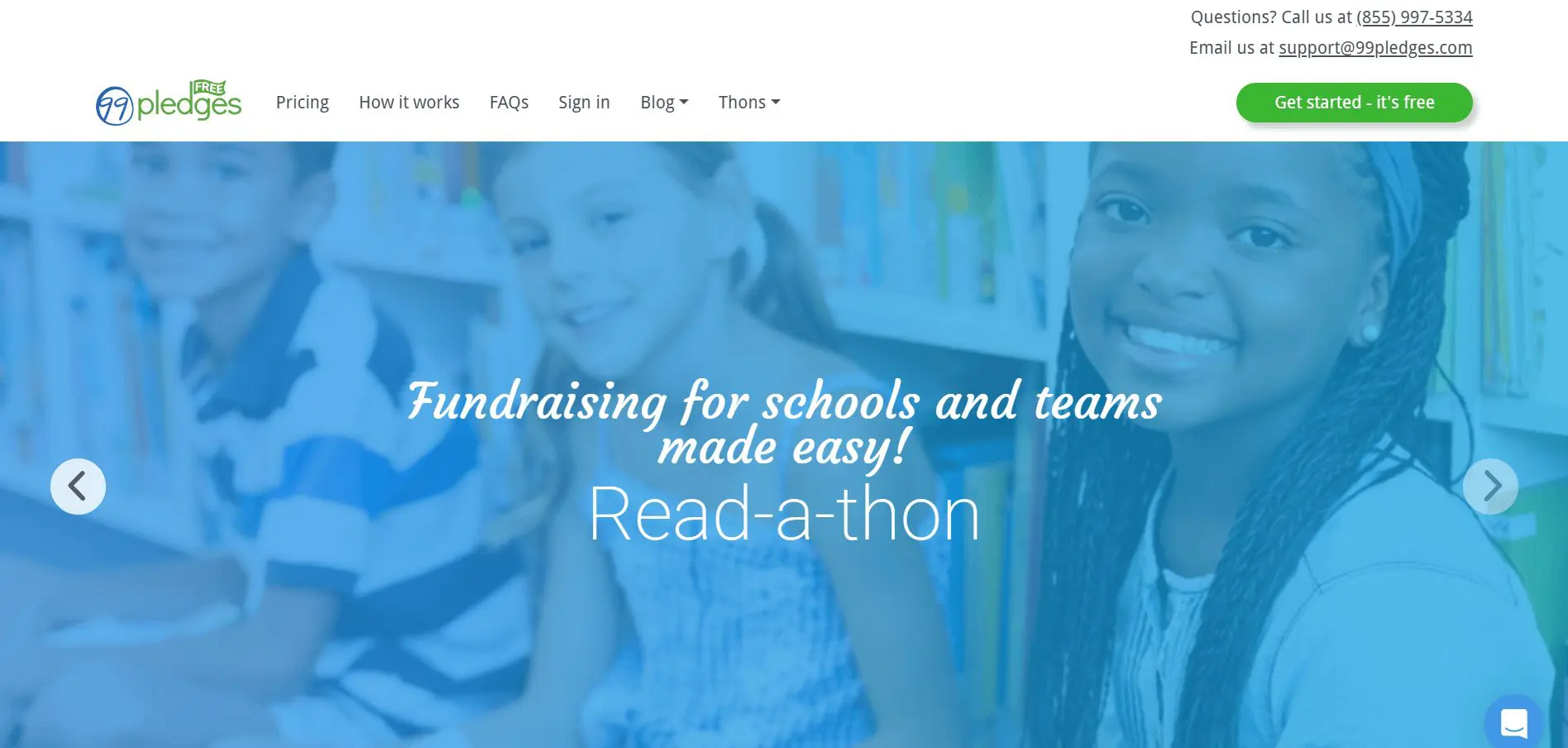
Outside pledge drives there is not much to work with. No auction, no ticketing, no raffle entries, so the gala and the spring auction need a different platform.
Versus RallyUp: RallyUp runs the A-Thon and then the gala auction from the same Campaign, so the PTA hands over one system at the end of the year instead of four.
- Pricing: no upfront subscription; standard transaction fee 3.49% + $0.49 per transaction.
7. Snap! Raise — hands-on coaching for athletic and band programs, at a percentage that is not published
Snap! Raise brings something most platforms do not: guided campaigns with human coaching, which is why so many middle and high school teams, bands, and cheer programs use it.
Pricing is not published. District disclosures and school summaries put the platform fee around 20% of funds raised, with processing generally rolled into that percentage and card rates not itemized separately. Terms vary by contract and campaign size, so it tends to suit larger team fundraisers where the coaching is treated as part of the value.
Versus RallyUp: RallyUp publishes every rate — 4.9% for A-Thons and Auctions, 6.9% for Raffles and Sweepstakes on the Flex plan, 0% on the Free plan — and free human fundraising experts are included by chat and phone rather than priced into a percentage.
8. PledgeStar — capped pledge-drive pricing that keeps costs predictable, one format only
PledgeStar’s capped fee is a genuinely school-friendly idea: 7% of donations, invoiced after the event, and never more than $1,195 no matter how well the drive goes.
It does one thing. Ticketing, auctions, and raffle entries are not part of the picture, and card processing is billed separately on top of the platform fee.
Versus RallyUp: RallyUp caps things too, but inside a broader Campaign — auction platform fees are capped at $100 per item on the Flex plan, while pledges, tickets, and donations run through the same checkout.
- Platform fee: no monthly fees; 7% of total donations processed, invoiced after the event, capped at $1,195.
- Processing: separate; 1.99% + $0.49 for verified nonprofits, around 3% if donors do not cover it. Donors can choose to cover platform and processing fees.
9. Schoolfundr — $0 platform fees for school groups, funded by optional donor tips
Schoolfundr is built for school communities specifically, and eligibility is refreshingly broad: schools, PTAs, teams, and booster clubs all qualify. There are no platform fees and no subscription, with the model funded through optional donor tips and Stripe processing at 2.9% + $0.30. The feature set stays close to simple fundraising pages and tracking, so auctions, raffle entries, and event checkout are elsewhere.
Versus RallyUp: RallyUp’s Free plan also carries a 0% platform fee, and it still gives you Raffles, Auctions, Ticketing, and A-Thons inside the same Campaign.
5 crowdfunding platforms for schools
10. Zeffy — genuinely zero fees on every transaction, with a narrower bench for live school events
Zeffy is the real thing on fees: no platform fee and no payment processing fee, funded entirely by an optional donor contribution at checkout. Its auctions include auto-bidding, anti-sniping, automatic charging of winners, and outbid notifications by email, and it handles memberships with renewals and cards — something RallyUp does not offer.
Where it thins out is the live room and the breadth around it. There is no Zeffy equivalent to Event Balances and Automated Checkout, the single running tab per guest across a whole gala night that settles with one charge, and eligibility is limited to registered nonprofits or charities with an organization-owned bank account — which excludes many PTAs and booster clubs. On the fee model, reviewers including Donorbox and G2 have noted that Zeffy’s checkout pre-selects a donor contribution reported at 15–17%, putting the effective cost to donors at around 12.75%.
Versus RallyUp: RallyUp’s Free plan carries its own 0% platform fee with Donation Pages free and no donor tipping required, and for the gala it adds Auction Gifts, which turns bidders who win nothing into revenue rather than a thank-you email.
- Pricing: Zeffy charges no platform or payment processing fees and is funded through optional donor contributions.
11. GoFundMe — unmatched public reach for an urgent need, no school-specific structure
Nothing else in this guide matches GoFundMe for reach and instant setup, and individuals, teams, and organizations can all launch. There is no platform fee for personal and nonprofit fundraisers, donors are prompted to leave an optional tip, and processing is 2.9% + $0.30. What you do not get is structure: no pledge tracking, no ticketing, no auction, no classroom-level reporting.
Versus RallyUp: RallyUp gives you a public campaign page too, plus student pages, classroom leaderboards, and event checkout in the same place.
12. SignUpGenius Fundraisers (formerly Fundly) — donations attached to the sign-up sheet schools already use
Familiarity is the real strength here: most school communities already run volunteer coordination and event sign-ups through SignUpGenius, and adding donations to that flow removes a step. There is no subscription cost, with Stripe processing at 2.9% + $0.30 per transaction. Donations remain a feature of a sign-up tool, though, so pledge tracking, auctions, and raffle entries are out of scope.
Versus RallyUp: RallyUp is built the other way round — the fundraiser is the product, and ticketing, pledges, and donations share one checkout and one report.
13. Crowdfundly — cheap, customizable campaign pages, with nothing school-specific
Crowdfundly is genuinely inexpensive and flexible: structured campaign pages with optional peer-to-peer layers on a free plan (4% on Memberships and Shop Items), Pro at $4.99/month, and Pro Plus at $8.33/month, with payment processing charged by your processor and region. It is not built for schools, so a-thon pledge tracking, classroom rankings, and event checkout are things you assemble yourself.
Versus RallyUp: RallyUp ships the school-specific pieces already assembled, from student pages to raffle entry tiers, and a fundraising expert will build the first one for you at no cost.
14. Givebutter — broad free campaign coverage funded by donor tips, thinner in the live room
Givebutter covers a lot of ground at a 0% platform fee when tips are enabled: donation pages, peer-to-peer, ticketed events, and auction-style campaigns. Its Guarantee states your organization keeps 100% of funds raised even when donors decline to tip, and its free CRM has no contact cap.
Turning tips off moves you to a flat 3% platform fee across campaign types. Givebutter offers a non-transacting preview for some campaign types and supports test receipts at the campaign level, but it does not simulate an end-to-end transaction through checkout on a draft campaign. Individuals cannot create independent fundraising campaigns.
Versus RallyUp: Power Preview, RallyUp’s interactive draft mode, runs real test card transactions through checkout before your campaign publishes — so the PTA treasurer finds the mispriced gala ticket, not a parent.
- Platform fee: 0% with tips enabled; 3% flat across campaign types with tips disabled.
- Processing (when not covered): 2.9% + $0.30 for cards and digital wallets; 1.9% + $0.30 for ACH, noted as for verified nonprofits.
3 merchandise and product-based fundraising platforms for schools
15. Bonfire — hands-off spiritwear with printing and shipping handled, margin-based earnings
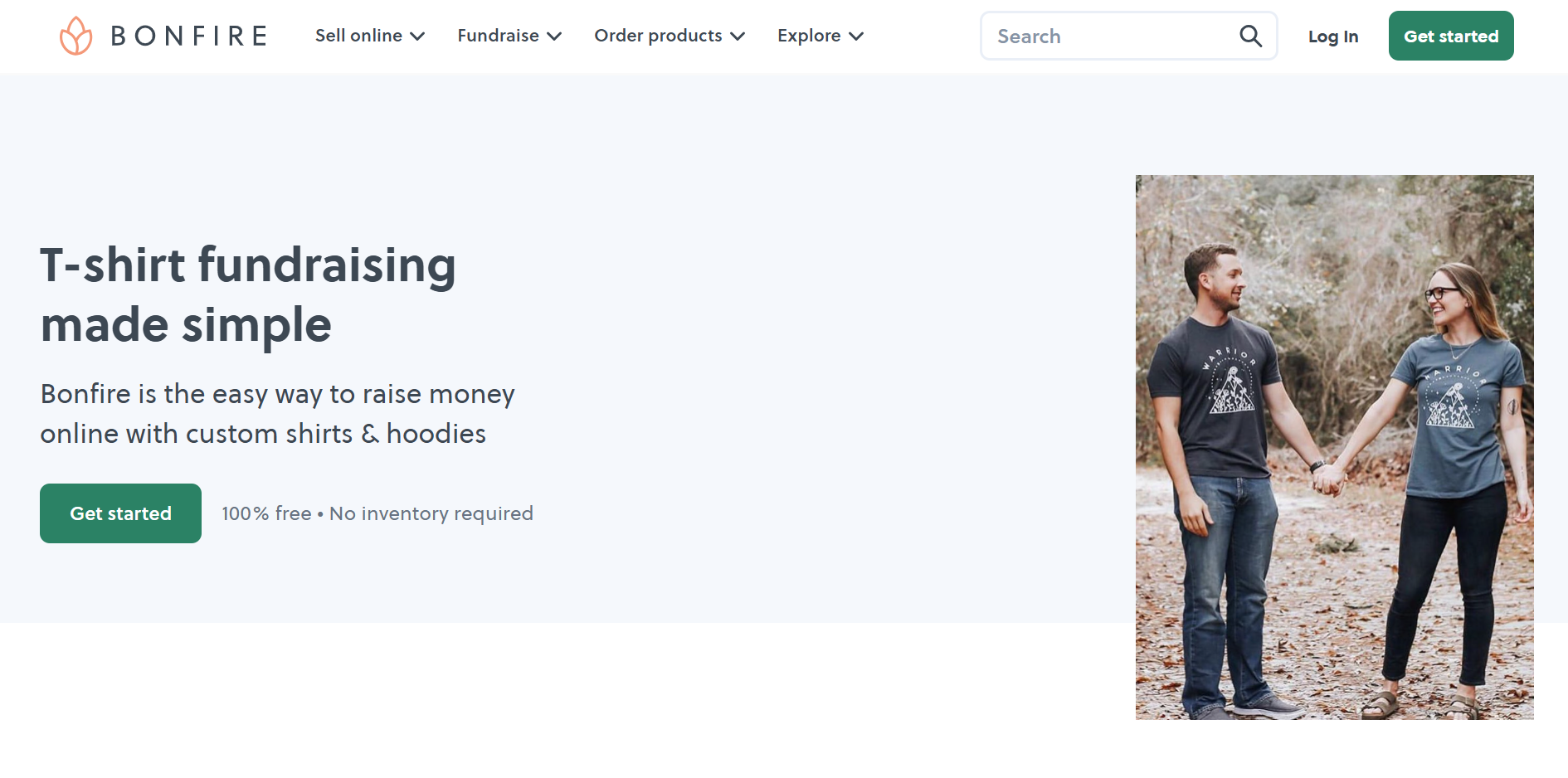
Bonfire removes every piece of merchandise logistics: you set the selling price, Bonfire prints and ships, and the margin is your profit. Processing is 8%, reduced to 3.5% for verified nonprofits, and buyers pay shipping at Bonfire’s rates. Earnings depend entirely on how many shirts move, and there is no donation, ticketing, or pledge layer around the drop.
Versus RallyUp: the RallyUp Storefront Component sells spiritwear inside the same Campaign as your tickets, raffle entries, and donations, at a 2.9% platform fee on the Flex plan.
16. Custom Ink Fundraising — a familiar apparel catalog and a free launch, limited beyond merchandise

For the many school groups already ordering from Custom Ink, this is the path of least resistance: free to launch and run, with Custom Ink handling production and delivery, and a 2.9% processing fee only when supporters add a donation or give funds-only. Merchandise earnings come from the margin you set on items. Beyond apparel there is no fundraising machinery at all.
Versus RallyUp: RallyUp treats merchandise as one Component of a campaign rather than the whole campaign, so the shirt sale can sit alongside the read-a-thon that promotes it.
17. ShopRaise — passive, always-on revenue from everyday shopping, in small amounts
ShopRaise is the lowest-lift option in this guide. Families shop through the app or browser extension at participating retailers and the school earns a percentage back, up to 10% depending on the retailer, at no cost to supporters. If you add ShopRaise Direct Donations, a 3% processing fee is deducted before funds arrive, with an option for donors to cover it.
The amounts arrive slowly and depend on family shopping habits, so it supplements a campaign rather than funding one.
Versus RallyUp: RallyUp is the campaign that actually hits the goal; a shopping program like this is a sensible background stream next to it, not a replacement.
Bonus: Quick picks for school merchandise fundraising
- Spiritwear with zero logistics: Bonfire — a clean storefront with printing and shipping handled for you.
- Already using a shirt vendor: Custom Ink Fundraising — a familiar workflow for a PTA or booster club that already orders there.
- Year-round, low-lift revenue: ShopRaise — a passive stream families support through everyday shopping.
- Merchandise inside a bigger event: the RallyUp Storefront — when spiritwear is one piece of a larger campaign alongside tickets, donations, and raffle entries.
5 donor management and school foundation platforms
18. DonorPerfect — deep donor database and reporting for a development office, quoted not published
DonorPerfect is a serious donor management system, and for a private school running an annual fund, alumni giving, and a capital campaign at once, its multi-year donor tracking and reporting depth are genuinely hard to replace.
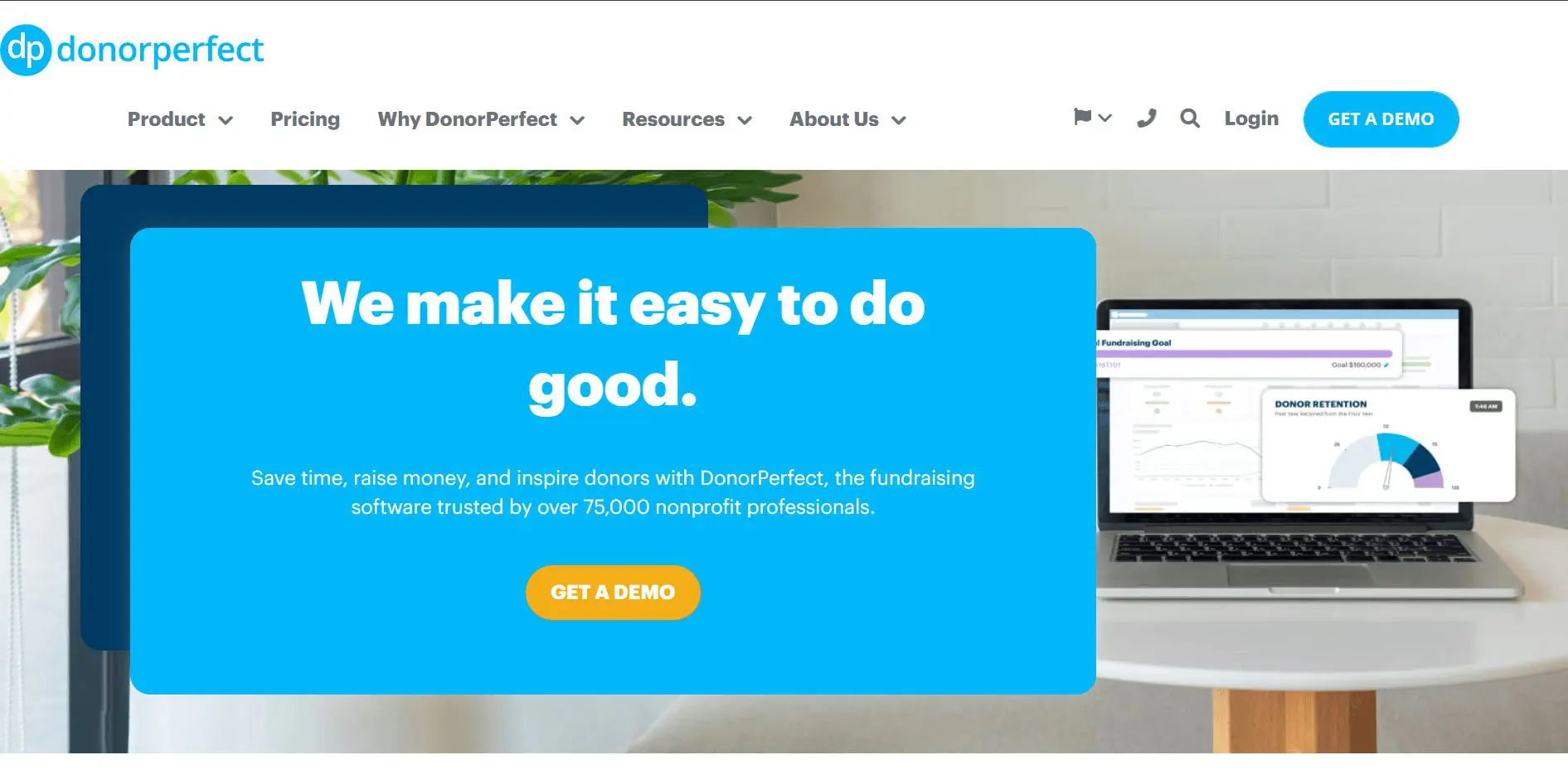
All three tiers — Core, Plus, and Pro — price by quote after a sales conversation, and the value accrues over years of donor history rather than in one spring campaign. Nonprofit organizations only.
Versus RallyUp: RallyUp is the campaign engine rather than the database, and it integrates with donor CRMs, so a school foundation can keep its records where they are and still launch the raffle this week.
- Subscription: Core, Plus, and Pro tiers, all custom-priced after contacting sales.
- Processing: typically around 2.2%–2.9% + $0.30 per transaction, depending on processor and nonprofit eligibility.
19. Bloomerang CRM — retention reporting done properly, a database first and a campaign tool second
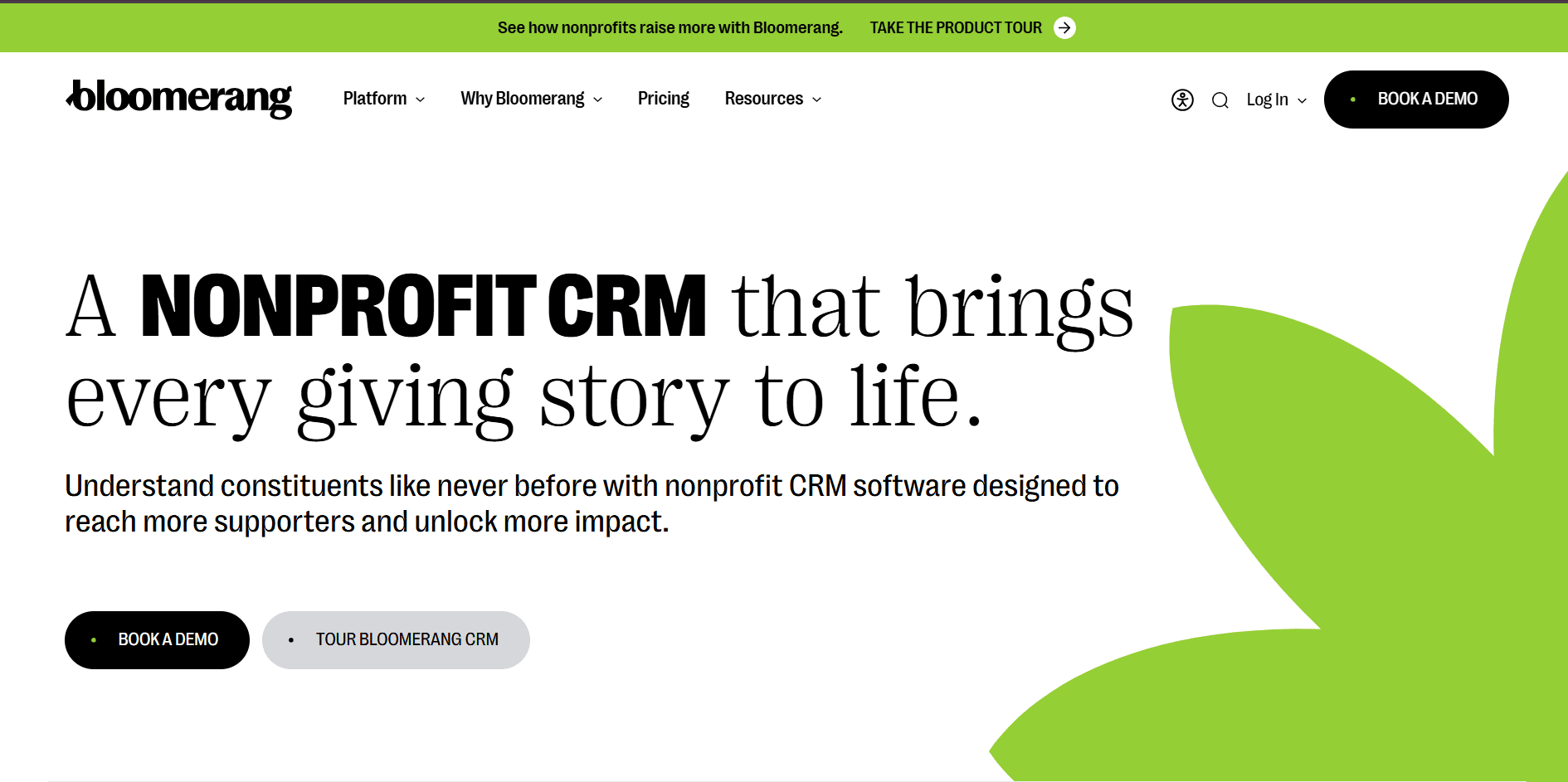
Bloomerang’s donor retention reporting is a real strength, and a school foundation that needs board-level engagement tracking will find it clearer than most. Pricing starts around $119/month for smaller databases and rises with contact volume, with the bundled Giving Platform quoted on request; processing is 2.2% + $0.30 for Visa, Mastercard, and Discover, and 3.5% + $0.30 for American Express. Its fundraising tools exist, but the core of the product is the database.
Versus RallyUp: retention reporting matters after you have donors; RallyUp is what gets a school its first few hundred, then hands the records off.
20. Blackbaud Raiser’s Edge NXT — enterprise development machinery with wealth screening, priced and staffed accordingly
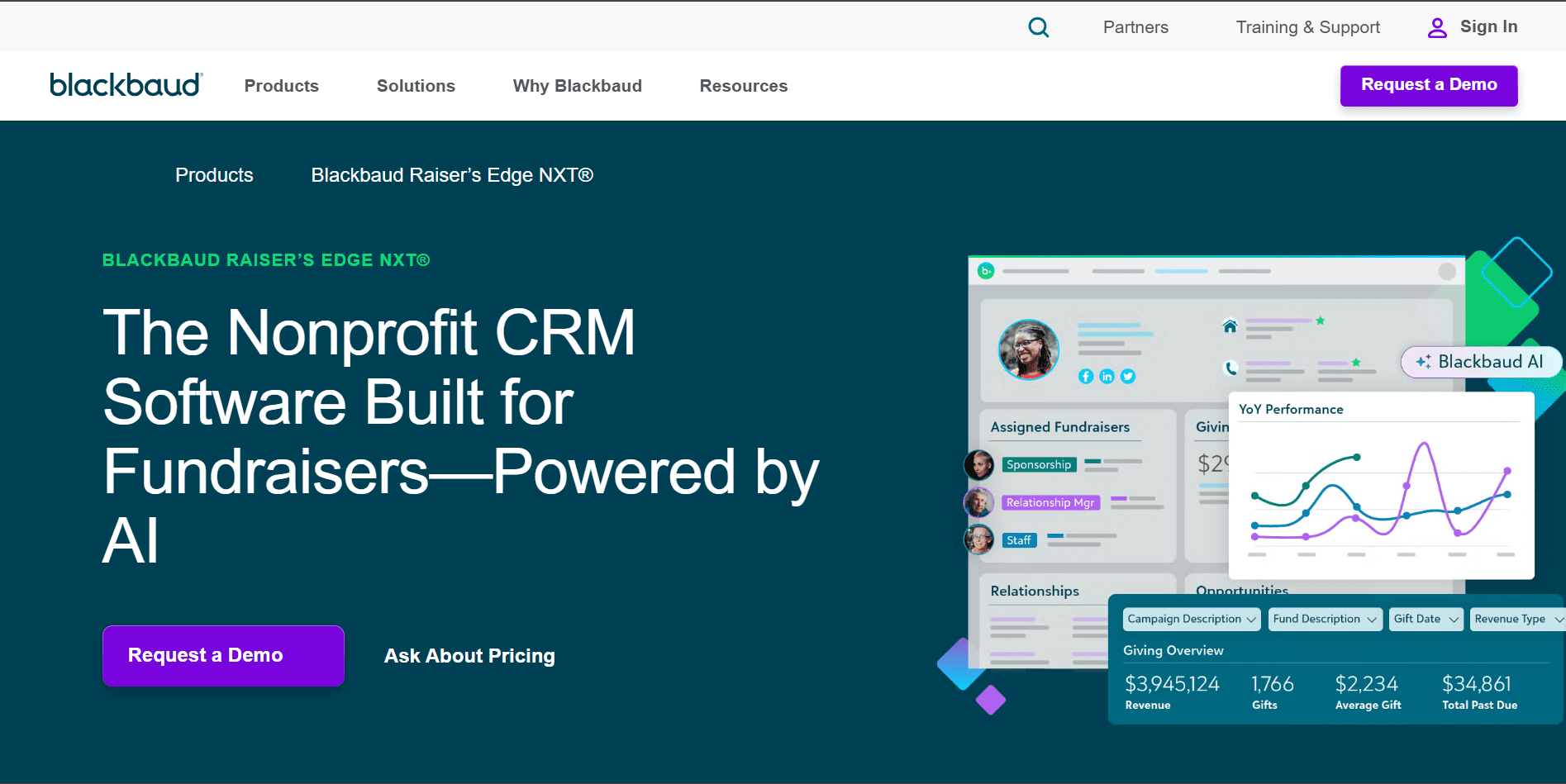
For an independent school with a real development office, Raiser’s Edge NXT does things nothing else here attempts: wealth screening, prospect research, endowment and capital campaign management. Blackbaud publishes no pricing — cost depends on database size, modules, and integrations — and processing runs 2.99% + $0.30 for most cards, 3.5% + $0.30 for American Express, and 1% + $0.30 for ACH capped at $5. It assumes dedicated staff to operate it.
Versus RallyUp: a PTA does not need prospect research; it needs a raffle live by Friday, which RallyUp can do from a template in 15–20 minutes.
21. Little Green Light — affordable donor database for a small school foundation, not a campaign engine
Little Green Light is the sensible, honest option for a charter school or small private school that wants records kept properly without enterprise pricing: roughly $45/month for up to 2,500 constituent records rising to $135/month for up to 50,000, then $15/month per additional 10,000, with processing from 2.2% + $0.30. Campaign tooling is minimal by design.
Versus RallyUp: pair it with RallyUp rather than choosing between them — RallyUp runs the a-thon and the gala, Little Green Light remembers who gave.
22. Salesforce Nonprofit Cloud — endlessly customizable at scale, a configuration project before it is a fundraiser
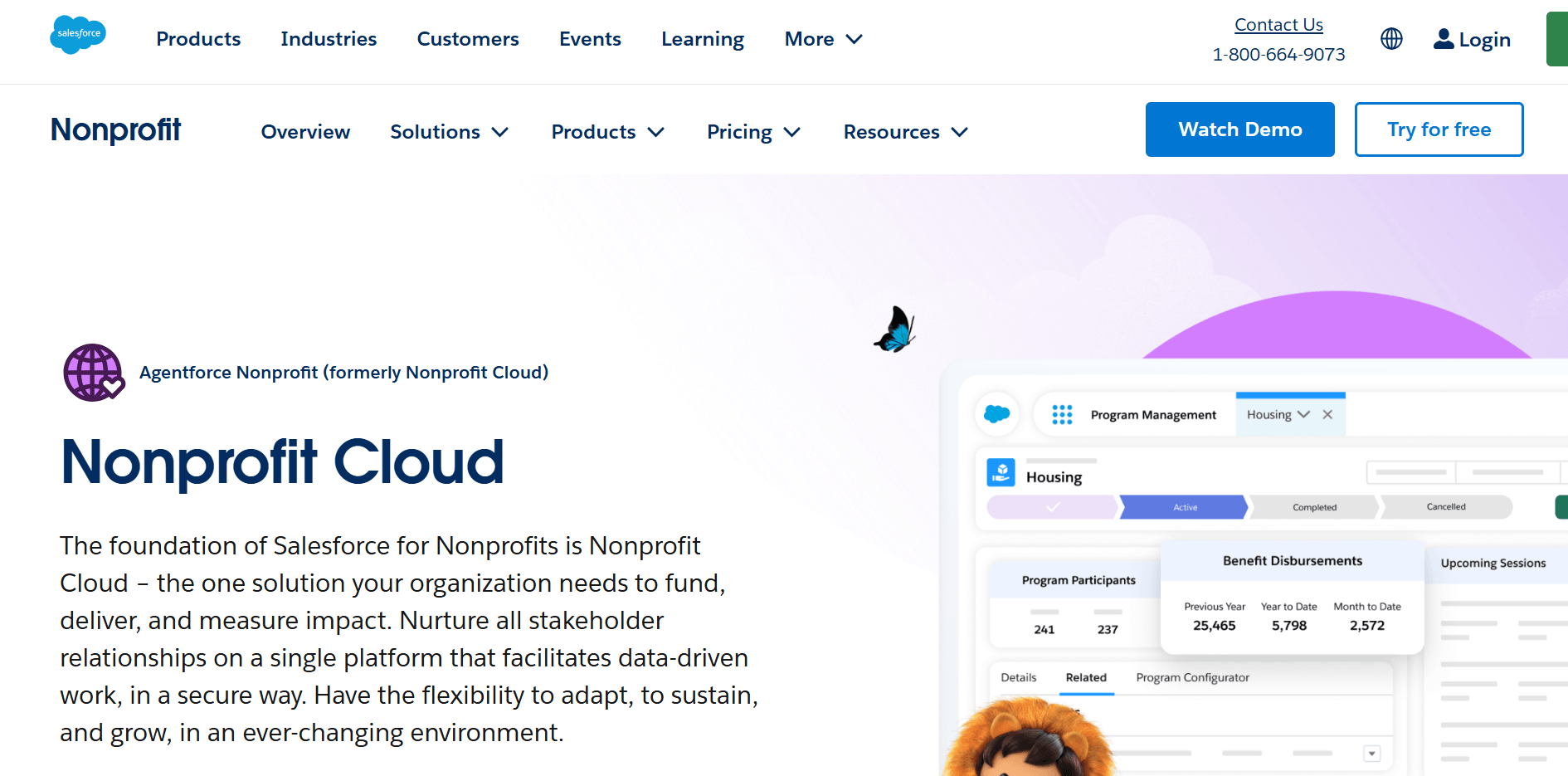
Salesforce Nonprofit Cloud can model almost anything a large private school network needs, with advanced automation and alumni segmentation at genuine scale.
Versus RallyUp: RallyUp needs no configuration project — a volunteer opens a template, and the campaign is live the same afternoon.
- Pricing: licenses typically start around $60–$100 per user per month depending on edition; most organizations add consulting or setup services; payment processing runs 2.2%–2.9% + $0.30 per transaction
3 raffle, auction, and sweepstakes fundraising platforms for schools
Raffles and sweepstakes are regulated differently* from simple donations.
*Compliance considerations for school raffles and sweepstakes
In accordance with the Council of Nonprofits:
Raffles are typically considered games of chance and are regulated at the state level. Public schools often need district approval before running raffles.
Sweepstakes must include a free method of entry to avoid being treated as gambling, which affects how entries are structured.
Silent and live auctions are generally less regulated, though sales tax and nonprofit reporting rules can still apply.
Raffle Compliance Checklist for Schools & Nonprofits
General raffle requirements
Before launching a raffle or sweepstakes
Platforms can provide tools for ticket sales and winner selection, but compliance ultimately rests with the organizing school or PTA.
23. 32auctions — straightforward silent auctions on a free tier, one format at a time
32auctions does silent auctions well and cheaply: a free tier with no upfront cost, individuals as well as schools and nonprofits eligible, paid plans typically from about $35 to $675 per auction depending on features, and Stripe processing around 2.9% + $0.30 with nonprofit discounts sometimes available. The free tier keeps 32auctions branding on your page, and ticketing, pledge drives, and donation campaigns sit outside the product.
Versus RallyUp: RallyUp runs the silent auction, the gala ticket sales, and the Fund-a-Need moment inside one branded Campaign, with auction platform fees capped at $100 per item on the Flex plan.
24. Auctria — thorough auction administration at a low annual price, bounded by income tier
Auctria is genuinely good value for a school gala committee: item tracking, bidder registration, checkout, and reporting across online, mobile, and in-person bidding, starting at $0 per year.
The plans are bounded by total annual income — Explorer stops at $10,000 — so a growing gala climbs tiers, and the Auctria fee stacks on top of Stripe’s processing rather than replacing it.
Versus RallyUp: RallyUp adds Auction Gifts, which systematically earns revenue from bidders who win nothing, plus Event Balances and Automated Checkout so the end of the night is one charge instead of a queue.
- Tiers: Explorer $0/year (up to $10,000 total income/year) with a 1% Auctria fee; Emerald $375/year (up to $50,000) at 0.50%; Diamond $750/year (unlimited income) at 0.25%.
- Processing: via Stripe; combined totals approximately 3.9% + $0.30 (Explorer), 3.4% + $0.30 (Emerald), and 3.15% + $0.30 (Diamond).
25. BetterWorld — free auction and event tooling on a donor-tip model, lighter at the high end
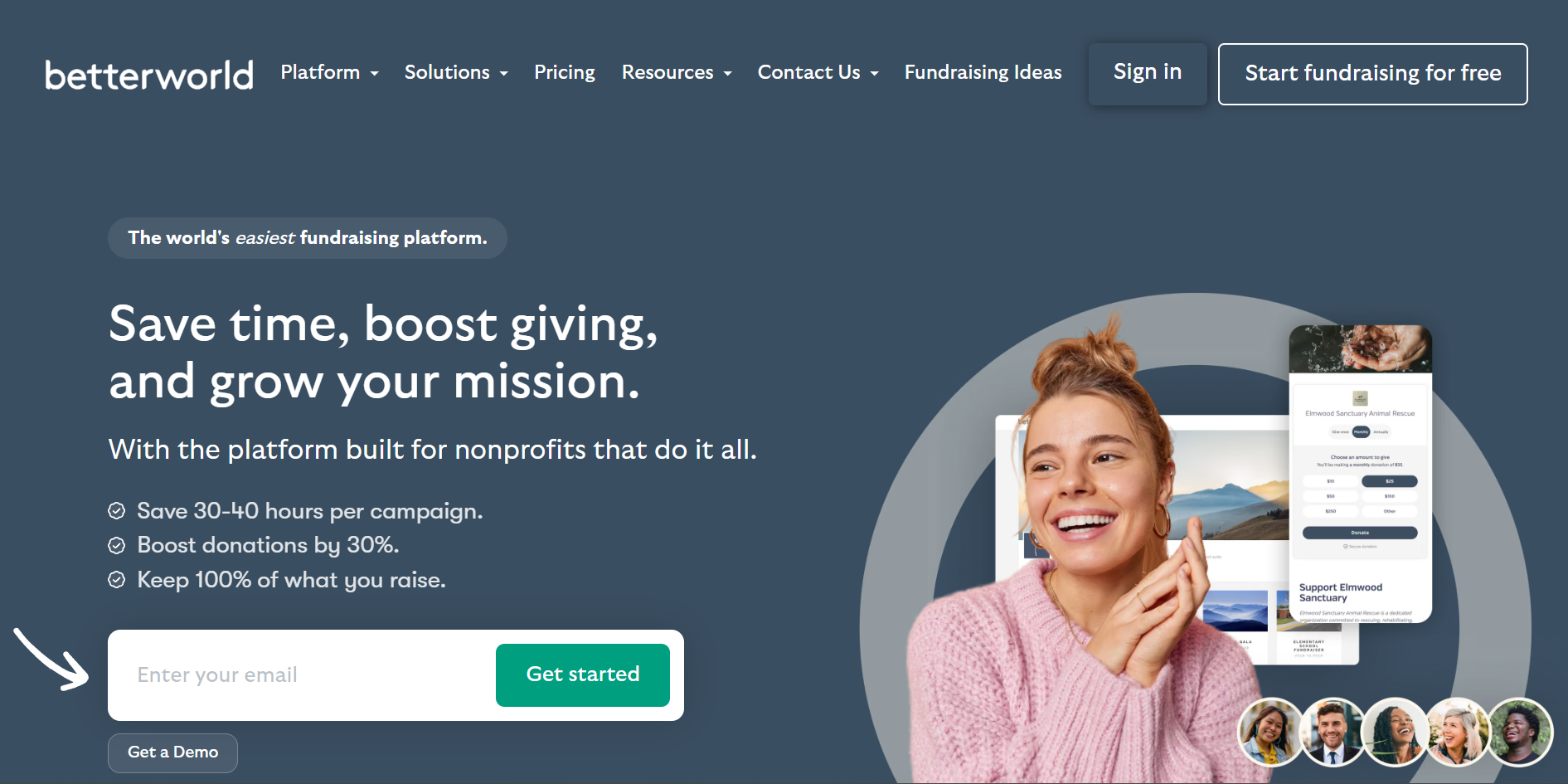
BetterWorld gives a school a lot for nothing: auctions, ticketing, donation pages, and raffle ticket sales with no platform fee, funded by a donor-tip model with an option for donors to cover fees, and processing at 2.9% + $0.30. The tooling is aimed at simpler online events, and revenue depends on donors choosing to cover the costs.
Versus RallyUp: RallyUp covers the same free-to-run ground on its Free plan and adds automated winner selection, Event Balances, and Automated Checkout for the night itself.
Decide between BetterWorld and RallyUp with a proper comparison3 classroom and teacher project platforms for schools
26. DonorsChoose — funded classroom projects with materials shipped for you, U.S. public school teachers only
DonorsChoose solves a problem no general platform does: a teacher posts a specific project, donors fund it, and DonorsChoose buys and ships the materials directly, so accountability is built into the model rather than promised.
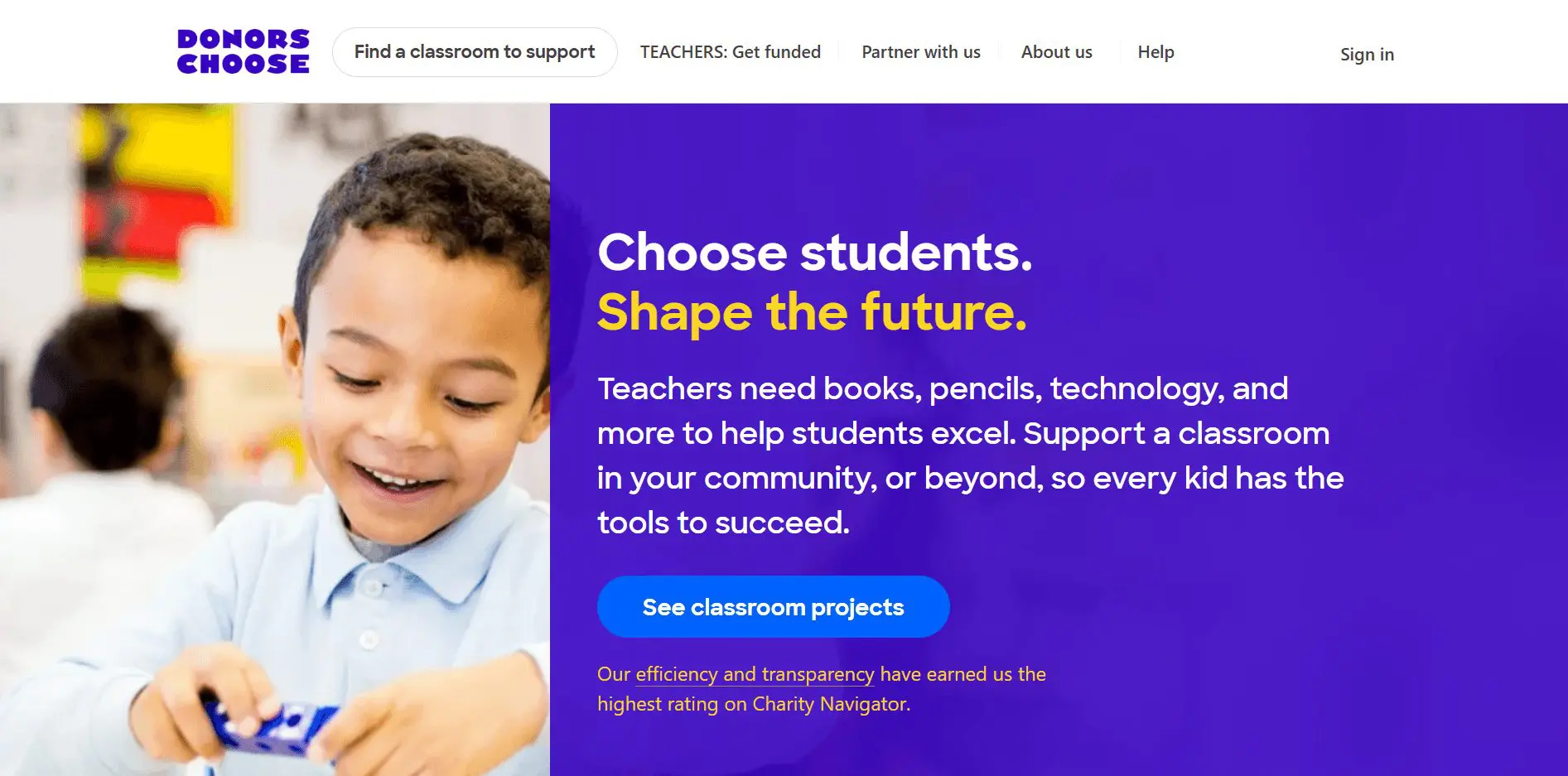
It funds classroom items, not PTA campaigns, galas, or school-wide drives, and eligibility stops at public school teachers in the United States.
Versus RallyUp: the two coexist happily — a teacher funds the STEM kit through DonorsChoose while the PTA runs the school-wide raffle and A-Thon on RallyUp.
- Pricing: optional donor support amount, typically around 15% of the project total; processing 1.5% per transaction.
27. AdoptAClassroom.org — flexible teacher spending with guardrails, bound to its marketplace
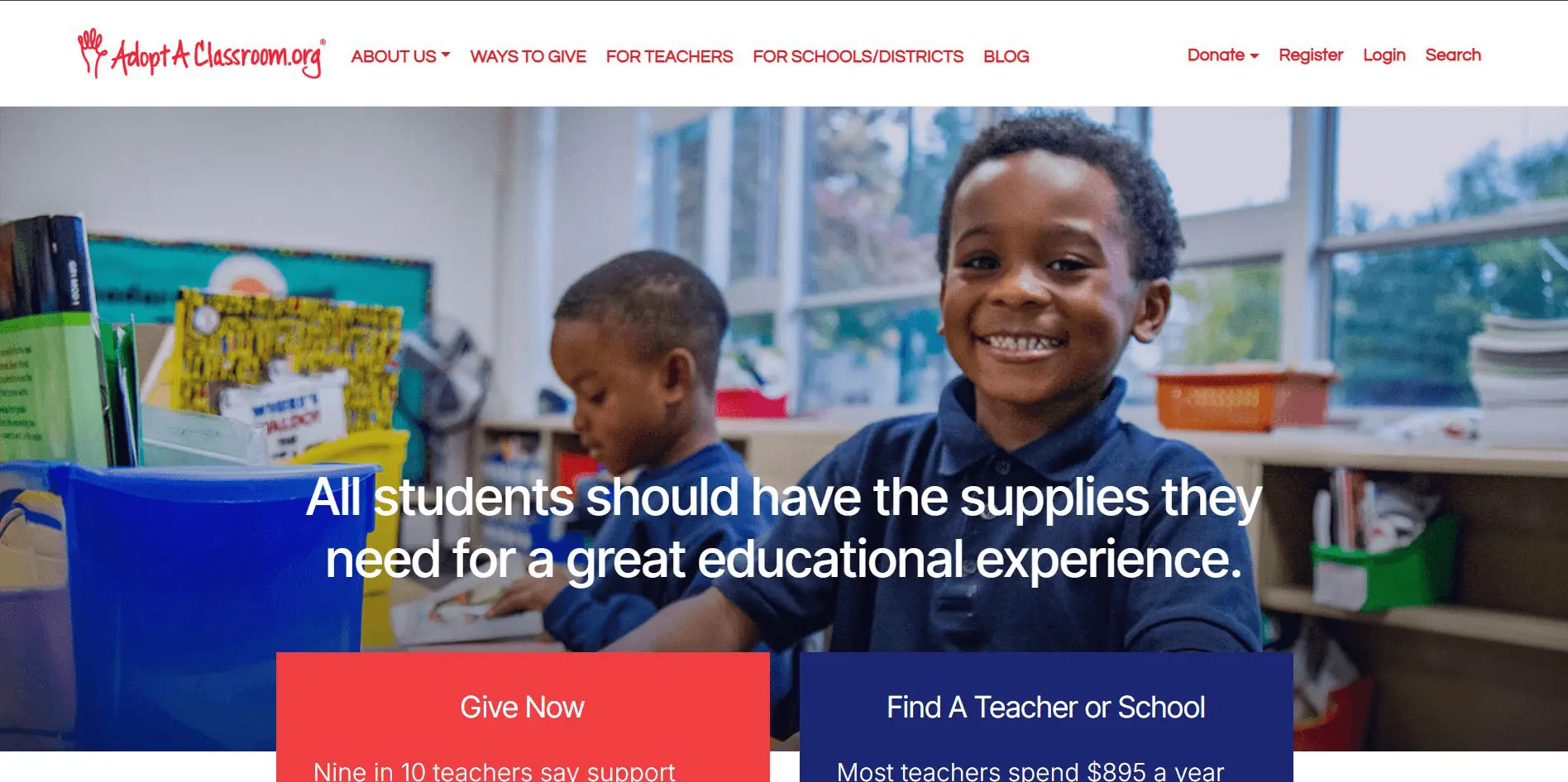
AdoptAClassroom.org strikes a useful balance: educators create classroom pages, receive donations, and then buy what they need through the platform’s marketplace, with teachers and schools eligible in all U.S. states and territories. Donors are asked for an optional supplemental contribution, and purchases made outside the marketplace are subject to a 5% administrative fee with a $10 minimum.
Versus RallyUp: RallyUp puts no restriction on what the money buys, because the school controls its own payouts through its own processor.
28. PledgeCents — no platform fee for small classroom drives, minimal beyond that
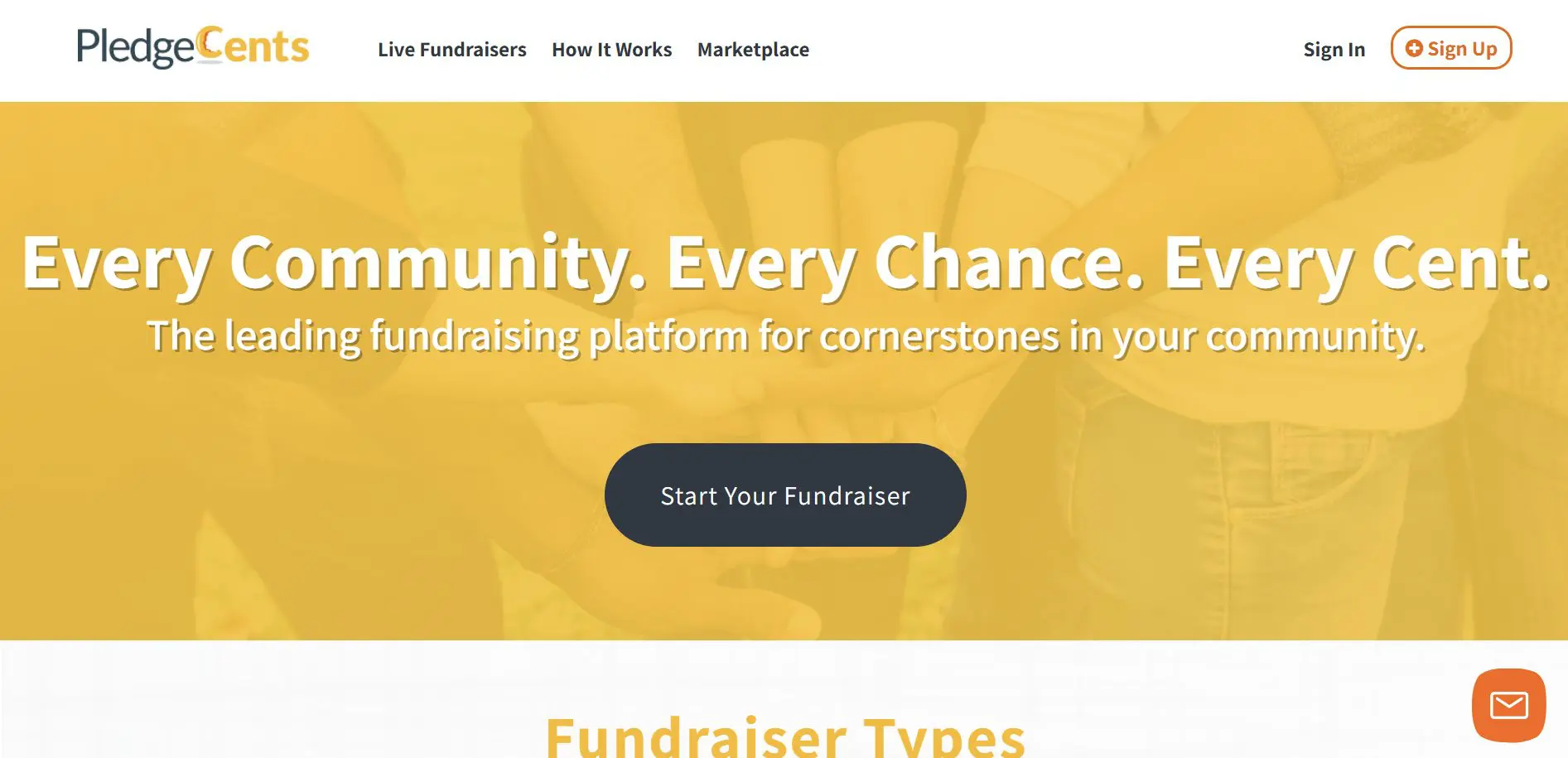
PledgeCents is K-12 friendly and open to schools, teachers, and school groups, with no platform fee on funds raised and payment-processor-dependent fees on top. That makes it a reasonable choice for a single classroom or club page, and a thin one for anything with tickets, bidding, or pledges attached.
Versus RallyUp: RallyUp’s Free plan also carries a 0% platform fee, and it scales from one classroom page up to a full gala without a migration.
4 text-to-give and mobile-first fundraising platforms for schools
29. Snowball — text-to-give tied to live appeals, quoted rather than published
Snowball is built for the moment of the ask: mobile giving, text-to-donate, and event and auction support that work well for a paddle raise or a live appeal in an assembly. There is no public starting price, so schools request a demo or quote, text messaging fees can apply depending on volume and plan tier, and processing sits around the standard 2.9% + $0.30.
Versus RallyUp: RallyUp’s rates are published and its Paddle Raise+ and Fund-a-Need Components run inside the same Campaign as the tickets and the auction, with nothing to quote first.
30. OneCause — serious gala and mobile bidding machinery, sold as an annual contract
OneCause is genuinely strong at the large school gala: mobile bidding and text-to-donate integrated into the auction, built for events with hundreds of guests and a run of show.
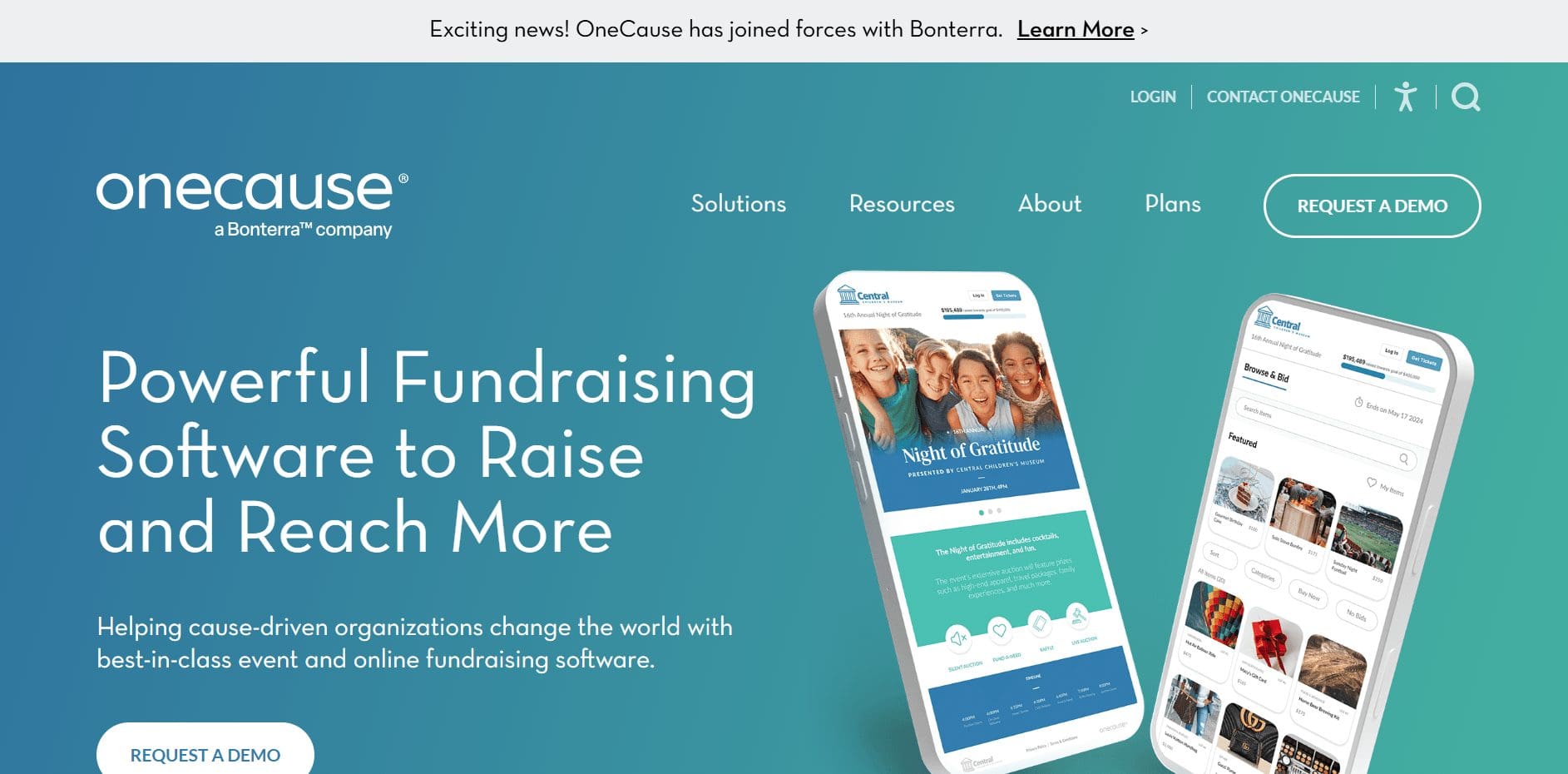
Pricing is contract-based and request-only. An annual subscription or per-event fee, with the Online Fundraising and Text2Give plan quoted on request and Text2Give listed around $200 per month depending on features, means the gala committee negotiates before it builds anything.
Versus RallyUp: RallyUp’s Free plan lets a committee build and test the whole gala — tickets, auction, Fund-a-Need — before committing a dollar, using Power Preview to run real test transactions through checkout.
- Platform: annual subscription or per-event pricing, not publicly listed; Online Fundraising and Text2Give quoted on request; Text2Give around $200 per month depending on features.
- Processing: usually around 2.9% + $0.30 per transaction.
31. Handbid — a polished bidding app for premium events, priced from about $1,999 a year

Handbid’s app-based bidding experience is genuinely slick, and for a school that runs one high-end auction night a year with an engaged crowd, guests tend to like it. Subscription tiers scale with fundraising volume and typically start around $1,999 per year, with processing at 3.5% + $0.30 — a lot of fixed cost to carry for a single evening.
Versus RallyUp: RallyUp’s bidding runs in the browser, so there is nothing for guests to download, and a school’s first auction can go live on the Free plan at a 0% platform fee.
32. GiveSmart — mobile-first forms and text campaigns with solid reporting, on a subscription
GiveSmart handles text-based appeals well, with reporting and donor tracking that a development office can actually use and optional donor fee coverage. Subscription fees vary by feature tier, and card processing is 3.5% (3.95% for American Express), which is toward the high end of this guide.
Versus RallyUp: RallyUp’s Flex rates run from 0% on Donation Pages to 6.9% on Raffles and Sweepstakes with no subscription attached, so a school pays for the format it actually runs.
Make the right decision; compare GiveSmart with RallyUpWhat changes when you’re ready to grow
Most schools run one fundraiser at first, which is why the ease argument comes first. The reason RallyUp keeps working in year three is Full Stack Fundraising: 12+ stackable Components — Raffles, Sweepstakes, Auctions, Ticketing and Registration, A-Thons, Peer-to-Peer, Crowdfunding, Storefront, Donation Pages, Fund-a-Need, Paddle Raise+, and livestreaming — combining inside a single Campaign on one URL with one checkout.
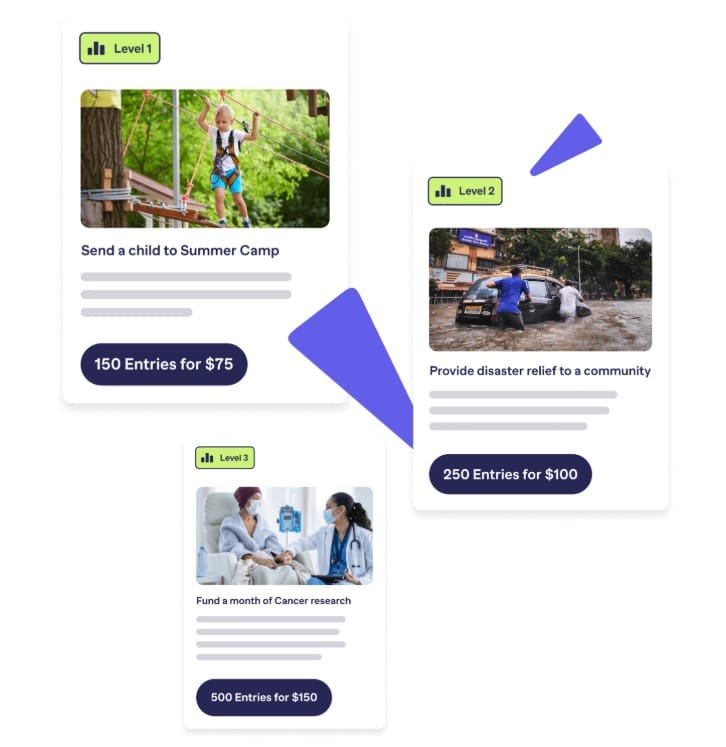
Organizations that combine campaign types raise 38% more than those running a single format. A read-a-thon that also sells spiritwear and raffle entries is one campaign, not three, and new Components can be added to a Campaign that is already live — no rebuild, no second link.
Also worth knowing before year two: the AI Fundraising Content Generator drafts your campaign copy for you to edit, and the Done-for-You team has built more than 1,000 campaigns for organizations that would rather hand it over. Support starts with an AI assistant that knows the platform, and you can ask for a person at any point and get one, on every plan.
- Free plan: 0% platform fee. Donors see an optional tip prompt at checkout, and your school pays no platform fee even if they skip it.
- Flex plan platform fees: 2.9% for Ticketing and Registration and Storefront; 4.9% for Auctions, Crowdfunding, A-Thons, Fund-a-Need, and Paddle Raise+; 6.9% for Raffles and Sweepstakes; 0% for Donation Pages and livestreaming. Auction fees are capped at $100 per item.
- Payment processing (both plans): generally 1.9%–2.9% + $0.30 per transaction via Stripe or PayPal, depending on processor and nonprofit status.
More than 55,000 organizations have raised over $1 billion on RallyUp, at a 4.8/5 average rating.
How to choose the best online fundraising platform for your school
Schools have their own constraints — volunteer turnover, district approval, families rather than donors — but the underlying platform decision is the same one every nonprofit makes. Our guide to the best online fundraising platform for nonprofits compares the same platforms on fees, campaign formats, and build time without the school framing.
Fit matters more than feature lists. The right tool matches your campaign type, your budget, and your volunteer capacity.
1. Start with your fundraising model
An a-thon needs pledge tracking and student pages. A gala needs ticketing, auctions, and sponsorships. A classroom supply drive may only need a donation page.
Have RallyUp build your school campaign for free2. Understand the full cost structure
Look past the headline number. Add up platform fees, processing fees, subscriptions, and donor-tip models at the volume you actually expect to raise.
3. Check built-in payment processing
Nobody should reconcile checks in a spreadsheet. Confirm cards, ACH, and mobile wallets are supported, and that receipts and exports come automatically.
4. Evaluate peer-to-peer and event tools
If student participation drives your result, confirm individual pages, team totals, and live tracking. For events, confirm ticketing, raffles, and auctions work without a third-party workaround.
5. Consider volunteer turnover
PTA leadership changes every year or two. Choose something learnable in an afternoon and handed off in an email.
6. Test the donor experience
Open the page on a phone and complete a test transaction. Slow or confusing checkout costs conversions — which is exactly what Power Preview exists for.
How the right platform accelerates school fundraising
Two schools that picked their platform deliberately, and what happened next.
St. Francis de Sales School
Instead of a long traditional fundraiser, the school ran two short, high-energy raffle campaigns on RallyUp, tying each entry to a chance to win tickets to a major rivalry football game. Peer-to-Peer layered on top: students got personal selling pages, classrooms were ranked by ticket sales, and top sellers won daily prizes.
- Campaign length: 9 days, down from a previous 6-week campaign — a quarter of the time.
- Result: more than 40% more funds raised, with higher student participation.
“RallyUp’s user interface is stellar, the live chat and backend management are unparalleled,” said Geoff Rose, President of St. Francis de Sales School. Read the full St. Francis case study.
Sycamore Elementary School
Sycamore’s PTA needed $15,000 a year for classroom supplies, teacher development, and making sure no student went without basic materials. They ran an A-Thon on RallyUp that tied fundraising to student achievement and captured both in-person and online donations.
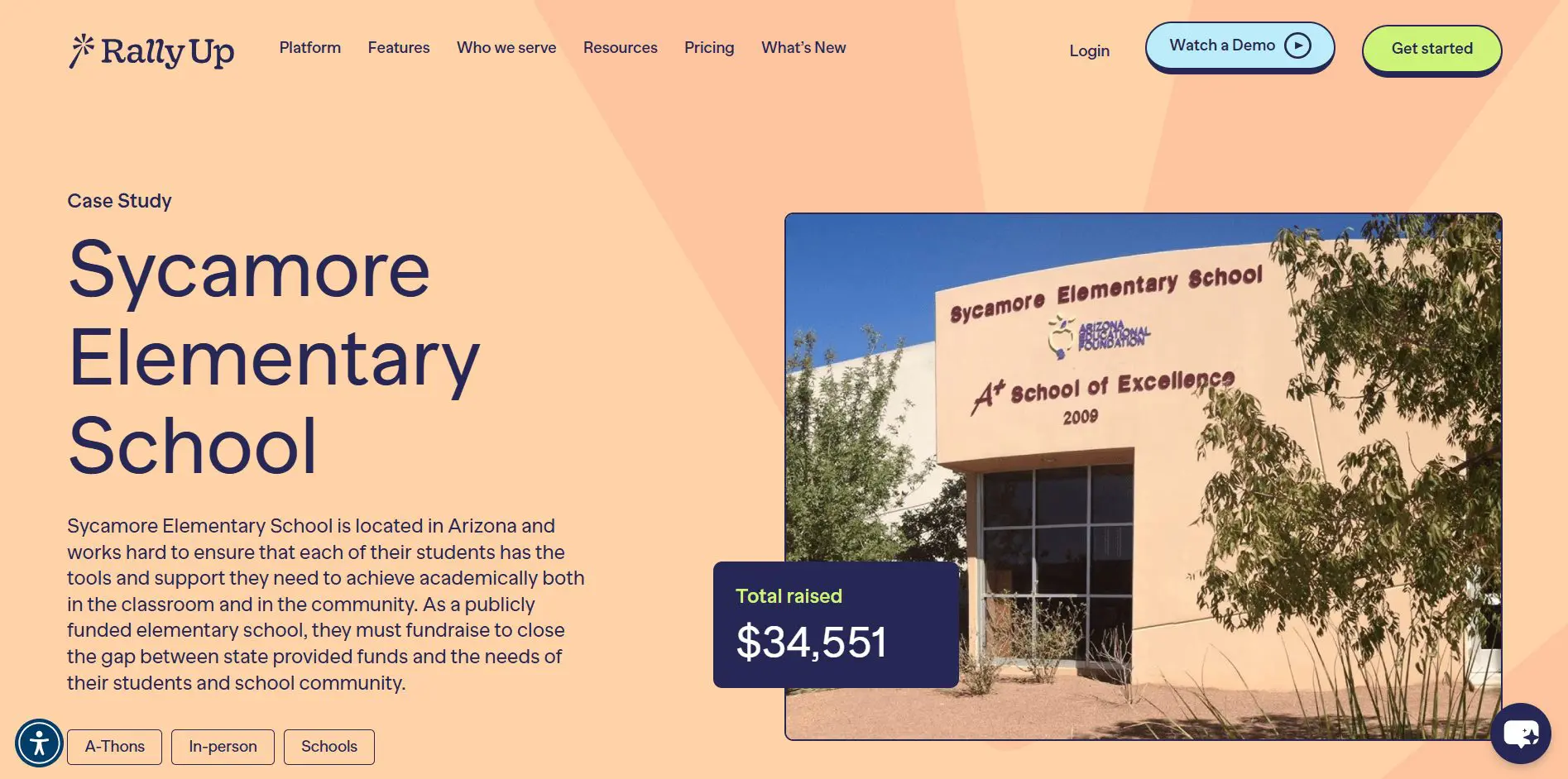
- Total raised: $34,551 — more than double the annual goal.
- Result: increased donor participation and student engagement, with progress visible to families throughout.
Mistakes schools make when choosing fundraising platforms
Overpaying for enterprise tools
Enterprise CRMs are built for large nonprofits with full-time fundraising staff, and they carry annual contracts, onboarding time, and higher subscription costs. For one or two campaigns a year, that infrastructure is not matched to the job.
Choosing complexity over usability
A long feature list is not a practical tool for a volunteer-led team. Anything needing technical setup or a training session slows the campaign before launch.
Forgetting the parent experience
Parents give on their phones, often in under two minutes. Long, unclear, or account-gated checkouts cost donations.
Final recommendation framework
- Small PTA with limited tech skills: simple setup, clear pricing, no required subscription. RallyUp’s Free plan and Instant Fundraiser Templates fit exactly; Schoolfundr and 99Pledges are single-format alternatives.
- Large private school annual gala: ticketing, auctions, sponsorships, and reporting in one system. RallyUp covers all four in one Campaign; OneCause and Handbid do it on an annual contract.
- District-wide athletic fundraiser: peer-to-peer is what matters — team pages, student tracking, mobile sharing. RallyUp’s P2P Component, or GoFundMe Pro if you don’t mind a quote.
- Teacher-led classroom campaign: simplicity and accountability. DonorsChoose or AdoptAClassroom.org for item-based needs; RallyUp when the class is part of a school-wide drive.
Final thoughts: funding children’s education the right way
Schools fundraise in many ways — pledge drives, galas, raffles, auctions, merchandise, classroom projects. Before deciding, weigh pricing structure, built-in payment processing, and how fast a volunteer can learn the tool.
If you want one system that handles the raffle, the auction, the ticket sales, and the read-a-thon without separate logins, RallyUp is where to start. It is easy enough for a first-time PTA volunteer and deep enough for a school foundation in year five. See how it works for PTAs, PTOs and booster clubs on the RallyUp for schools page.
FAQs about fundraising platforms for schools
RallyUp, for most schools. A PTA volunteer can build and launch a raffle, auction, or A-Thon in 15–20 minutes from a template, and all three can run from one Campaign. The Free plan carries a 0% platform fee, and Create My Campaign will build your first campaign at no cost.
Match the fundraiser to your families and your goal. Peer-to-peer drives, raffles, and event-based campaigns draw the strongest participation because students take part directly. Organizations that combine campaign types raise 38% more than those running a single format, so pairing a read-a-thon with a spiritwear storefront usually beats either alone.
Walk-a-thons, read-a-thons, raffles, and school auctions perform consistently well because they involve students directly. St. Francis de Sales School raised more than 40% more funds in 9 days, down from a 6-week campaign, by pairing raffle entries with student selling pages on RallyUp.
Set a clear goal, pick the platform that matches your format, build from a template, test checkout on a phone before publishing, then promote through parents and social channels. On RallyUp, Power Preview pushes real test card transactions through checkout on a draft Campaign, so you catch a mispriced ticket before a parent does.
Yes. RallyUp’s Free plan carries a 0% platform fee, with Donation Pages free and no donor tipping required; payment processing still applies. Zeffy, Schoolfundr, BetterWorld, and PledgeCents also run at no platform fee, generally funded by an optional donor contribution.
Pricing and features current as of August 2026.
Now that you’ve seen it in action, are you ready to start fundraising?
Get Started