
How to generate revenue for nonprofit organizations
Nonprofit Revenue Strategies
Whether you’re a small community organization or a large national charity, there are revenue strategies built for your stage of growth.
Small nonprofits: Crowdfunding, membership programs, local business sponsorships, community fundraising events
Medium nonprofits: Events, grants, merchandise, peer-to-peer fundraising
Large nonprofits: Corporate partnerships, social enterprises, major gifts and planned giving, fee-for-service programs
In the world of nonprofits, where every dollar counts and the mission is king, the question of “how do nonprofits make money” often bubbles up in strategy meetings, fundraising galas, and boardroom chats.
Whether you’re running a small community-based organization, a medium-sized advocacy group, or a large charity with a global footprint, generating revenue is key to sustaining and expanding your impact.
So, buckle up as we dive into the fun and informative world of making “profitable nonprofits” a reality, complete with practical examples and a spotlight on a top online fundraising solution that’s changing the game.
In this article
Small nonprofits: the community heroes
Small nonprofits are the backbone of local communities, often operating on shoestring budgets but fueled by passion and the support of their community. Let’s dive deeper into how these organizations can harness the power of Crowdfunding and membership programs to sustain and grow their impact.
1. Crowdfunding: the digital bake sale
Crowdfunding has revolutionized fundraising for small nonprofits. It’s akin to hosting a bake sale in the digital age, where your goodies are the stories, dreams, and aspirations of your organization. The beauty of Crowdfunding lies in its simplicity and reach. By crafting a compelling narrative about your cause, you can connect with potential donors across the globe, not just in your local community.
Maximizing Crowdfunding success
- Engaging content: Use videos, images, and compelling narratives to tell your story. Make it personal and relatable.
- Social media: Leverage social media to spread the word. Encourage shares, likes, and tags to increase your campaign’s reach.
- Updates: Keep your supporters in the loop with regular updates about your project’s progress and how their contributions are making a difference.

2. Membership programs: join the club
Membership programs turn occasional donors into committed supporters. By offering exclusive benefits and a sense of belonging, you can cultivate a dedicated community of supporters who contribute regularly to your cause.
Crafting an attractive membership program
- Tiered membership levels: Offer various levels of membership with corresponding benefits. This allows supporters to choose a level that matches their capacity to give.
- Exclusive content: Provide members with exclusive updates, behind-the-scenes looks, and early access to events to make them feel special.
- Recognition: Acknowledge your members regularly. This can be through thank-you notes, mentions in newsletters, or recognition on your website.
3. Local business sponsorships: Your strongest partners
Small nonprofits don’t always need to look far for funding. Local businesses are often willing to contribute because supporting a community cause helps them build goodwill with the very people they serve.
Make your local sponsorships work:
- Start with relationships you already have: Reach out to businesses your board members or volunteers already frequent, since a warm introduction goes further than a cold pitch.
- Make the ask specific: Come with a clear opportunity, like sponsoring a prize table for $150, rather than asking for general support.
- Offer something in return: Logo placement on flyers or a shout-out at your event gives the business a tangible reason to say yes.
4. Community fundraising events: Big impact, small budget
For small nonprofits, community events are one of the most accessible ways to raise money and grow awareness. A neighborhood walk, trivia night, bake sale, or car wash can bring in real dollars without a big budget.
To make your event a success:
- Match the event to your capacity: If you have five volunteers, a trivia night with a $10 entry fee is far more manageable than a multi-vendor fair.
- Use free or low-cost venues: Community centers, parks, libraries, and church halls are often available at little or no cost for nonprofits.
- Add a giving moment: A QR code to your donation page or a quick verbal ask can meaningfully increase what you bring in beyond entry fees.
Some public events require permits, and any raffle or game of chance is subject to charitable gaming laws that vary by state. Check local regulations and build in enough lead time to get approvals before finalizing your plans.
Medium nonprofits: the change makers
Medium-sized nonprofits, nestled comfortably between the grassroots efforts of small organizations and the broad reach of large charities, possess unique capabilities to mobilize resources, engage communities, and drive significant impact. Their strategies for revenue generation are as dynamic as the causes they champion, blending creativity with scalability.
Let’s dive deeper into how these nonprofits can amplify their fundraising efforts and mission.
1. Events: more than just a party
Events are a cornerstone of fundraising for medium-sized nonprofits, serving dual purposes of raising funds and elevating awareness. These are not just gatherings; they are strategic campaigns designed to deeply engage participants with the cause.
- Charity runs with a twist: Building on the idea of a “Run for the Reefs,” imagine incorporating augmented reality (AR) experiences where runners can witness the beauty of the coral reefs they’re running to save, right on their mobile devices. This technological touch can transform a traditional fundraising run into an immersive experience that educates and inspires.
- Gala dinners: These elegant Events can be more than just dinner and speeches. Incorporating live Auctions, where guests bid on donated items or experiences, can significantly boost fundraising. Think beyond the event space: virtual reality (VR) stations can transport guests to the heart of your mission, whether it’s a remote village your nonprofit is helping or the center of an environmental project you’re leading.
- Online webinars and workshops: Leveraging the power of digital platforms to host educational webinars and workshops can attract a global audience. These Events can be themed around your cause, offering deep dives into specific issues, solutions, and the impact of your work. Offering tiered ticketing options, including VIP access to Q&A sessions with experts, can add value and raise additional funds.
2. Grants: the hunt for funding
Securing grants requires a blend of storytelling, data-driven outcomes, and strategic alignment with funders’ goals. For medium-sized nonprofits, the approach to grant writing can be both innovative and systematic.
- Strategic partnerships: Collaborating with research institutions or other nonprofits to submit joint grant proposals can strengthen your application. This shows potential funders a commitment to cooperation and maximizing impact, which can be a decisive factor in competitive grant environments.
- Data visualization: Incorporating infographics, charts, and impact videos into your grant proposals can make your application stand out. Visual storytelling can effectively communicate the success of your programs, the need for funding, and the potential impact of the grantor’s contribution.
- Grant writing workshops: Investing in grant writing workshops for your team can pay dividends. These workshops can hone your team’s ability to craft compelling narratives, understand the intricacies of grant requirements, and stay abreast of trends and opportunities in grant funding.
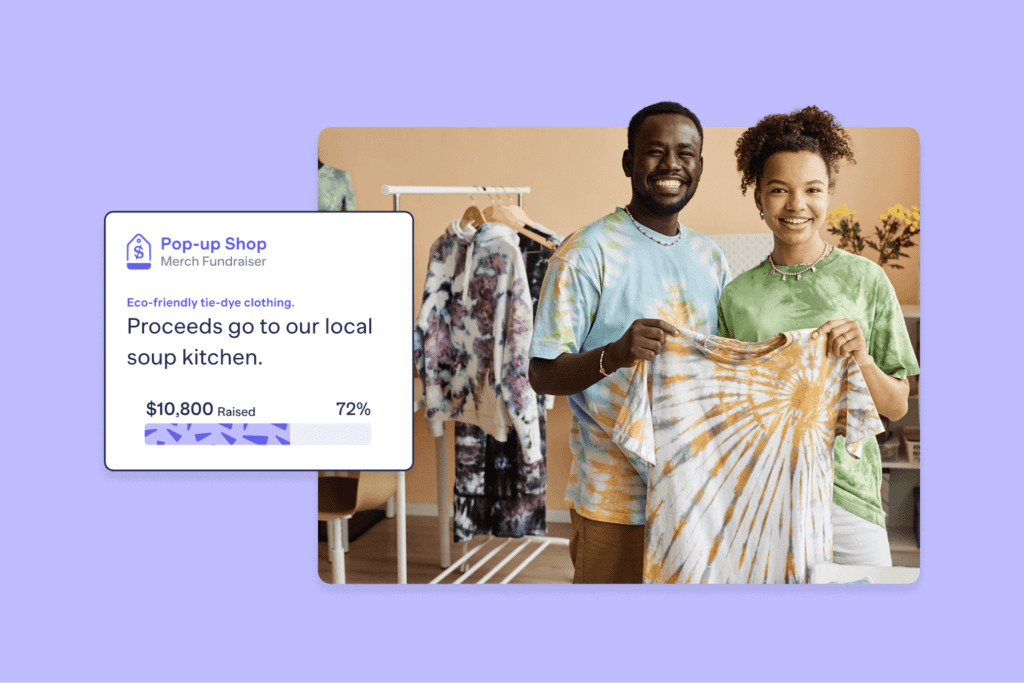
3. Merchandise: swag with a cause
Merchandising offers a tangible connection between your supporters and your cause, turning them into ambassadors in their daily lives.
- Limited edition collections: Collaborate with local artists or influencers to create limited edition merchandise lines. This not only raises the appeal of your products but also taps into the artists’ or influencers’ following, broadening your reach.
- Eco-friendly products: Align your merchandise with your mission by offering eco-friendly products, such as reusable water bottles made from recycled materials or organic cotton T-shirts. This approach reinforces your nonprofit’s values and appeals to environmentally conscious consumers.
- Pop-up shops at Events: Setting up pop-up shops at local community Events, festivals, or markets can increase your merchandise’s visibility. Pairing this with storytelling—why the merchandise matters, whom it helps, and how it supports your mission—can significantly boost sales and engagement.
4. Peer-to-peer fundraising: Let your supporters do the talking
Medium nonprofits have an established base of volunteers, donors, and advocates. Peer-to-peer fundraising puts that network to work by letting supporters raise money on your behalf.
How to make it work:
- Give supporters the tools they need: A pre-written message, a shareable link, and a personal fundraising page make it easy for participants to get started quickly.
- Set a team goal alongside individual ones: Group targets create friendly competition and keep energy high throughout the campaign.
- Recognize top fundraisers publicly: A leaderboard on your campaign page or a shout-out on social media encourages others to keep pushing.
- Keep momentum going with updates: Regular progress reports remind participants why they signed up and motivate them to share one more time.
Large nonprofits: the global guardians
When we talk about large nonprofits, we’re talking about organizations with the capacity to enact change on a global scale. These entities are often well-established, with a broad reach and a diverse donor base.
Their strategies for generating revenue are as ambitious as their missions, focusing on sustainability, major contributions, and impactful partnerships. Here’s how they do it:
1. Corporate partnerships: joining forces
For large nonprofits, corporate partnerships represent a strategic alliance that can amplify their impact and resources significantly. These collaborations can take various forms:
- Sponsorships: Companies may sponsor Events, programs, or campaigns, providing financial support in exchange for brand visibility among the nonprofit’s audience.
- Cause marketing campaigns: This is where a company aligns itself with a nonprofit to raise funds for a cause, often donating a portion of the sales of a particular product. It’s a powerful way to tap into the customer base of the business while promoting the nonprofit’s mission.
- Matching gifts programs: Many corporations offer matching gift programs, doubling (or sometimes tripling) the donations their employees make to eligible nonprofits. It’s an effective way to incentivize more substantial employee giving, leveraging the corporate funds for a greater impact.
These partnerships are mutually beneficial: they enable corporations to enhance their Corporate Social Responsibility (CSR) profile and engage their employees in meaningful causes, while nonprofits gain access to resources, expertise, and networks that can propel their missions forward.
2. Social enterprises: doing well by doing good
Large nonprofits are uniquely positioned to establish or partner with social enterprises to generate revenue while advancing their social, environmental, or cultural objectives. These ventures are designed to be financially self-sustaining, channeling profits back into the nonprofit’s mission.
Examples include:
- Employment ventures: Nonprofits might create businesses that employ individuals from disadvantaged backgrounds, such as cafes, retail stores, or manufacturing units. This not only provides valuable job skills and employment but also generates income for the organization.
- Product Sales: Selling artisanal products crafted by communities the nonprofit supports can be a significant revenue stream. These products often have a story that resonates with consumers, adding value to the purchase and providing a direct connection to the cause.
The beauty of social enterprises lies in their dual-purpose model: they contribute to the nonprofit’s financial sustainability while making a tangible, positive difference in the community or environment.

3. Major gifts and planned giving: the big fish
Attracting major gifts and facilitating planned giving are crucial strategies for large nonprofits, enabling them to secure substantial funding for their initiatives. These approaches require a personalized touch, building deep, long-term relationships with donors who can make significant contributions.
- Major gifts: Identifying, cultivating, and stewarding relationships with high-net-worth individuals is an art. It often involves engaging these donors in the organization’s vision, demonstrating the impact of their potential contribution, and providing opportunities for them to get involved at a deeper level.
- Planned giving: This strategy involves working with donors to plan future gifts through their estates, such as bequests, trusts, or annuities. It’s a way for donors to leave a legacy, ensuring that their commitment to the cause endures beyond their lifetime.
For large nonprofits, these high-level fundraising efforts are about more than just securing funds; they’re about forging partnerships that align with the donor’s values and vision, creating lasting impacts that resonate through generations.
4. Free-for-service programs: Get paid for what you know
Large nonprofits often develop deep expertise through years of program delivery. Offering that expertise as a paid service to businesses, government agencies, or other nonprofits turns internal knowledge into a sustainable revenue stream.
- Start with what you already do well: Training, consulting, research, or program management are common areas where nonprofits can charge a fair market rate.
- Set clear pricing and scope: Treat fee-for-service work like a business contract with defined deliverables, timelines, and fees to protect both parties.
- Ensure mission alignment: Only pursue service opportunities that connect directly to your core work so the revenue doesn’t pull staff focus away from your primary programs.
- Reinvest proceeds intentionally: Be transparent with your board about how fee-for-service revenue is allocated so it strengthens rather than complicates your financial picture.
Across the board: innovative fundraising methods
In the quest for sustainability and growth, nonprofits of all sizes are exploring new horizons of revenue generation. Whether you’re mobilizing your local community with a Crowdfunding campaign, engaging a global audience with impactful Events, or pioneering social enterprises, the goal remains the same: to support your mission and make a difference.
Enter RallyUp, your nonprofit’s new best friend in the fundraising arena
Offering 10 innovative ways to fundraise, RallyUp is an online solution that breathes fresh air into your revenue generation strategies.
RallyUp, an end-to-end fundraising platform, stands as a testament to the power of innovative fundraising, offering a versatile platform that not only addresses the challenge of donor fatigue but also opens new avenues for supporter engagement and revenue generation.
Here’s why it’s a game-changer:
- Combats donor fatigue: With a plethora of unique fundraising methods, including Sweepstakes, Auctions, and Peer-to-Peer campaigns, RallyUp keeps your supporters engaged and excited to contribute.
- Acquires new donors: By leveraging social media integrations, creative Fundraising Activities and customizable campaign pages, RallyUp helps you reach beyond your existing network to tap into new pools of potential supporters.
- Innovative fundraising methods: From virtual Events to A-Thons, Crowdfunding, Online Stores, Livestreaming and more, RallyUp offers cutting-edge tools that cater to every kind of donor and make giving both fun and effortless.
As nonprofits continue to navigate the complexities of fundraising in a rapidly changing world, embracing creativity, leveraging technology, and staying true to your mission are key. Remember, at the heart of every successful fundraising effort is a story that resonates, a community that supports, and a cause that inspires. Let’s make profitable nonprofits not just a possibility but a reality.
Happy fundraising!
FAQs
What is the 33% rule for nonprofits?
The IRS requires public charities to receive at least one-third of their support from public and mission-related sources over a five-year period to maintain 501(c)(3) status.
How to generate revenue for a nonprofit organization?
Nonprofits raise money through donations, grants, events, membership programs, corporate partnerships, and earned income tied to their mission.
How many revenue streams should a nonprofit have?
At least three to five as a diversified mix protects the organization if one source slows down or disappears.
What is the 80/20 rule for nonprofits?
About 80% of donations typically come from just 20% of donors. This makes major donor relationships a priority in any fundraising strategy.
Now that you’ve seen it in action, are you ready to start fundraising?
Get Started